Introduction
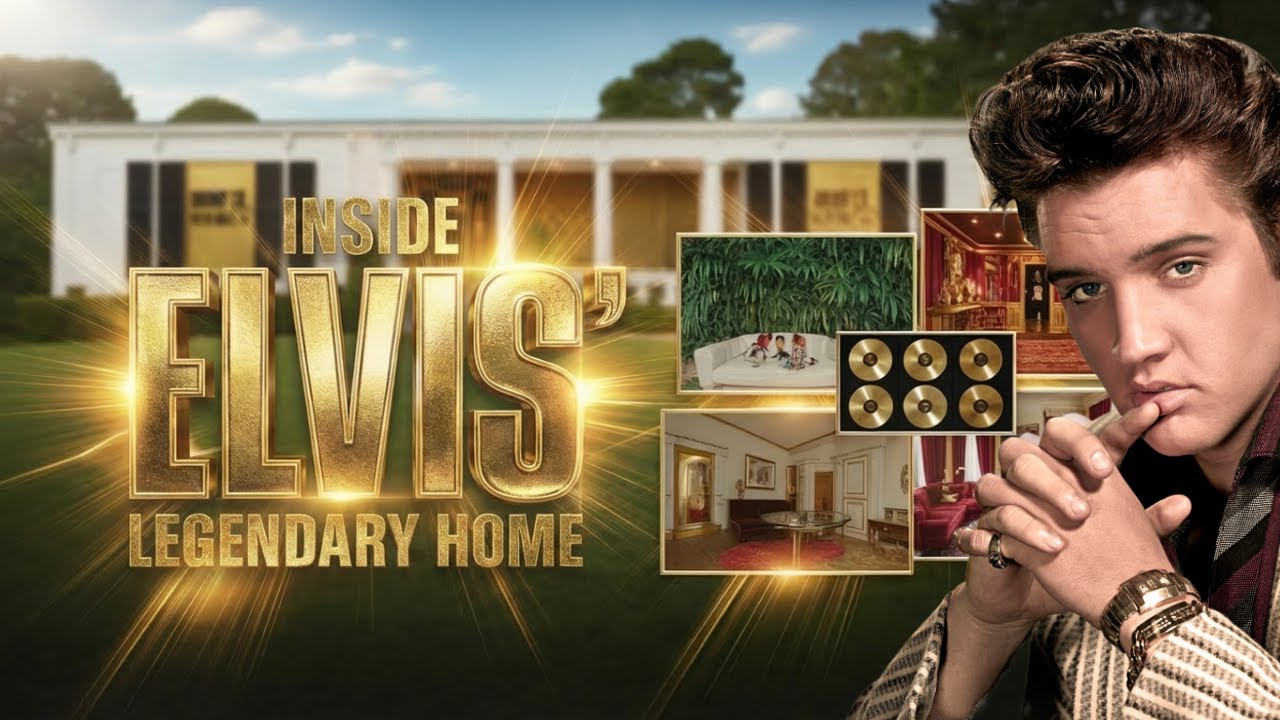
Inside Elvis Presley’s Graceland: Secrets You’ve Never Seen
A visit to Graceland is more than a tour of a famous home — it is a journey into the private world of Elvis Presley, the man behind the legend. Located in Memphis, Tennessee, Graceland remains one of the most visited historic homes in the United States, drawing millions of fans eager to experience the life, style, and spirit of the King of Rock and Roll.
The experience begins with a short shuttle ride across the street from Elvis Presley’s Memphis, a modern exhibition complex opened in 2017. From there, visitors are transported back in time to the mansion Elvis purchased in 1957 and called home until his death in 1977. Before stepping inside, guests watch a short introductory film that sets the emotional tone, reminding everyone that this was not just a celebrity estate, but a family home filled with memories.
Inside the mansion, photography is limited, preserving the sense of intimacy. The living room immediately captures attention with its iconic 15-foot custom-built sofa, originally metallic blue before Elvis had it reupholstered in white. The room connects to the music room through stained-glass peacock panels added in 1974, where it’s easy to imagine Elvis and friends gathered around the piano late into the night.
Down the hallway lies the bedroom of Elvis’s mother, Gladys Presley. Her clothes still hang in the closet, frozen in time since her passing in 1958. Upstairs rooms are off-limits to the public, including Elvis’s bedroom and bathroom — the very place where he tragically died. This restriction reflects Elvis’s lifelong desire for privacy, even in death.
One lesser-known feature of Graceland is the hidden staircase leading from the upstairs directly into the kitchen. Elvis used it to avoid guests when he wanted quiet moments away from attention. The kitchen itself remains exactly as he left it in the mid-1970s, complete with an early-model microwave, showcasing his love for the latest technology.
Downstairs, the famous TV room features three televisions — a concept Elvis borrowed from President Lyndon B. Johnson so he could watch all major news channels simultaneously. Across the hall, the pool room stands out with its dramatic fabric-covered walls and ceiling, requiring hundreds of yards of material and days of meticulous work. Even the tear in the pool table felt remains, a small imperfection that humanizes the space.
The Jungle Room, known for its exotic décor and indoor waterfall, was Elvis’s favorite retreat. In the late 1970s, he even recorded music there, choosing the comfort of home over traditional studios. It was also a favorite space of his daughter, Lisa Marie Presley.
Outside the mansion, visitors explore Vernon Presley’s office, where Elvis’s father managed his personal business affairs, and the trophy building, filled with deeply personal artifacts. The final stop is the Meditation Garden, where Elvis and several family members are laid to rest. Open to visitors each morning, the garden offers a peaceful space for reflection and remembrance.
Graceland is not just a museum — it is a living tribute. Beyond the jumpsuits and fame, it reveals a man who valued family, comfort, and privacy. These unseen details remind visitors that while Elvis Presley changed music forever, he was also deeply human — and Graceland still whispers his story in every room.
Video