Introduction
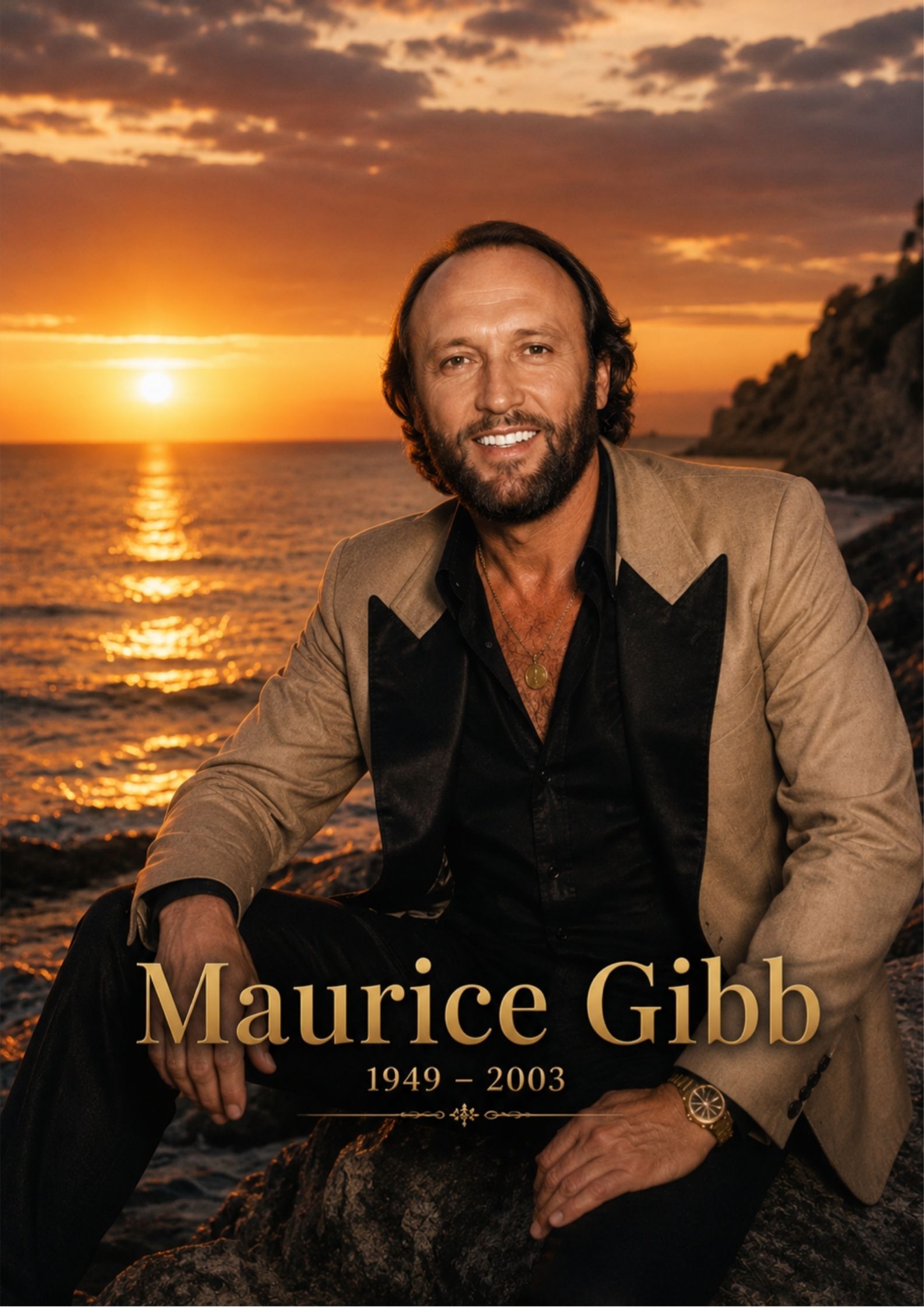
Maurice Gibb: The Forgotten Genius Behind the Bee Gees’ Harmony, the Quiet Brother Whose Music Held Everything Together
Maurice Gibb: The Forgotten Genius Behind the Bee Gees’ Harmony, the Quiet Brother Whose Music Held Everything Together
In every legendary group, there is often one figure whose importance cannot be measured by spotlight alone. For the Bee Gees, that figure was Maurice Gibb — the brother who may not have stood at the front as often as Barry or Robin, but whose musicianship, humor, and instinctive understanding of harmony helped shape one of the most recognizable sounds in popular music history. His story is not merely the story of a backing vocalist. It is the story of a gifted architect working inside the music, building the emotional foundation that allowed the Bee Gees to become immortal.
Born Maurice Ernest Gibb on December 22, 1949, in Douglas on the Isle of Man, Maurice entered the world as the fraternal twin of Robin Gibb, younger by just 35 minutes. That small detail has always carried a quiet poetry. The two brothers arrived together, grew up inside the same hardships, and later became part of a musical force that would travel far beyond anything their childhood could have predicted. Alongside their older brother Barry Gibb, Maurice would help create songs that crossed decades, borders, and generations.
The beginnings were humble, almost cinematic in their simplicity. In the 1950s, the Gibb family moved back to Manchester, where the brothers’ harmonies were first noticed at home. Long before the world knew the name Bee Gees, the boys performed as part of a skiffle and rock-and-roll group called the Rattlesnakes. One early performance at a local cinema became the kind of accident that later feels like destiny: the brothers had planned to sing along to a record, but after it was broken on the way, they had no choice but to sing live. The audience responded warmly. In that moment, without orchestration or industry planning, the power of their natural harmony began to reveal itself.
Maurice’s role would later become easy to overlook because it was rarely loud or self-promoting. Barry and Robin often carried the lead vocal attention, while Maurice worked in the spaces between. But listeners who understand music know that the spaces between are where greatness often lives. Maurice supplied essential backing vocals, played bass, guitar, piano, organ, and other instruments, and helped shape arrangements that gave the Bee Gees their unmistakable texture. His musical fingerprints were everywhere, even when his face was not at the center of the camera.
That is why calling Maurice simply “the quiet one” does not go far enough. He was the glue, the technician, the instinctive musician, and often the emotional relief within a group built on intense family dynamics. He had a sharp sense of humor and a gift for lightening the mood, which mattered deeply in a band made of brothers. Family groups can create extraordinary beauty, but they can also carry deep pressure. Maurice’s personality helped soften edges that might otherwise have cut too deeply.
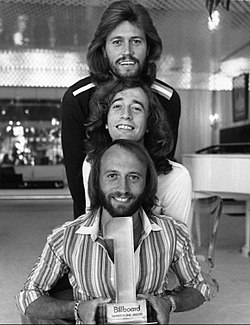
There were moments when Maurice stepped closer to the front. During the temporary 1969 split involving Robin, Barry and Maurice continued as a two-man version of the Bee Gees, recording Cucumber Castle. Songs like “I.O.I.O.” gave Maurice a more noticeable vocal presence, reminding attentive listeners that he had more to offer than harmony alone. He also explored solo work, including the single “Railroad” and the unreleased project The Loner. Though that solo album never officially emerged, its existence points to a more private artistic ambition — the desire of a gifted musician to be heard in his own right.
Yet Maurice’s destiny remained tied to his brothers. When the Bee Gees reunited, his contribution became vital again as the group entered new chapters of success. Their sound evolved from early pop ballads to orchestral drama, then into the global phenomenon associated with the late 1970s. Through each transformation, Maurice remained a musical craftsman inside the machinery, adapting, arranging, playing, and harmonizing with remarkable discipline.
His life, however, was not without struggle. Maurice faced personal difficulties, including the breakdown of his marriage to Lulu and later battles with alcoholism. These challenges did not define him, but they reveal the human cost that often hides behind famous songs. The pressures of success, family expectation, grief, and public life can weigh heavily, even on those who appear cheerful. Maurice’s recovery, supported by his second wife Yvonne Spencerley, became an important part of his later story. It allowed him to return to music with renewed steadiness and to remain a crucial part of the Bee Gees’ continued work.
The death of his younger brother Andy Gibb in 1988, followed by the death of his father the same year, brought further sorrow. Yet Maurice continued forward, helping the Bee Gees record and perform through later decades, including the 1989 album One, which marked an important comeback moment for the group in America. His endurance was not dramatic in a public way. It was quieter than that — the endurance of a man who kept showing up for the music.
When Maurice Gibb died on January 12, 2003, at only 53, the loss was devastating because it removed more than a voice from the Bee Gees. It removed a stabilizing force. It removed the brother whose humor, musicianship, and harmony had helped hold the group together from childhood stages to international arenas. After his passing, the Bee Gees were never the same, and perhaps they could not be. Some musical chemistry exists only when certain people are in the room.
Today, remembering Maurice Gibb means looking beyond the obvious spotlight. It means honoring the man behind the blend, the musician behind the melody, the brother behind the harmony. His legacy lives not only in the songs where listeners hear him clearly, but also in the countless moments where they may not realize they are hearing him at all.
That may be the most powerful tribute of all. Maurice Gibb did not need to dominate the stage to become unforgettable. He helped build a sound so enduring that millions still recognize it within seconds. And every time those harmonies rise again, his presence returns — steady, warm, essential, and forever part of the music.