Introduction
Neil Young Never Wanted to Be Comfortable — And That’s Exactly Why He Became a Legend
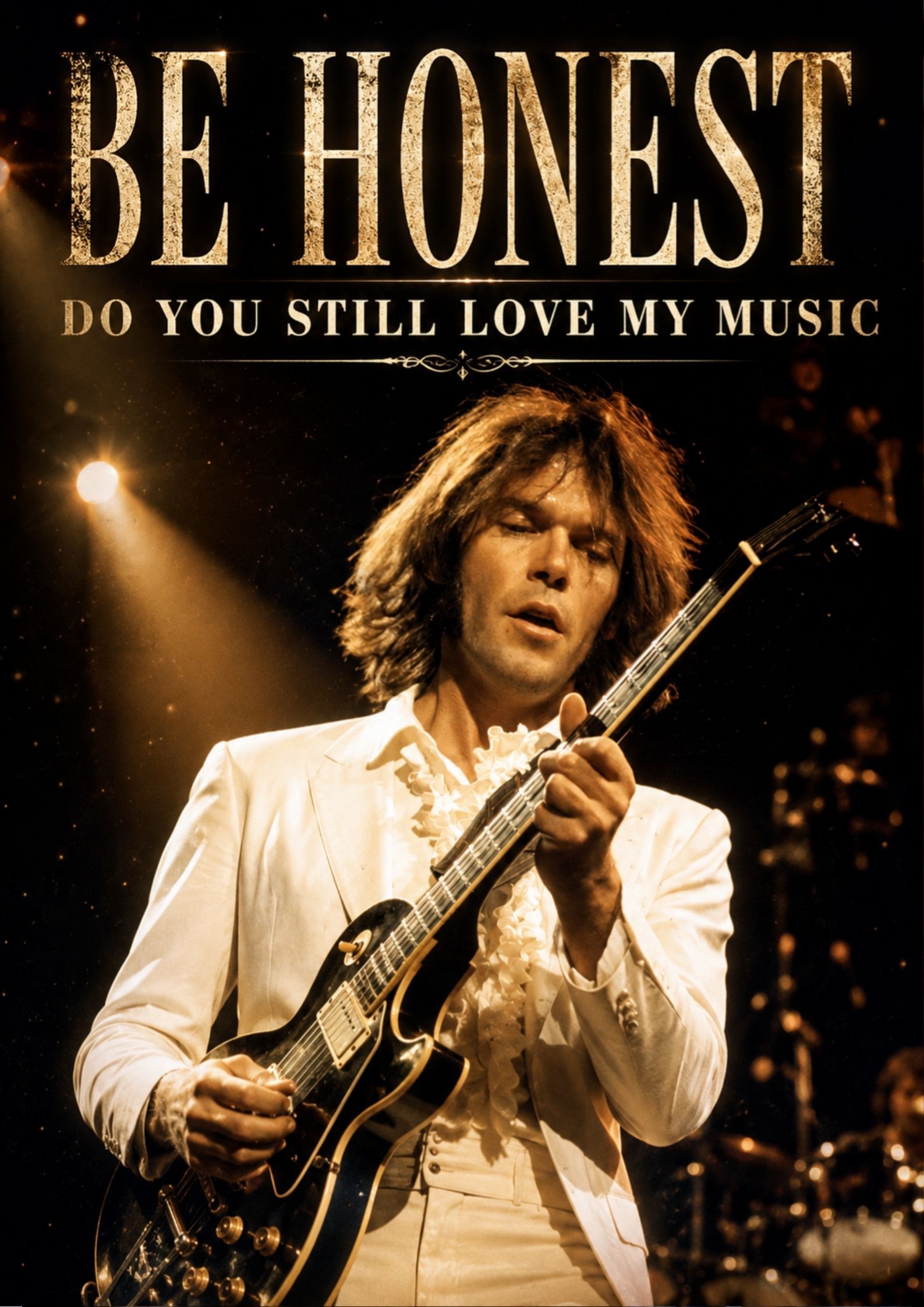
There are artists who follow trends, and then there are artists who spend an entire lifetime running from them. Neil Young belongs firmly to the second category. Across more than fifty years of music, controversy, reinvention, and emotional honesty, he has remained one of the most unpredictable and deeply respected figures in rock history. While many musicians spend careers protecting their legacy, Young has often seemed willing to risk everything — commercial success, critical approval, even fan expectations — simply to remain truthful to himself.
That fearless spirit is what has made Neil Young not merely a songwriter, but a symbol of artistic independence.
Born in Toronto, Canada, in 1945, Young emerged during one of the most transformative periods in modern music. Yet even in the crowded landscape of the late 1960s and early 1970s — an era overflowing with revolutionary voices — there was something unmistakably different about him. His high, fragile tenor carried both vulnerability and defiance. His guitar work could sound gentle and wounded one moment, then erupt into raw chaos the next. He wrote songs that felt personal yet universal, poetic yet brutally direct.
From the very beginning, Young resisted easy categorization.
When he arrived in Los Angeles in the mid-1960s and joined Buffalo Springfield alongside Stephen Stills, Richie Furay, Bruce Palmer, and Dewey Martin, he immediately stood out as a restless creative force. Songs like “Mr. Soul,” “Broken Arrow,” and “Expecting to Fly” hinted at the emotional depth and introspective storytelling that would later define his solo career. Yet even then, Young seemed uncomfortable staying in one musical place for too long.
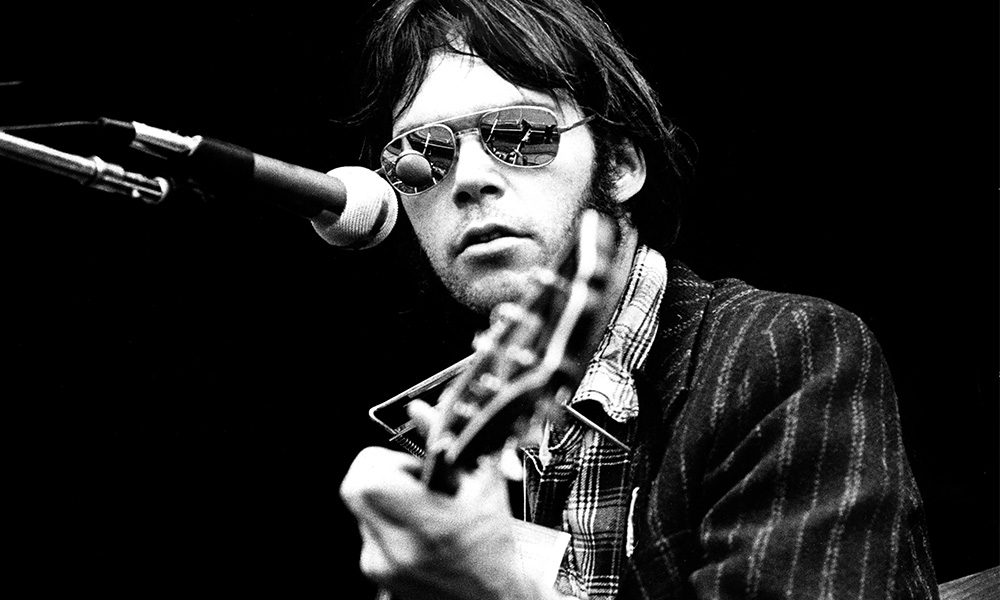
That refusal to stand still became the defining feature of his career.
Albums such as After the Gold Rush, Harvest, On the Beach, and Tonight’s the Night are now considered masterpieces, but what makes them extraordinary is how emotionally exposed they feel. Neil Young’s music has never chased perfection. Instead, it often embraces fragility, uncertainty, and even discomfort. His songs sound lived-in, scarred by experience, and deeply human.
Take “Heart of Gold,” perhaps his most famous song. On the surface, it feels warm and accessible, almost comforting. Yet beneath its simplicity lies longing, loneliness, and the restless search for meaning that runs through much of Young’s work. That emotional tension became part of his genius. He could write songs that sounded familiar while quietly unsettling listeners at the same time.
For older listeners especially, Neil Young’s music carries unusual emotional weight because it ages alongside them. His work does not freeze youth in nostalgia. It acknowledges disappointment, exhaustion, regret, political anger, and the passage of time itself. That honesty has allowed his songs to remain relevant across generations.
Young’s career has also been marked by remarkable unpredictability. After achieving massive commercial success with Harvest in 1972, many expected him to continue delivering polished folk-rock albums designed for radio dominance. Instead, he turned sharply toward darker, more emotionally difficult records like Tonight’s the Night and On the Beach — albums filled with grief, bitterness, and spiritual disillusionment following the deaths of people close to him.
At the time, some critics were confused.
Today, those records are considered among his greatest achievements.
That pattern repeated throughout his life. Whenever audiences thought they understood Neil Young, he changed direction completely. He explored country music, garage rock, electronic experimentation, grunge-inspired distortion, protest songs, orchestral folk, and stripped-down acoustic confessionals. Some albums became classics immediately. Others confused listeners before eventually earning admiration years later.
But that unpredictability is precisely why fans remain so devoted.
Young has never treated music like a product. He treats it like a living conversation between artist and audience — sometimes messy, sometimes confrontational, but always sincere. Even his imperfections feel authentic. In a modern entertainment culture built increasingly on branding and careful image control, Neil Young remains refreshingly unfiltered.
His influence on younger artists cannot be overstated. Long before alternative rock became mainstream, Young’s work with Crazy Horse laid the emotional and sonic foundation for grunge music. That is why many later called him the “Godfather of Grunge.” Bands like Pearl Jam openly admired him, not only for his sound but for his refusal to compromise artistically. His collaboration with them on Mirror Ball symbolized a bridge between generations of musicians searching for emotional truth inside loud guitars and restless songs.
Yet perhaps the most remarkable thing about Neil Young is that even after decades of success, he still sounds restless. He still sounds like someone searching.
Whether singing about environmental destruction, war, heartbreak, aging, or memory, Young continues to approach music with urgency rather than comfort. That urgency has kept him creatively alive long after many of his contemporaries became trapped by nostalgia.
For longtime fans, that may be the deepest reason his work endures.
Neil Young never tried to become timeless. He simply refused to become artificial.
And in the end, that honesty became timeless all by itself.
His songs are not perfect monuments frozen in history. They are living documents of a complicated human being trying to make sense of the world through melody, distortion, poetry, and emotion. That is why listeners continue returning to albums like Harvest, Rust Never Sleeps, and After the Gold Rush decades later. Not because they belong to the past, but because they still feel startlingly alive.
In a world increasingly obsessed with polished images and safe artistic choices, Neil Young remains something far rarer: an artist willing to risk failure in order to tell the truth.
And perhaps that is why his music still matters so profoundly.
Not because he always gave people what they wanted.
But because he always gave them something real.