Introduction
Elvis Presley’s Final Night on Stage — The Haunting Truth Behind the Last Show That Left Fans Forever Changed
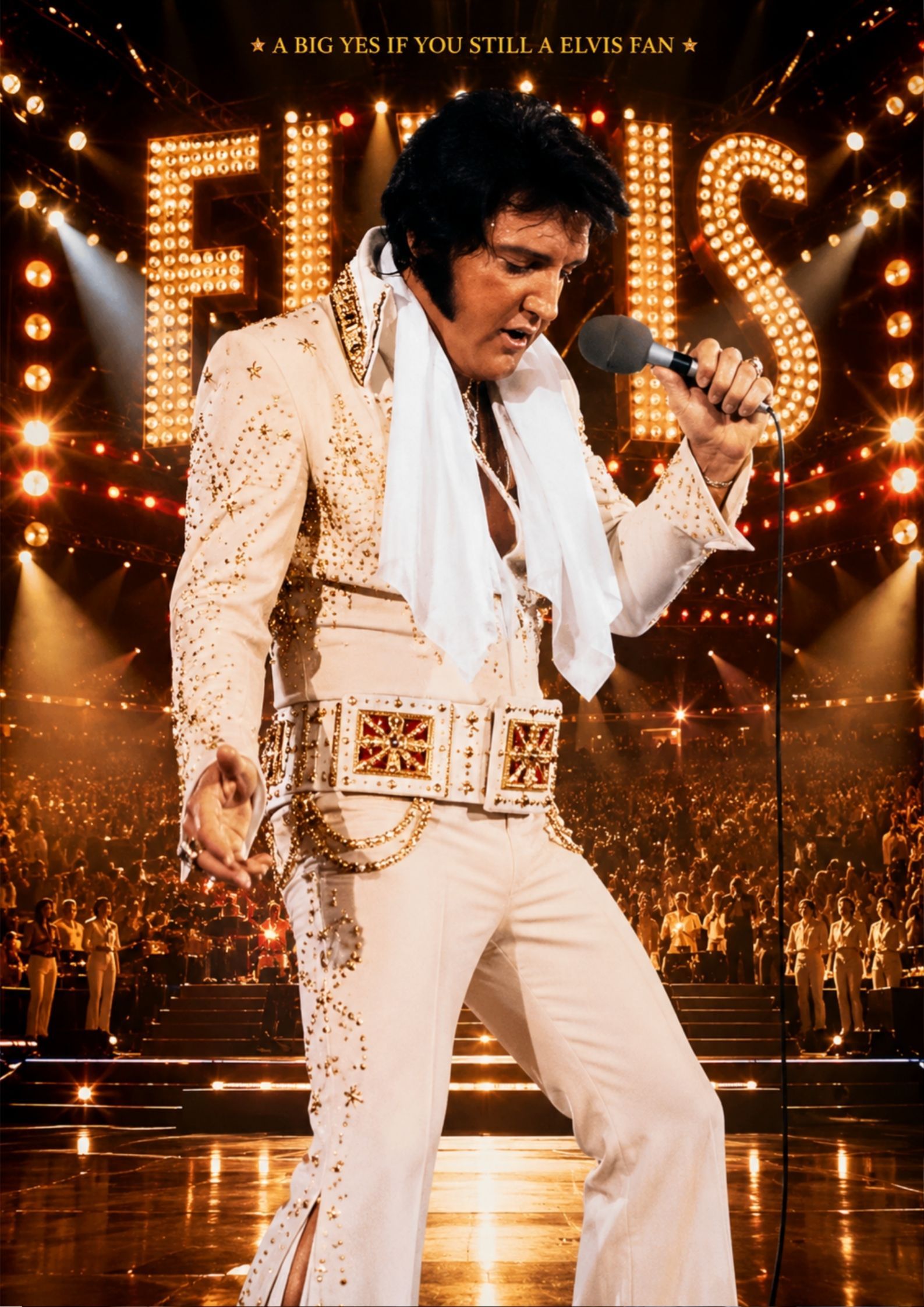
There are concerts that become memories, and then there are concerts that become legends. On June 26, 1977, nearly 18,000 fans gathered inside Market Square Arena in Indianapolis to watch Elvis Presley perform what they believed would be another unforgettable night with the man they still called the King. They cheered, laughed, sang along, and waited anxiously for him to walk onto the stage. What nobody in that arena understood was that they were witnessing the final live performance of one of the most influential entertainers in modern history.
Today, decades later, Elvis’ last show continues to fascinate music historians, longtime fans, and younger audiences discovering his story for the first time. Not simply because it was the end, but because the performance itself seemed suspended between glory and heartbreak. The evening carried all the familiar elements of an Elvis concert — the roaring crowd, the jumpsuit, the classic songs, the emotional farewell — yet behind the spectacle was a man visibly carrying the weight of exhaustion, pressure, loneliness, and a body that had begun to fail him.
For older generations who lived through the Elvis phenomenon in real time, the story of that final night is especially emotional because it reflects something painfully human: the difficulty of watching an icon grow older while the world still demands the image of eternal youth. Elvis Presley had become more than a performer by 1977. He had become a symbol frozen in public memory — the handsome young rebel from the 1950s, the electrifying movie star, the voice that changed American culture forever. But time does not stop, even for legends.

By the summer of 1977, Elvis was physically and emotionally struggling. Reports from the tour described uneven performances, health concerns, and visible fatigue. Yet despite everything, he continued performing. Many close to him later questioned whether he should have kept touring at all. But the machine surrounding Elvis never truly stopped moving. Too many schedules, expectations, financial interests, and emotional dependencies revolved around the continuation of the King’s public life.
That final show in Indianapolis began like many others. Comedian Jackie Kahane warmed up the audience, though even he reportedly never knew exactly when Elvis would be ready to take the stage. Warm-up acts stretched on while anticipation inside the arena grew almost unbearable. Then, at around 10:00 p.m., Elvis Presley finally appeared wearing the now-famous white and gold jumpsuit, stepping into thunderous applause.
According to those who were there, the crowd erupted the moment he launched into “C.C. Rider.” Though his energy was different from earlier years, flashes of the old Elvis still appeared. He delivered signature leg movements, moments of charm, and bursts of vocal strength that reminded audiences why he remained magnetic even during difficult times. Fans who attended often describe the atmosphere not as depressing, but strangely emotional — as though everyone sensed something fragile unfolding in front of them, even if they could not yet explain it.
Over the course of the evening, Elvis performed classics that traced multiple eras of his career. Songs like “Jailhouse Rock,” “It’s Now or Never,” “Can’t Help Falling in Love,” and his powerful rendition of “Bridge Over Troubled Water” created a setlist that felt almost like a retrospective of a life in music. He also honored songs by artists he admired, including Ray Charles and Chuck Berry, proving that even at the end, Elvis remained deeply connected to the musical traditions that shaped him.
Yet much of the lasting fascination surrounding The Untold Truth Of Elvis’ Last Show comes from the emotional details visible in hindsight. Audience members later recalled Elvis sitting down frequently, appearing tired, struggling at times with lyrics, and moving more cautiously than in his younger years. Critics were divided. Some reviews called the performance outdated or uneven. Others defended him passionately, insisting that despite his physical decline, Elvis still possessed a unique emotional power impossible to imitate.
Perhaps the most haunting moment came at the very end.
After singing “Can’t Help Falling in Love,” Elvis reportedly told the audience, “We’ll meet you again. God bless. Adios.” At the time, it sounded like a normal farewell from a performer ending a show. But after his death on August 16, 1977, those words took on an almost eerie significance. Fans began replaying the moment in their minds, wondering whether Elvis himself somehow sensed how little time remained.
The tragedy surrounding his final months has often overshadowed the humanity of the man himself. Discussions about his appearance, health, and exhaustion sometimes forget that Elvis was living under extraordinary pressure while also confronting aging in public view. His former wife Priscilla Presley later admitted that watching some of those late performances was painful because she could see how tired he had become. Others close to him expressed similar concerns.
Still, what remains remarkable is that even in decline, Elvis could still move an audience unlike anyone else. That is the contradiction at the center of his final performance. The flaws were visible, but so was the magic. The vulnerability only made the connection more emotional. Fans were not simply watching a superstar perform songs. They were watching a man trying to carry the weight of a legacy larger than himself.
Today, the site of Elvis Presley’s final concert remains an important part of music history. Though Market Square Arena was demolished in 2001, a memorial plaque now stands in its place, honoring the night the King gave his last performance. A time capsule containing fan letters, photos, and a recording from that evening waits to be opened in 2102 — a reminder that the fascination with Elvis Presley did not end when he left the stage.
And perhaps that is the real truth behind Elvis’ last show. It was not perfect. It was not triumphant in the way legends are often remembered. It was something far more human: a tired but still beloved artist standing before thousands of people one final time, singing through exhaustion, memory, expectation, and fading strength — while the world unknowingly watched the end of an era.