Introduction
Andy Gibb’s Final Chapter: The Dazzling Rise, Private Struggles, and Heartbreaking Loss of the Bee Gees’ Youngest Brother Whose Voice Still Haunts Pop Music History
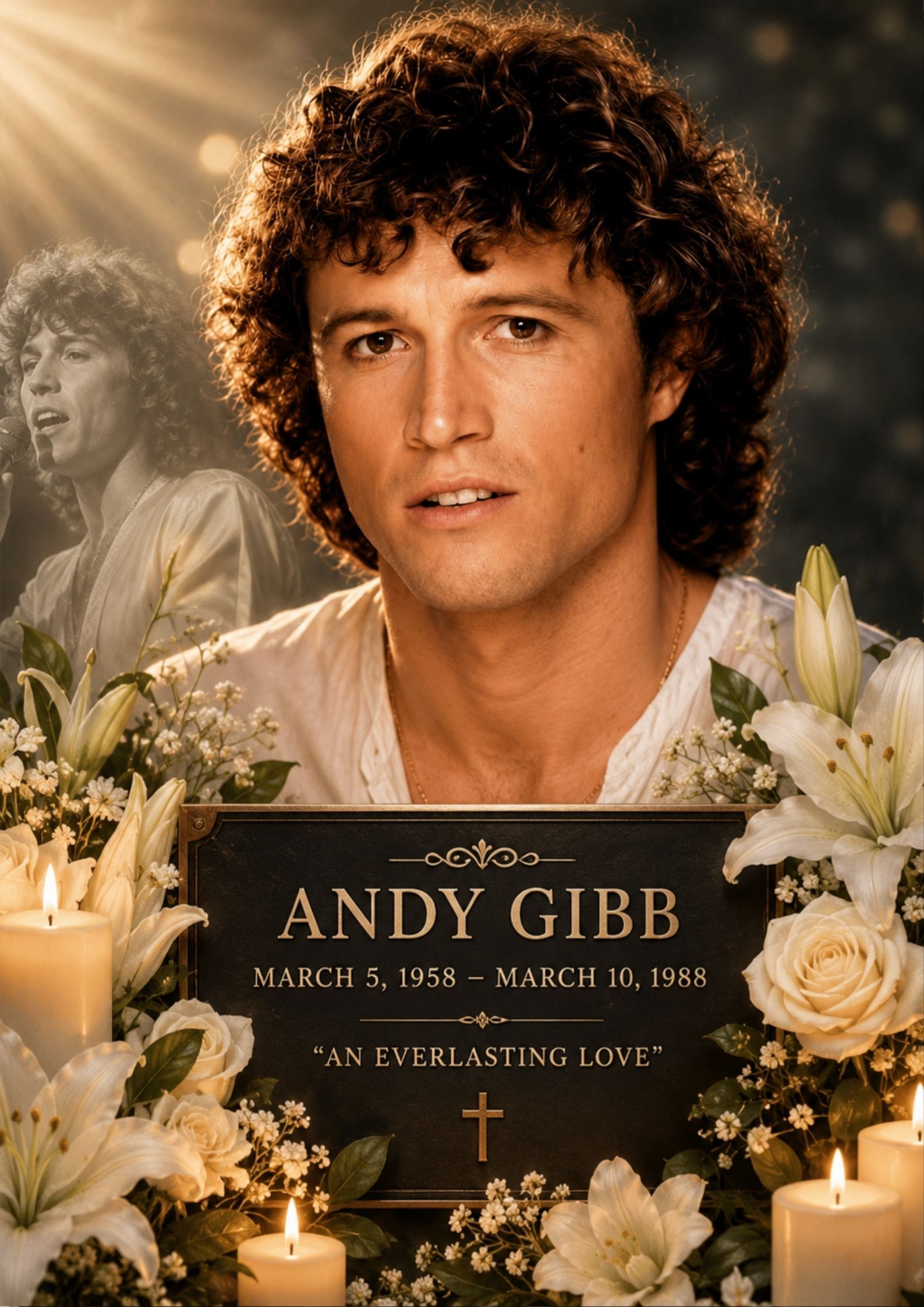
Some stories in music history feel almost too bright to last, and the story of Andy Gibb is one of them. He arrived with the kind of natural charm that could light up a television screen before he sang a single note, yet behind that easy smile was a young artist carrying the heavy burden of a famous name, enormous expectations, and a level of attention few people could endure at such a tender age. As the youngest brother of Barry, Robin, and Maurice Gibb, the legendary voices behind the Bee Gees, Andy entered the world of popular music already surrounded by comparison. But he was never merely an extension of his brothers’ fame. He had a voice, style, and presence of his own, and for a brief, brilliant period, he seemed ready to become one of the defining solo stars of his generation.
Born Andrew Roy Gibb on March 5, 1958, in Manchester, England, Andy Gibb grew up in a family where music was not just a profession, but almost a language of daily life. By the time he reached young adulthood, his older brothers had already changed the sound of popular music, building the Bee Gees into an international force. For many young performers, such a legacy might have been impossible to escape. Yet Andy stepped forward with remarkable confidence. He did not simply borrow the family name; he proved that he had the talent to stand beneath the spotlight on his own terms.
His rise was breathtaking. At only 19 years old, Andy Gibb achieved what many artists can only dream of: his first three singles — “I Just Want to Be Your Everything,” “(Love Is) Thicker Than Water,” and “Shadow Dancing” — all reached No. 1 on the Billboard Hot 100. That achievement immediately placed him in rare company and made him one of the most celebrated young stars of the late 1970s. To fans, he seemed to possess everything: youth, good looks, a tender voice, polished songs, and the unmistakable emotional warmth associated with the Gibb family sound.
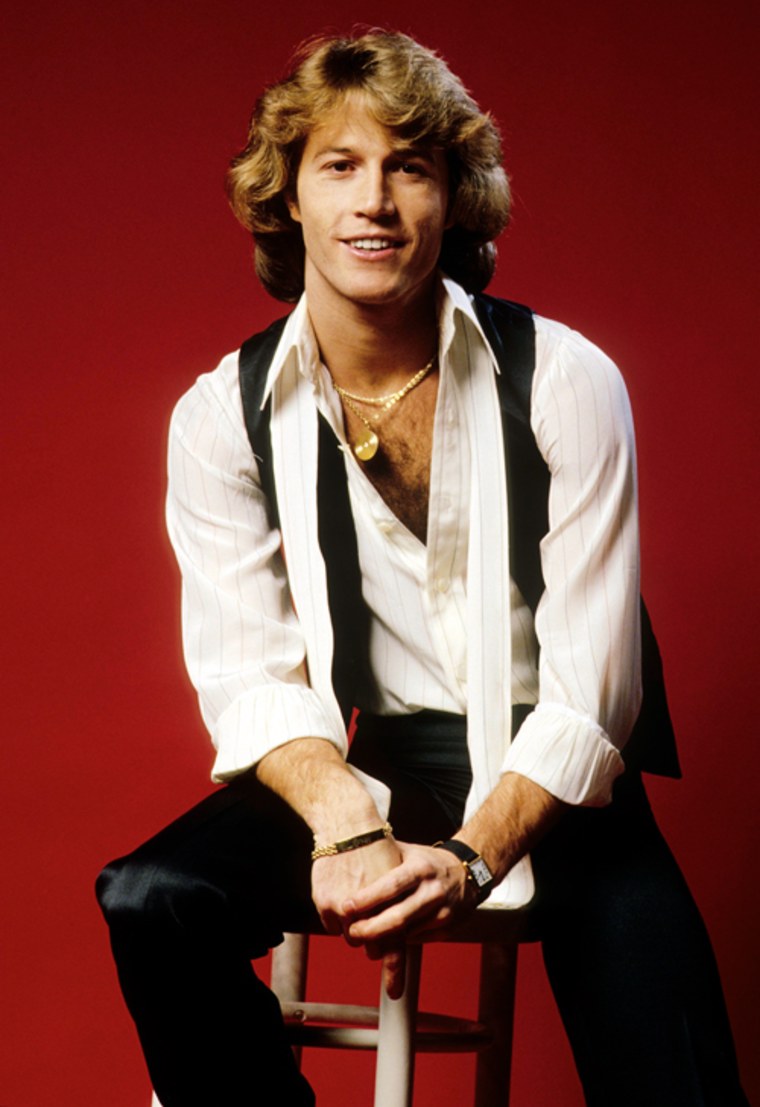
But the public often sees only the applause, not the pressure behind it. The same fame that made Andy Gibb a household name also placed him under relentless scrutiny. Every performance, every record, and every public appearance came with expectations. He was admired as a solo star, yet constantly measured against the towering success of the Bee Gees. That comparison would have challenged any young artist, especially one still trying to understand himself away from the noise of celebrity.
As the years passed, the story became more complicated. Behind the success, Andy Gibb faced personal struggles that gradually began to affect his career and well-being. The demands of touring, television appearances, recording schedules, and public attention became difficult to manage. Opportunities that once seemed limitless began to slip away. The young man who had once appeared unstoppable found himself fighting battles that fans could not fully see from the outside.
Yet it would be unfair to remember Andy Gibb only through the sadness of his final years. He made real attempts to rebuild his life and career. Those close to him continued to believe in his talent, his heart, and his ability to return to music with renewed purpose. By early 1988, there were signs of hope. He was still young, still gifted, and still capable of creating something meaningful. Many believed a new chapter was possible.
:max_bytes(150000):strip_icc():focal(539x0:541x2)/andy-gibb92-4ea9928a1a7349e3a5b6d01ab64f1071.jpg)
Tragically, that chapter never fully arrived. On March 10, 1988, only five days after his 30th birthday, Andy Gibb passed away. His death shocked fans around the world and left a wound in the Gibb family that would never completely heal. The loss was not simply the end of a career; it was the loss of a son, a brother, and a performer whose greatest possibilities may still have been ahead of him.
Today, when listeners return to “Shadow Dancing” or “I Just Want to Be Your Everything,” they hear more than polished pop hits from another era. They hear the promise of a young artist who briefly stood at the center of the world and gave it songs filled with warmth, melody, and feeling. Andy Gibb’s legacy remains powerful because it contains both brilliance and warning. His life reminds us that fame can elevate a person quickly, but it cannot always protect the heart behind the voice.
More than three decades after his passing, Andy Gibb still matters. His career was short, but his impact was lasting. He left behind songs that continue to move listeners, memories that still touch longtime fans, and a story that reminds us to look beyond the surface of celebrity. He was the youngest brother of the Bee Gees, yes, but he was also an artist in his own right — gifted, vulnerable, unforgettable, and gone far too soon.