Introduction
When Barry Gibb and Dolly Parton Sang “Words,” Two Musical Legends Turned a Classic Into a Farewell Across Generations
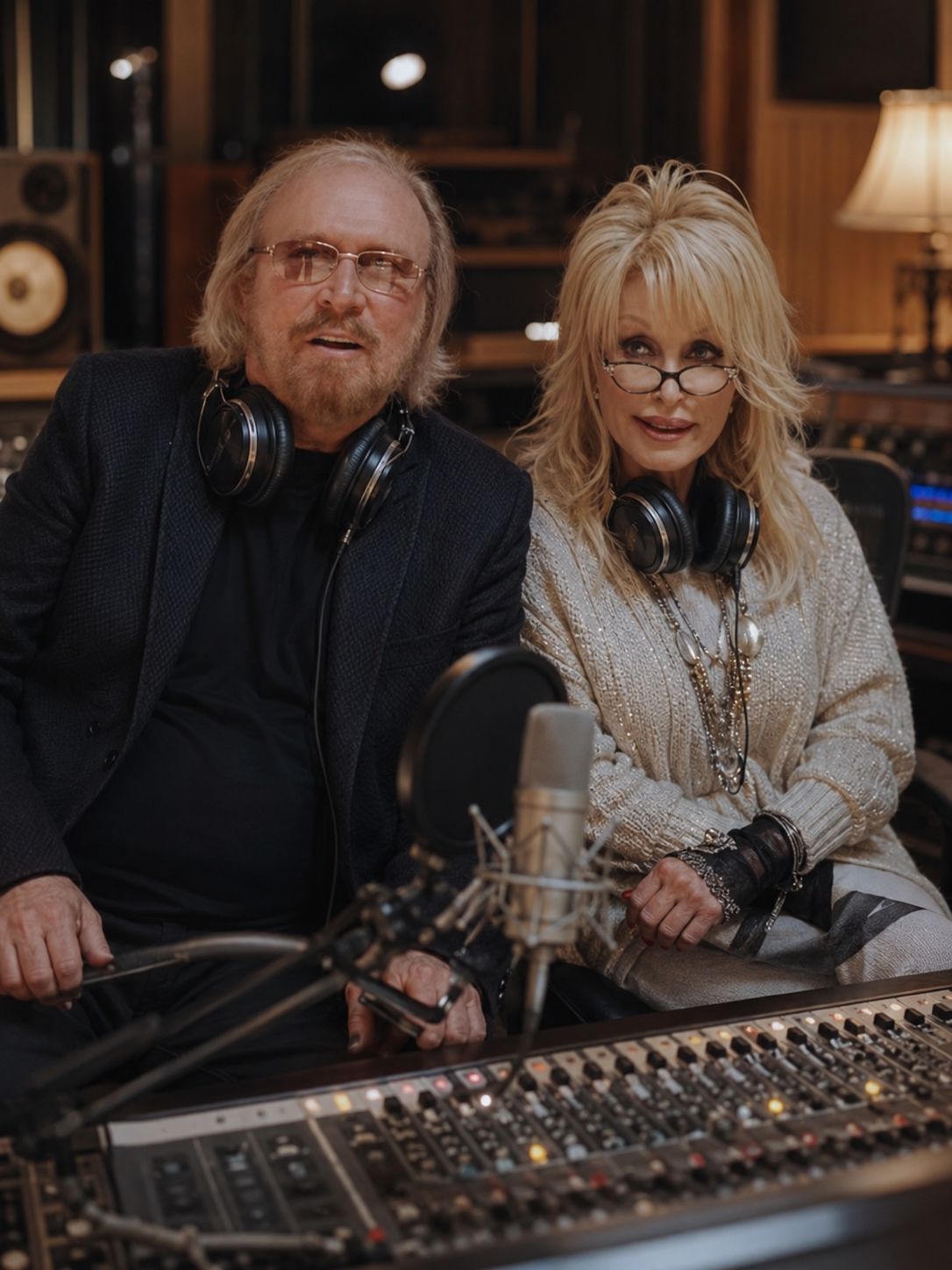
When Barry Gibb and Dolly Parton Sang “Words,” Two Musical Legends Turned a Classic Into a Farewell Across Generations
Some songs belong to a particular moment in history, while others seem to grow older alongside the people who first loved them. “Words” belongs firmly to the second category. First introduced during the Bee Gees’ remarkable rise in the late 1960s, the song has survived changing fashions because its emotional argument remains timeless: language can comfort, wound, reconcile, and preserve feelings that might otherwise disappear. More than five decades later, Barry Gibb returned to this treasured composition with Dolly Parton, creating a performance that feels less like a conventional remake and more like a conversation between two extraordinary musical lives.
Their version appeared on Greenfields: The Gibb Brothers’ Songbook, Vol. 1, Barry Gibb’s 12-track collection of newly interpreted songs from the Gibb family catalog. Released by Capitol Records on January 8, 2021, the album brought Barry together with respected performers including Alison Krauss, Keith Urban, Brandi Carlile, Sheryl Crow, Miranda Lambert, Olivia Newton-John, and Little Big Town. Produced by Dave Cobb, the project placed familiar Gibb compositions within warmer country, folk, and Americana arrangements.
Among those distinguished collaborations, “Words” featuring Dolly Parton carries a special emotional weight. The song was written by Barry, Robin, and Maurice Gibb, and the new arrangement surrounds the singers with acoustic guitar, piano, pedal steel, Hammond organ, and strings. These instruments do not overwhelm the melody. Instead, they create a patient and spacious setting in which every phrase can be heard clearly.
The result is striking because Barry and Dolly do not attempt to sound as they did in their youth. They allow experience to remain present in their voices. Every note carries the passing of time, the memory of people lost, and the quiet authority of artists who no longer need to prove their importance. Their performance is not built around vocal competition. It is built around listening, restraint, and mutual respect.
Barry begins with a gentleness that immediately changes the atmosphere of the song. His delivery is softer and more reflective than the youthful recording remembered by generations of Bee Gees admirers. The famous melody remains unmistakable, but its meaning has deepened. In his later voice, the plea contained within the lyrics no longer sounds like a young man attempting to rescue a fragile relationship. It sounds like someone who has lived long enough to understand how easily words can be left unspoken until the opportunity to say them has passed.
That interpretation is inseparable from the history of the Gibb brothers. Barry once created music beside Robin and Maurice, combining three distinct voices into one of popular music’s most recognizable harmonies. By the time of the Greenfields project, Barry was carrying that musical history forward without his brothers physically beside him. He described the album as a tribute to Robin and Maurice and expressed his belief that they would have loved the project.
For longtime listeners, that knowledge changes the emotional landscape of “Words.” The song may speak broadly about communication and devotion, but Barry’s performance inevitably suggests remembrance. When he sings about the power of words, the listener may hear the accumulated history of three brothers who wrote, argued, reconciled, toured, and created music together across several decades. The silences between the lines seem almost as meaningful as the words themselves.
Then Dolly Parton enters, bringing a different form of emotional truth. Her voice has always possessed an unusual combination of brightness and sorrow. She can make a simple phrase feel conversational while still revealing the deeper feeling beneath it. On this recording, she does not treat “Words” as a visiting country singer’s interpretation of a Bee Gees standard. She enters the song as though it has always belonged within her own musical world.
That sense of familiarity is understandable. Dolly Parton and the Gibb songwriting tradition have crossed paths before. Barry, Robin, and Maurice wrote “Islands in the Stream,” which became one of the defining recordings associated with Dolly and Kenny Rogers. The success of that song demonstrated how naturally the Gibbs’ gift for melody could meet the storytelling warmth of country music. With “Words,” however, the connection feels more intimate and less concerned with creating a grand commercial event.
The Greenfields studio performance reinforces that intimacy. The official session video, released through Barry Gibb’s artist channel in January 2021, presents the collaboration as a meeting of musicians rather than an elaborate spectacle. The attention remains on the song, the voices, and the visible pleasure of two veteran performers sharing material they clearly respect.
Their vocal differences become the source of the recording’s beauty. Barry’s tone carries the unmistakable elegance of the Bee Gees tradition, while Dolly’s delivery introduces a country directness that makes each line feel personal. When their voices join, neither disappears behind the other. They sound like two people bringing separate histories to the same truth.
This is precisely what gives the performance its appeal to older and more attentive listeners. It does not depend upon volume, speed, or fashionable production. It asks the audience to slow down and notice small details: the careful breath before a phrase, the slight roughness that comes with age, the gentle rise of the strings, and the way one singer leaves room for the other. The recording honors maturity rather than attempting to conceal it.
There is also something quietly courageous about returning to a song as famous as “Words.” Familiar compositions carry enormous expectations. Listeners remember where they first heard them and may resist any interpretation that changes the emotional balance. Barry Gibb could easily have recreated the established arrangement and relied upon nostalgia alone. Instead, he allowed the song to enter another musical landscape.
Producer Dave Cobb’s approach supports that decision. Known for recordings that emphasize character and human presence, he gives the performance room to breathe. The country instrumentation does not transform “Words” into something unrecognizable. It reveals qualities that were already present: simplicity, vulnerability, melodic grace, and a belief that an honest sentence can change the course of a relationship.

The title Greenfields is appropriate because the project places the Gibb catalog in open musical territory. The polished surfaces associated with some periods of the Bee Gees’ career give way to wood, strings, breath, and natural resonance. These songs are not treated as museum pieces. They are allowed to live again through new voices and new arrangements.