Introduction
The Brother Barry Gibb Could Never Forget: What Andy Gibb’s Final Years Still Reveal About Fame, Family, and Loss
For generations of listeners, the name Gibb evokes something almost larger than popular music itself. It brings back the unmistakable harmonies of the Bee Gees, the remarkable songwriting partnership of Barry, Robin, and Maurice Gibb, and a family whose voices seemed destined to remain together forever. Yet behind that extraordinary musical legacy lies another story—one that has never lost its emotional weight. It is the story of Andy Gibb, the youngest brother, whose spectacular rise to fame was followed by years of personal difficulty and whose death at only 30 left a wound that his family carried for decades.
Sensational headlines sometimes claim that Barry Gibb has “finally confirmed” mysterious rumors about Andy Gibb’s final days, suggesting that some long-hidden revelation has suddenly emerged. The reality is more restrained and, in many ways, more moving. There is no need to invent a dramatic secret to understand why Andy’s story continues to haunt admirers of the Gibb family. What Barry and other members of the family have shared over the years already paints a deeply affecting picture of a gifted young man who achieved extraordinary success before he had fully learned how to live with its pressures.
Andy Gibb did not simply become famous because he shared a surname with three celebrated brothers. He possessed a recognizable voice, natural charisma, and the ability to command attention in his own right. During the late 1970s, songs such as “I Just Want to Be Your Everything,” “Shadow Dancing,” and “(Love Is) Thicker Than Water” transformed him into an international star. For a brief period, his career seemed almost unstoppable. His records dominated the charts, his face appeared across magazines and television programs, and audiences around the world embraced him as one of the era’s brightest young performers.
But extraordinary success can create extraordinary pressure, particularly when it arrives quickly. Andy was still very young when fame became his everyday reality. His brothers had already endured years of struggle, reinvention, criticism, and professional uncertainty before reaching their greatest commercial heights. Andy entered the spotlight under very different circumstances. He was not only expected to succeed; he was inevitably compared with the Bee Gees, one of the most successful musical groups in the world.

That comparison could never have been easy. Barry, Robin, and Maurice had spent years developing their musical identity together. Andy was the younger brother trying to establish an identity of his own while carrying one of the most recognizable family names in entertainment. His achievements were genuine, but so were the expectations surrounding him. Behind the glamorous photographs and chart-topping records was a young artist attempting to manage enormous public attention while facing serious personal difficulties.
As the years passed, Andy experienced well-documented struggles with substance dependence and declining health, problems that increasingly disrupted his career. Opportunities disappeared. Professional relationships became more difficult. The young performer who had once appeared to possess limitless possibilities found himself attempting to rebuild both his life and his place in music. These difficulties should not erase his achievements, nor should they reduce his story to a cautionary headline. They reveal something more complicated: the vulnerability of a young man whose public success could not protect him from private struggles.
For Barry Gibb, Andy was never merely another performer whose career had gone wrong. He was his little brother. That distinction matters when looking back on the way Barry has spoken about him. Beneath the fame of the Gibb family existed the ordinary emotional bonds of brothers who had grown up together, argued together, encouraged one another, and shared memories stretching back long before anyone knew their names. The loss of Andy therefore belonged to a part of Barry’s life that awards, record sales, and professional accomplishments could never replace.
Andy died on March 10, 1988, only days after celebrating his 30th birthday. His death came at an age when most musicians are only beginning to understand the direction of their mature careers. That fact alone gives his story its enduring sadness. There would be no great middle-aged comeback, no later album created with the wisdom of experience, and no opportunity to look back with humor at the mistakes of youth. The possibility of what Andy might eventually have become remains permanently unanswered.
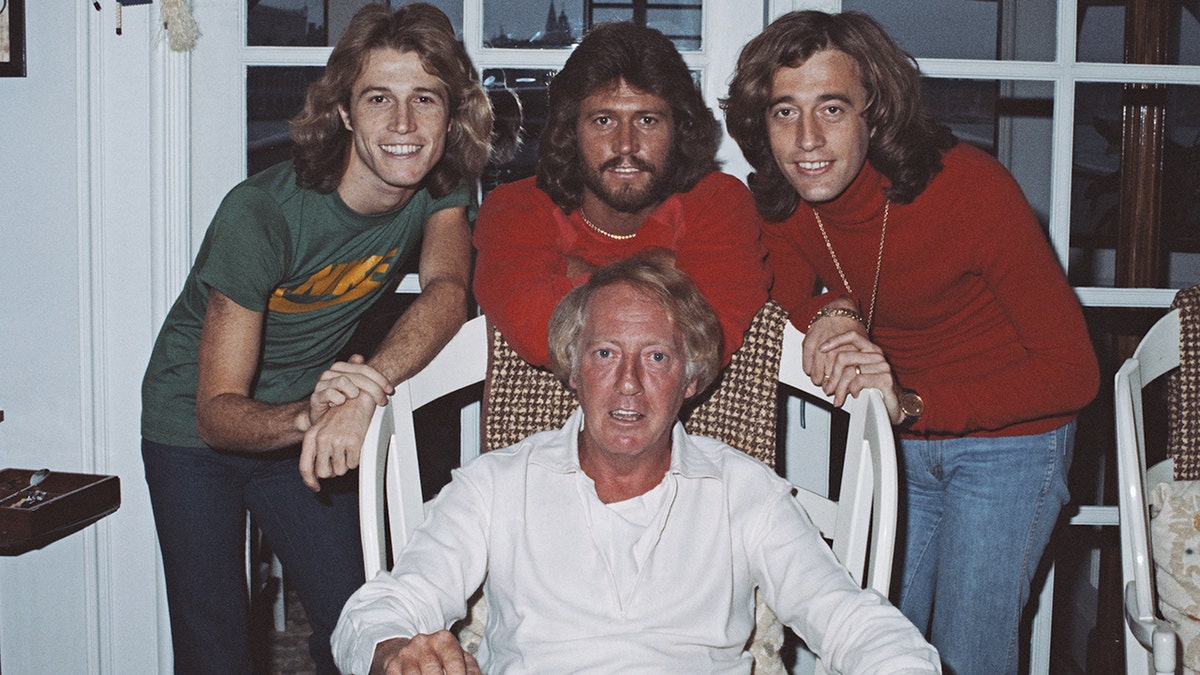
This is also why discussions about Andy’s final period should be treated with care. The temptation to transform tragedy into mystery is powerful, particularly in the modern age of sensational headlines. Yet the known story is already heartbreaking enough. A remarkably talented young singer reached astonishing heights, struggled with serious personal and health difficulties, attempted to regain stability, and died before he had the chance to begin another chapter.
Barry’s later reflections on family loss have become even more poignant because Andy was not the only brother he would eventually mourn. Maurice Gibb died in 2003, and Robin Gibb died in 2012, leaving Barry as the surviving member of the famous trio. Suddenly, photographs that once represented four brothers growing through different stages of life became reminders of people who could no longer stand beside him. For audiences, the Gibb brothers remain preserved in recordings. For Barry, those voices belonged to family.
That difference gives the story an emotional dimension that statistics cannot capture. The Bee Gees sold enormous numbers of records and created songs that became part of popular culture, but no commercial achievement could protect the brothers from the ordinary realities of illness, regret, separation, and grief. When Barry speaks about Andy, listeners are not simply hearing a legendary musician discussing another celebrity. They are hearing an older brother remembering the youngest member of the family.
Perhaps the most powerful lesson in Andy Gibb’s story is that public triumph and private happiness are not the same thing. From the outside, Andy appeared to have everything a young entertainer could desire: fame, hit records, international recognition, and membership in one of music’s most celebrated families. Yet success did not make him invulnerable. The contrast between his brilliant career peak and his later difficulties remains one of the most sobering chapters in the Gibb family history.
And still, Andy should not be remembered only for the way his life ended. Put on “Shadow Dancing” or “I Just Want to Be Your Everything” today, and the tragedy momentarily disappears. What remains is a young singer full of confidence, melody, and possibility. That is perhaps the fairest way to remember him—not simply through the darkness of his final years, but through the music that made millions of listeners believe his future had no limits.
There may never be a dramatic revelation capable of explaining everything about Andy Gibb’s final days, because real lives rarely provide such neat conclusions. What remains instead is something more human: a gifted younger brother, a family that could not save him from every struggle, and Barry Gibb carrying memories that fame could never erase. More than three decades later, that may be the truth that matters most. Andy’s career ended far too soon, but within the story of the Gibb family—and within the songs listeners continue to play—his voice never completely disappeared.