Introduction
When Barry Gibb and Dolly Parton Sang “Words,” Two Legends Turned a Bee Gees Classic Into a Moving Conversation Across Generations
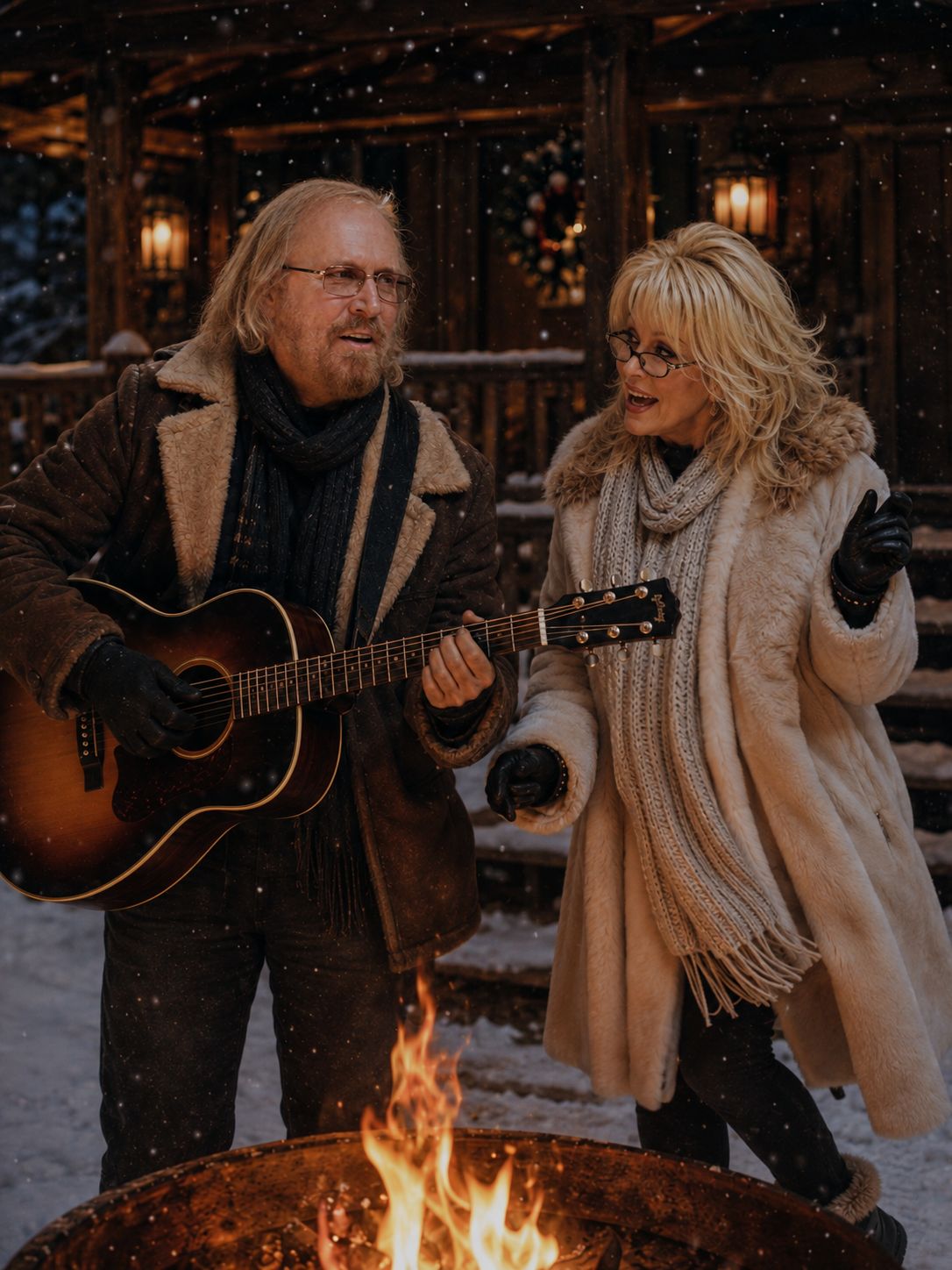
Some songs arrive with the excitement of their moment and gradually fade as tastes change. Others seem almost untouched by time, gathering new meaning as the years pass and the people who first heard them grow older. “Words,” written by Barry, Robin, and Maurice Gibb, belongs unmistakably to that second tradition. More than half a century after it became part of the Bee Gees’ enduring musical legacy, the song returned in a form few listeners could have anticipated: a thoughtful duet between Barry Gibb and Dolly Parton, two artists whose careers have traveled different roads yet share an extraordinary understanding of melody, storytelling, and emotional restraint. Their interpretation does not attempt to reproduce the past. Instead, it allows the past to stand quietly beside the present, turning a familiar song into something resembling a conversation between generations.
The original “Words” emerged during the Bee Gees’ remarkable rise in the late 1960s, when the Gibb brothers were establishing themselves as writers capable of creating melodies that could sound intimate while reaching enormous audiences. The song’s central idea remains strikingly simple: words possess consequences. They can restore confidence, preserve affection, soften distance, and sometimes communicate what ordinary conversation cannot. That theme has never depended upon a particular fashion, production style, or generation. Perhaps that is why the composition continues to resonate with listeners who first encountered it decades ago as well as those discovering the Bee Gees catalog today.
When Barry Gibb revisited “Words” with Dolly Parton, however, the song acquired another layer of meaning. Their recording appeared on Greenfields: The Gibb Brothers’ Songbook, Vol. 1, Barry’s collection of new interpretations of compositions associated with the extraordinary songwriting legacy of the Gibb family. Released on January 8, 2021, the project brought Barry into collaboration with an impressive group of country, folk, and Americana performers, including Alison Krauss, Keith Urban, Brandi Carlile, Sheryl Crow, Miranda Lambert, Olivia Newton-John, and Little Big Town. Rather than presenting these classics as museum pieces, the album gave them room to breathe within warmer arrangements shaped by acoustic instruments and country traditions.

Produced by Dave Cobb, the album succeeds largely because it understands that legendary songs rarely need excessive decoration. On “Words,” featuring Dolly Parton, acoustic guitar, piano, pedal steel, Hammond organ, and strings provide a graceful setting without competing with the singers. The arrangement feels spacious and unhurried, giving Barry and Dolly enough room to concentrate on phrasing, tone, and the meaning behind each line. There is a patience to the recording that becomes increasingly moving the longer one listens. Nothing feels rushed, and nothing appears designed merely to demonstrate vocal power.
That restraint is especially significant because Barry Gibb and Dolly Parton do not try to sound young again. They do something far more interesting: they allow their years of experience to become part of the performance. Barry’s voice carries the unmistakable character of someone who has lived with these words for decades. This is not simply another song from his catalog; it is part of a musical history created with his brothers, Robin and Maurice Gibb, whose absence inevitably gives later performances of Bee Gees material additional emotional weight. When Barry sings these compositions today, listeners are hearing not only a songwriter revisiting his work but also the surviving brother carrying forward a shared family legacy.
Dolly brings a different but complementary history to the recording. Her voice has always possessed an unusual ability to make carefully written lyrics sound conversational, as though they are being offered directly to one person rather than projected toward an audience. In “Words,” Dolly Parton avoids unnecessary theatricality. She listens, responds, and allows the melody to guide her. The result feels less like two famous entertainers sharing a microphone and more like two veteran storytellers recognizing something familiar in one another.
That quality may explain why the duet has such particular appeal for older listeners. For those who remember the Bee Gees from their earliest decades, hearing Barry Gibb singing “Words” more than fifty years later naturally creates a sense of reflection. A melody once connected with youth now arrives accompanied by memories of families, friendships, celebrations, losses, and years that seemed distant when the song was first released. The composition has not fundamentally changed, but the listener has. That transformation is one of music’s quietest miracles: the same song can mean something entirely different at twenty, forty, sixty, or eighty.
There is also something deeply respectful about the meeting of these two musical traditions. The Bee Gees and Dolly Parton may be associated with different corners of popular music, yet their careers share a foundation built on songwriting rather than passing fashion. Both understand that a memorable melody does not require complexity for its own sake, and both have spent decades demonstrating that a well-written song can cross genres, borders, and generations. Their version of “Words” therefore feels natural rather than calculated. Country instrumentation does not erase the Bee Gees identity of the composition; instead, it reveals another possibility already contained within the melody.
Most importantly, the performance never becomes a competition. There is no sense of two legends attempting to outsing one another. Barry Gibb and Dolly Parton understand that the song itself must remain at the center. Their maturity is heard in what they choose not to do: they do not crowd the arrangement, overstate the emotion, or chase dramatic moments simply for effect. They trust the composition, and they trust the listener.
For many longtime admirers, that may be the most powerful element of the recording. “Words” is no longer merely a song from the Bee Gees’ past. In this interpretation, it becomes a reminder of how great music survives. Songs endure not because they remain frozen in the era that created them, but because new voices, new experiences, and new generations continue to find something meaningful inside them.
When Barry Gibb and Dolly Parton sang “Words,” they did more than revisit a famous composition. They demonstrated how two remarkable musical lives could meet inside a melody written decades earlier and allow time itself to become part of the arrangement. What emerges is not really a farewell to the past. It is something gentler and perhaps more profound: an acknowledgment that voices change, years move forward, and loved ones may leave us, but the right words—and the right songs—can continue speaking long after the moment that created them has passed.