Introduction
Elvis Presley and Roy Orbison: Two Extraordinary Voices, Two Very Different Roads — How the King of Rock and the Man Behind the Dark Glasses Changed American Music Forever
Few comparisons in American popular music are as fascinating as the one between ELVIS PRESLEY and ROY ORBISON. They emerged from roughly the same musical landscape, recorded for the legendary Sun Records organization in the 1950s, absorbed the sounds of country, blues, gospel, and early rock and roll, and eventually became international icons. Yet when one listens carefully to their recordings, watches their surviving performances, and considers the careers they built, it becomes clear that these two men represented almost opposite ideas of what a great popular singer could be. Elvis Presley conquered audiences through movement, charisma, warmth, rhythm, and an extraordinary ability to inhabit almost any musical style, while Roy Orbison often seemed to conquer them by doing almost nothing at all. Orbison could stand virtually motionless behind his dark glasses, allow a song to rise around him, and then release a voice so dramatic that the entire atmosphere changed.
The most obvious difference between them was their public presence. Elvis Presley seemed born for the spotlight. From the moment his earliest records began attracting attention, he possessed the rare ability to make a large room feel alive before he had finished the first line of a song. His appearance, his unmistakable voice, his humor, and his instinctive understanding of rhythm created a connection with audiences that few performers have ever matched. Elvis did not merely sing a song; he often appeared to physically experience its beat, its emotion, and its dramatic tension. Whether performing an explosive rock number, a tender ballad, a gospel standard, or a country song, he brought a sense of immediacy that made listeners feel as though something unpredictable might happen at any moment.
Roy Orbison, by contrast, developed one of the most restrained stage images in popular music. He rarely relied on theatrical movement, elaborate gestures, or conversational showmanship. His dark clothing and famous sunglasses eventually became part of a mysterious public identity, but the real drama was always in the music. Orbison understood that his voice was powerful enough to provide the spectacle. He could begin a song quietly, almost cautiously, and gradually increase the emotional intensity until he reached one of those astonishing high passages that became his signature. Songs such as “Only the Lonely,” “Crying,” “Running Scared,” “In Dreams,” and “It’s Over” demonstrated a remarkable ability to transform loneliness and heartbreak into something almost cinematic.
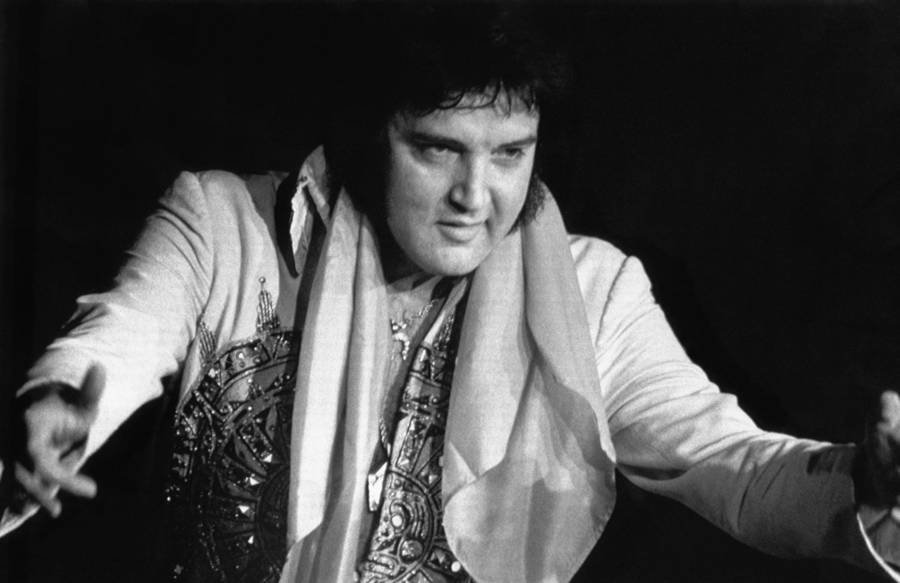
Vocally, the comparison becomes even more interesting. Elvis Presley possessed one of the most versatile voices of his generation. He could sound youthful and playful on early rock recordings, deeply sincere on gospel performances, smooth and controlled on ballads, or rugged and commanding during his later concert years. His greatness was not simply a matter of vocal range. It was the way he interpreted a lyric. Elvis often changed phrasing slightly, placed emphasis on unexpected words, or allowed a note to linger just long enough to give a familiar song a new emotional meaning. His recordings frequently reveal a singer responding instinctively to the musicians around him rather than simply following a predetermined arrangement.
Roy Orbison’s voice worked differently. His instrument had an almost operatic quality, particularly when he moved into his upper register. Rather than relying primarily on rhythmic improvisation, Orbison frequently constructed songs that resembled miniature dramas. A typical Orbison recording might begin quietly, introduce several changes in mood, rise through unexpected melodic turns, and conclude with an emotional climax far removed from where the song started. This unusual structure made his greatest recordings instantly recognizable. Orbison did not merely sing sadness; he gave sadness architecture.
Their songwriting backgrounds also separated them. Roy Orbison was deeply involved in writing many of the songs that defined his reputation, often working with important collaborators such as Joe Melson and Bill Dees. His songs frequently rejected the simple verse-and-chorus structure that dominated popular music. Instead, they could change keys, shift emotional direction, or continue building toward a climax that listeners could sense but not always predict. That approach helped give Orbison’s recordings their distinctive sense of suspense.

Elvis Presley, meanwhile, became one of history’s greatest interpreters of other writers’ songs. Although his name appeared in publishing arrangements associated with some early material, his primary genius was not traditional songwriting. It was interpretation. Elvis could hear possibilities in a composition that another performer might overlook. He drew material from writers and traditions across the musical spectrum and somehow made those songs sound unmistakably his own. “That’s All Right,” “Mystery Train,” “Heartbreak Hotel,” “Love Me Tender,” “Are You Lonesome Tonight?,” “Suspicious Minds,” “An American Trilogy,” and countless gospel performances demonstrate the remarkable breadth of his musical imagination.
There was also a significant difference in the scale of their fame. Elvis Presley became a cultural phenomenon whose influence extended far beyond recordings. His film career, television appearances, concerts, fashion, hairstyle, and public image made him one of the most recognizable individuals of the twentieth century. By the late 1950s, Elvis was no longer simply a successful singer. He had become a symbol of a rapidly changing America, admired by millions and debated by people who were trying to understand the new generation emerging after the Second World War.