Introduction
WHEN BARRY GIBB AND DOLLY PARTON SANG “WORDS,” A BELOVED CLASSIC BECAME A FAREWELL BETWEEN TWO GENERATIONS
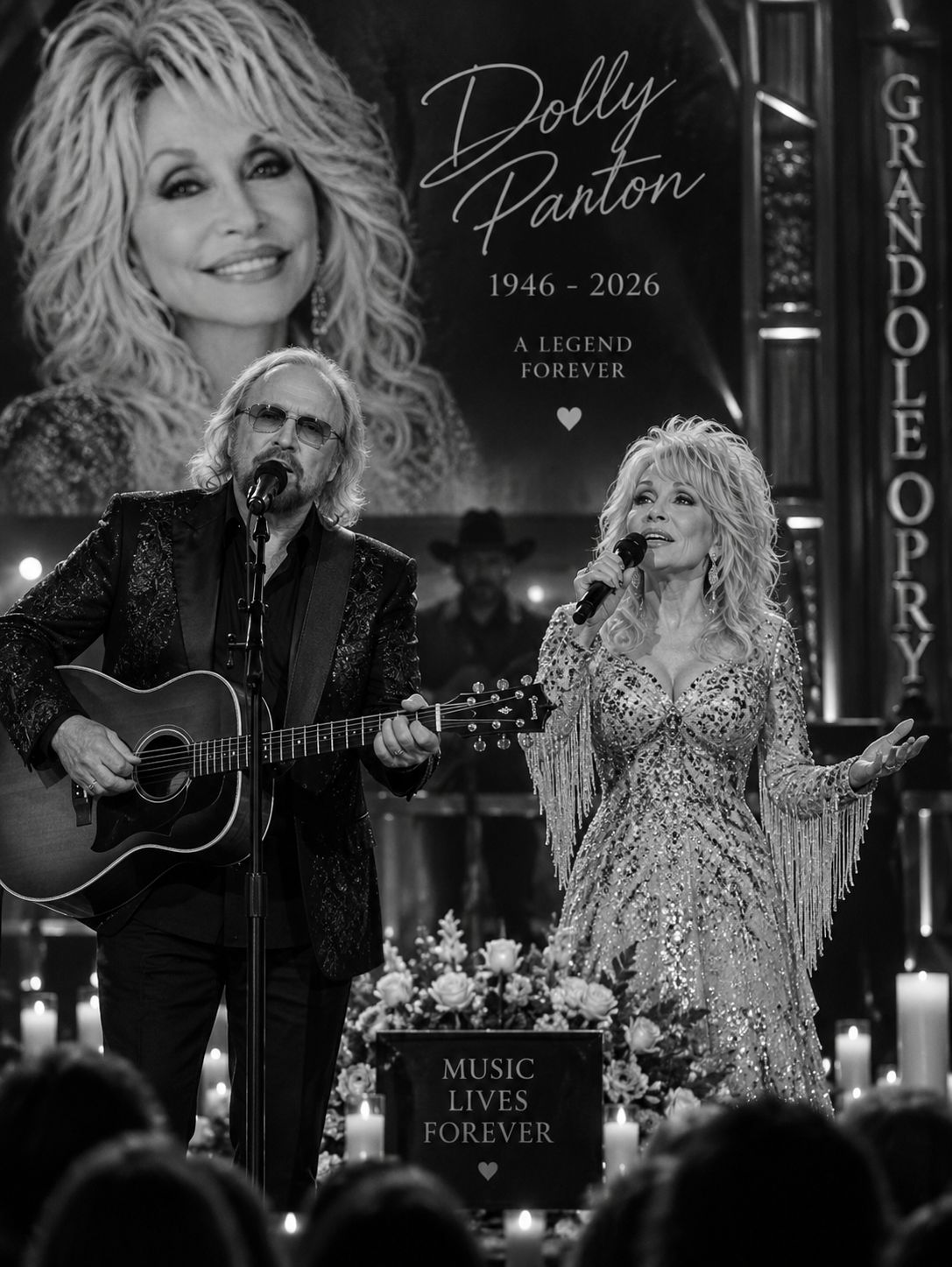
Some songs arrive at exactly the right moment and then quietly disappear with the era that produced them. Others seem to gather meaning as the years pass, becoming more valuable because listeners carry them through marriages, family gatherings, long drives, private disappointments, and the inevitable goodbyes that accompany a long life. “Words” belongs unmistakably to that second category. Originally written by Barry, Robin, and Maurice Gibb, the song emerged during the Bee Gees’ extraordinary rise in the late 1960s, yet its emotional message has never depended on a particular decade. At its heart, “Words” is about the extraordinary power of language: the things we say when we are brave enough to speak, the things we regret leaving unsaid, and the simple phrases that can remain in memory long after the people who spoke them are gone.
More than half a century after the song first entered the public imagination, Barry Gibb returned to it alongside Dolly Parton, another artist whose career had already become inseparable from the history of popular music. Their recording appeared on Greenfields: The Gibb Brothers’ Songbook, Vol. 1, Barry’s collection of newly interpreted songs from the celebrated Gibb catalog. Rather than treating those compositions as museum pieces, the project invited distinguished performers from country, folk, and popular music to approach them with fresh ears. Among the many collaborations, the meeting between Barry Gibb and Dolly Parton on “Words” feels especially meaningful because neither singer approaches the song as though youth must somehow be recreated. Instead, both allow age, experience, and memory to become part of the performance.
That decision changes everything. The familiar melody remains, but the emotional landscape feels different. When a young singer performs a song about love, regret, or reconciliation, the listener often hears possibility. When two artists who have lived through decades of triumph, disappointment, friendship, loss, and artistic change sing the same words, the listener hears history. Barry Gibb and Dolly Parton do not need to exaggerate the sentiment. Their careers have already provided the context. Every measured phrase seems to contain something beyond the lyric itself, as though the song has absorbed all the years that have passed since it was written.
The arrangement strengthens that sense of intimacy. Produced by Dave Cobb, the recording surrounds the voices with a warm musical setting built from acoustic guitar, piano, pedal steel, Hammond organ, and strings. Nothing feels hurried. Nothing is arranged simply to impress. The instrumentation creates space, and that space allows the listener to notice the details that matter most: a slight hesitation, the warmth of Dolly’s phrasing, the recognizable character of Barry’s voice, and the way the two singers respond to one another rather than competing for attention. The performance is built around listening, restraint, and mutual respect, qualities that become increasingly rare and increasingly powerful in an age of constant musical spectacle.
For longtime admirers of the Bee Gees, there is another layer of emotion within the recording. Hearing Barry revisit “Words” inevitably brings Robin and Maurice Gibb into the listener’s thoughts. The song was created by three brothers whose harmonies and songwriting helped define an extraordinary era, and Barry now carries that shared musical inheritance forward. He cannot sing these compositions without the history of his brothers standing somewhere behind them. Even when their voices are absent, their presence remains embedded in the melodies, chord changes, and lyrical instincts they created together. In this sense, revisiting “Words” is not merely an act of nostalgia. It is also an act of preservation.