Introduction
DOLLY PARTON SAID NO TO ELVIS—NOT BECAUSE SHE DIDN’T WANT HIM, BUT BECAUSE SHE REFUSED TO GIVE AWAY THE SONG THAT CHANGED HER LIFE
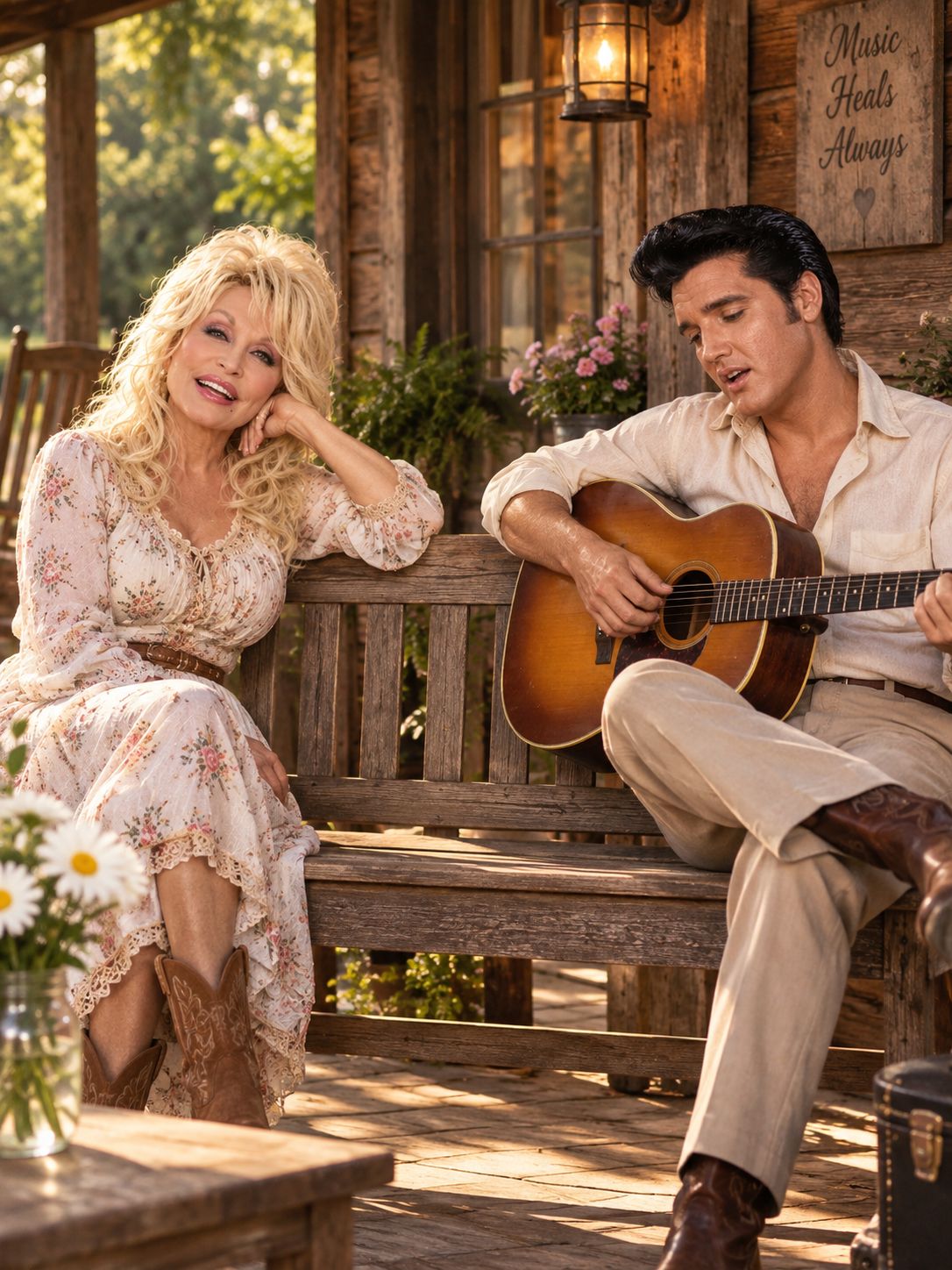
There are moments in music history that sound almost impossible when told decades later, and the story of Dolly Parton, Elvis Presley, and “I Will Always Love You” is one of them. Elvis wanted to record the song. Dolly desperately wanted to hear him sing it. She was thrilled at the thought that one of the most famous voices in the world might carry her words into another generation. Yet the recording never happened, and the reason had nothing to do with rivalry, ego, or personal dislike. It came down to a decision about ownership, independence, and the value of a song that meant far more to Dolly than a simple entry in a publishing catalog.
By Dolly’s own recollection, the possibility of Elvis recording “I Will Always Love You” filled her with excitement. She had admired him, understood what his voice could do to a song, and knew that an Elvis Presley recording could transform a songwriter’s career overnight. She recalled being invited to the studio because Elvis wanted to meet her and record the song. For a young songwriter who had fought hard to establish herself in Nashville, it must have felt like one of those extraordinary moments when years of work suddenly seem to open into something much larger.
Then came the condition that changed everything.
According to Dolly, Colonel Tom Parker, Elvis’s longtime manager, required a substantial share of the song’s publishing rights before Elvis would record it. The request was not presented as a sentimental gesture. It was business. In the music industry, publishing rights can be more valuable over time than the original recording itself, because they can generate income whenever a song is recorded, performed, licensed, or used commercially. For a songwriter like Dolly, giving away half of those rights was not the same as agreeing to a routine contract term. It meant surrendering a large piece of something she had created and owned.
When she refused, the answer came back plainly: then Elvis would not record it.
Dolly has said that she cried through the night.
That detail matters because it reveals just how painful the choice was. This was not a triumphant moment of defiance in which she casually walked away from a legendary opportunity. She wanted the recording badly. She could already imagine Elvis singing the song, and she understood what such a recording might have meant. But there are times when the most important decisions in a career are the ones that hurt precisely because both options carry a cost.
To understand why Dolly protected the song so fiercely, it helps to remember where “I Will Always Love You” came from.
The song was born from one of the most important turning points in her early career: her decision to leave Porter Wagoner’s television program and pursue a future under her own name. Dolly had worked closely with Porter, and their professional partnership helped introduce her to a wide audience. But as time passed, she increasingly believed that she needed to step away and build an independent career. She has often described both of them as strong-willed people, and leaving was not emotionally simple.
Rather than trying to explain everything through an argument, Dolly did what she understood best.
She wrote a song.
She went home and turned her feelings into “I Will Always Love You,” then returned and sang it for Porter privately with only her voice and guitar. According to Dolly, Porter began to cry as he listened. He recognized the power of the song immediately and told her that it was one of the finest things she had written. The song was therefore never simply a romantic ballad in Dolly’s personal history. It was a musical farewell, a declaration of gratitude, and a statement that she was ready to walk into the next chapter of her life.