Introduction
JOHNNY CASH CALLED ELVIS “UNTOUCHABLE”—BUT THE REAL GOSPEL STORY BEHIND THE KING IS MORE POWERFUL THAN THE LEGEND
There is a dramatic story that has circulated among Elvis Presley fans in which Johnny Cash supposedly stood before a packed Nashville auditorium in 1971 and unexpectedly challenged Elvis to rise from his seat and return to gospel music. It is a beautiful scene to imagine: Cash at the microphone, Elvis reluctantly stepping into the light, and thousands of people witnessing two American legends reconnect through the music that shaped them. Yet the surviving historical record does not support that particular event as described. The 1971 GMA Dove Awards took place at Nashville Municipal Auditorium on October 9, not April 3, and there is no reliable documentation that Cash summoned Elvis from the audience for an emotional gospel performance that night.
But perhaps the remarkable thing is that the invented scene is unnecessary. The documented relationship between Johnny Cash, Elvis Presley, and gospel music is already rich enough to tell a far more meaningful story.
Cash knew Elvis before history had finished turning either man into an American institution. Both emerged from the extraordinary musical world surrounding Sun Records in Memphis, alongside Carl Perkins and Jerry Lee Lewis. On December 4, 1956, all four were present for the spontaneous studio gathering later immortalized as the Million Dollar Quartet. The surviving tapes are especially revealing because gospel music occupies an important place in that informal session. Away from television cameras and carefully staged performances, these young musicians naturally returned to hymns and spiritual songs they had known long before fame arrived.
That matters when considering Johnny Cash’s later assessment of Elvis. In a 1988 interview, Cash was asked about great performers and answered that Elvis was probably the best, adding that he did not believe anyone could touch him as a performer. Cash remembered touring with Elvis when Presley was still a teenager and emphasized that the fascination went far beyond young female fans. According to Cash, even the men backstage would stand in the wings simply to watch him work because Elvis possessed that rare combination of rhythm, voice, charisma, and the mysterious ability to move an audience.
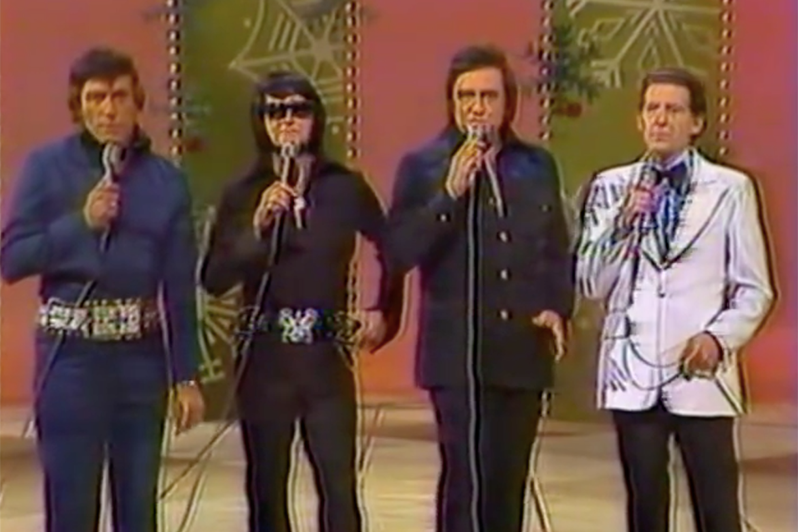
For people who remember Elvis primarily through “Hound Dog,” “Jailhouse Rock,” Las Vegas, and the famous white jumpsuits, it can be easy to overlook how central gospel music remained to him throughout his life. Yet gospel was not a decorative side project he occasionally visited when commercial fashions allowed it. It was embedded in his musical identity from childhood. Graceland’s own historical material notes that Elvis sang in church with his parents as a boy in Tupelo and continued gathering around the piano with musicians to sing gospel long after he became famous.
The clearest evidence may be found in the honors he received. All three competitive Grammy Awards Elvis Presley won during his lifetime were connected to gospel or inspirational music. His first came for “How Great Thou Art,” followed by recognition for “He Touched Me,” and later another award for a live performance of “How Great Thou Art.” For a performer remembered as the King of Rock and Roll, that fact says something profound about where some of his most respected singing actually lived.
The 1971 period mentioned in the dramatic story was, in fact, extremely important to Elvis’s gospel legacy—but for a different reason. During his Nashville recording sessions that year, Elvis recorded material that would form the heart of the He Touched Me album. The title song itself was recorded at RCA Studio B on May 18, 1971, with musicians including James Burton, Norbert Putnam, David Briggs, Charlie McCoy, and vocal support from the Imperials and others. The album arrived on April 3, 1972 and eventually earned Elvis another Grammy.
Listen closely to those recordings and something changes in Elvis’s voice. The theatrical swagger associated with many of his performances recedes, while another quality moves forward: sincerity. He could certainly produce enormous vocal power, but the most affecting gospel performances often reveal the opposite—restraint, vulnerability, and the sense that he was singing music he did not need to pretend to understand.
Perhaps Johnny Cash recognized that because gospel occupied an important place in his own life as well. Cash came from an Arkansas family shaped by hardship, faith, work, and the American South, and religious music remained a recurring element throughout his enormous recording career. His official biography describes gospel as part of the musical legacy that helped define him.
That common ground makes the relationship between Cash and Elvis more interesting than any invented onstage confrontation.
They were very different men. Cash’s stage presence could be severe, measured, and almost biblical, while Elvis could turn a theater electric through movement alone. Cash carried darkness openly; Elvis often concealed vulnerability behind spectacle. Yet both understood music that came from churches, porches, radio broadcasts, family singing, poverty, and the complicated spiritual landscape of the American South.