Introduction
BARRY GIBB AT 80: THE LAST VOICE OF THE BEE GEES CARRIES A SILENCE NO SONG COULD EVER EXPLAIN
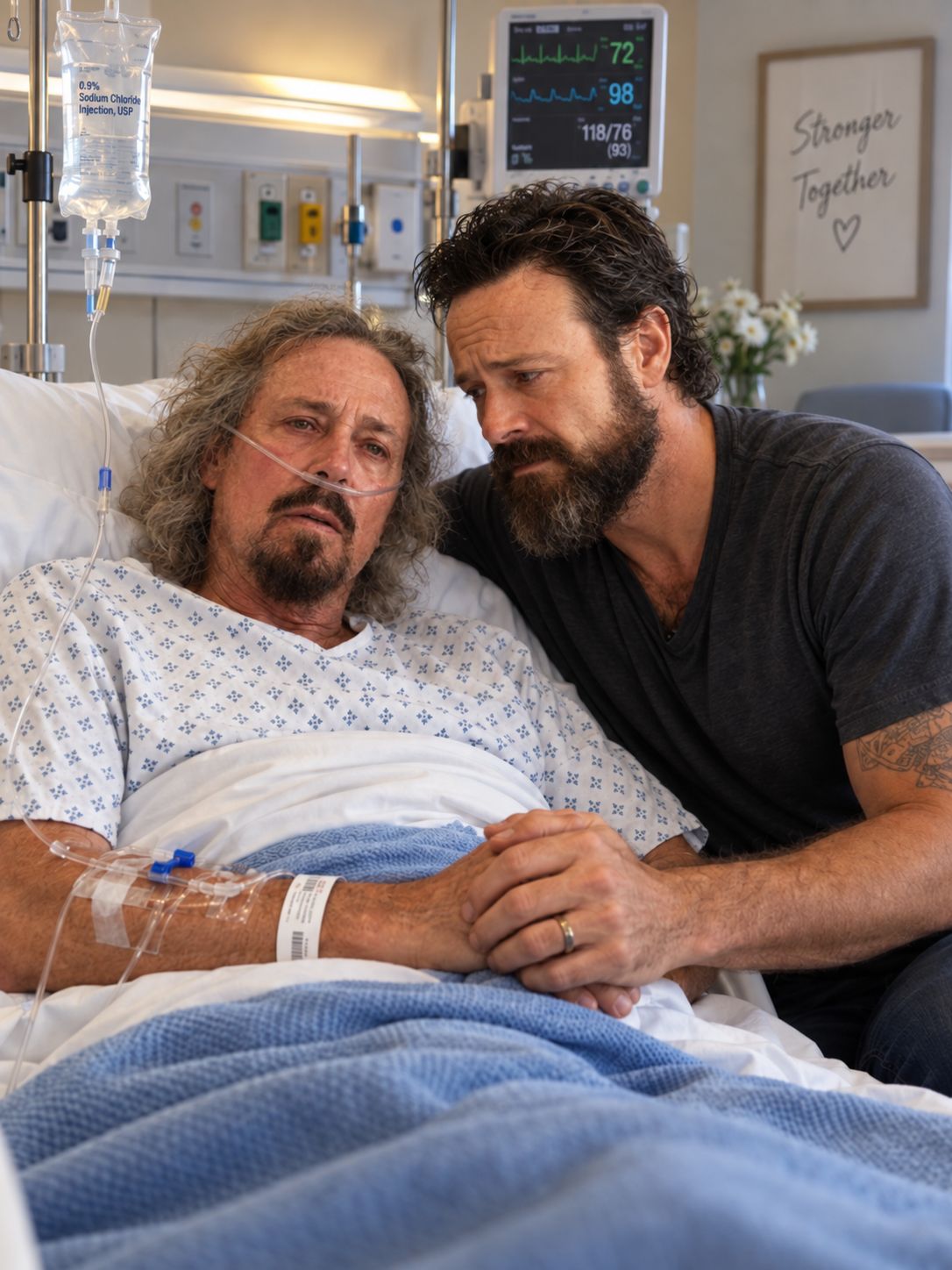
For generations of listeners, the name Barry Gibb immediately brings back a sound that seems almost impossible to recreate: three brothers standing together, their voices rising and folding into one another until individual identities disappeared inside the harmony. The Bee Gees became one of popular music’s most recognizable groups, but at the age of 80, Barry represents something far more complicated than musical survival. He is now the brother who remains, the keeper of a family history that once seemed inseparable from the voices of Robin Gibb, Maurice Gibb, and their younger brother Andy Gibb. Behind the extraordinary catalog, the international fame and the songs that continue to travel from one generation to another lies another story, quieter and considerably more painful: the experience of being the person left to remember everything.
Barry’s story began long before gold records, stadium crowds and the unmistakable falsetto that would eventually become part of popular culture. Born on the Isle of Man on September 1, 1946, Barry grew up in a musical household led by his father, Hugh, a drummer and bandleader. His earliest years were not untouched by hardship. As a very young child, Barry suffered a severe scalding accident involving boiling liquid, an experience he later described as having profoundly affected his outlook on survival and life. Music gradually became the language through which the Gibb children found direction. Barry and his younger twin brothers, Robin and Maurice, began discovering their natural gift for harmony while still boys, long before anyone could have imagined that those childhood voices would one day be heard around the world.
The Gibb family’s move from Britain to Australia in 1958 became one of the defining turns in their story. Barry, Robin and Maurice were still extraordinarily young when they began performing around Queensland, eventually attracting attention with the unusual closeness of their voices. They sang at venues far removed from the glamour that would later surround them, learning persistence through small stages, modest audiences and records that initially went nowhere. Those years are important because the Bee Gees were not an overnight miracle. They learned failure before they understood worldwide success, and Barry would later remember the long succession of early singles that failed to become hits. Their eventual triumph was built not simply on talent but on the stubborn conviction that the three brothers belonged together.
When international success arrived, it came with extraordinary force. Songs such as “Massachusetts,” “How Can You Mend a Broken Heart,” “Jive Talkin’,” “How Deep Is Your Love,” “Night Fever,” and “Stayin’ Alive” transformed the brothers from hopeful songwriters into global stars. Yet reducing the Bee Gees to one musical period would miss the magnitude of their accomplishment. They were songwriters, producers, arrangers and performers whose melodies proved remarkably adaptable, and their writing reached well beyond the records carrying the Bee Gees name. Their work survived changing fashions because underneath the production was something much older and more durable: melody, storytelling and family harmony. The Rock & Roll Hall of Fame, which inducted the group in 1997, credits them with a career spanning more than four decades and more than 200 million records sold.
But the story of Barry Gibb cannot be understood only through achievement. Fame gave the brothers almost everything the music industry could offer, yet it could not protect the family from loss. Their youngest brother, Andy Gibb, died in 1988 at only 30. Then came the devastating death of Maurice Gibb in 2003, an event that effectively ended the Bee Gees as the world had known them. Barry and Robin would appear together again and continue protecting the group’s legacy, but another chapter closed when Robin Gibb died in 2012. The three-part harmony that had defined so much of Barry’s life had become something that could exist only in recordings, memory and imagination.
That reality gives Barry’s later performances a different emotional weight. When an audience hears “Words” or “To Love Somebody” today, it is easy to hear only the familiar melody, but for Barry those songs belong to rooms, studios, arguments, reconciliations, journeys and decades spent beside his brothers. He has spoken publicly about the complicated nature of those relationships, acknowledging that brothers can love one another deeply while still carrying disagreements and regrets. That admission makes the story more human. The Gibbs were not a perfectly harmonious family simply because their voices sounded perfect together. Their musical unity was extraordinary precisely because real life outside the microphone could be far more difficult.
There is also something particularly moving about the idea of the last surviving Bee Gee standing before an audience. Barry cannot reproduce the Bee Gees simply by singing their songs again, because the group was never only a collection of compositions. Its deepest instrument was the relationship among three brothers. Robin’s distinctive vibrato, Maurice’s musicianship and humor, and Barry’s voice and songwriting instincts created a chemistry that belonged to them alone. Barry once reflected that the personalities and presence of his brothers remained imprinted on him, and perhaps that explains why the music continues to feel inhabited by people who are no longer physically there. A recording does something remarkable: it refuses to allow time to completely erase a voice.