Introduction

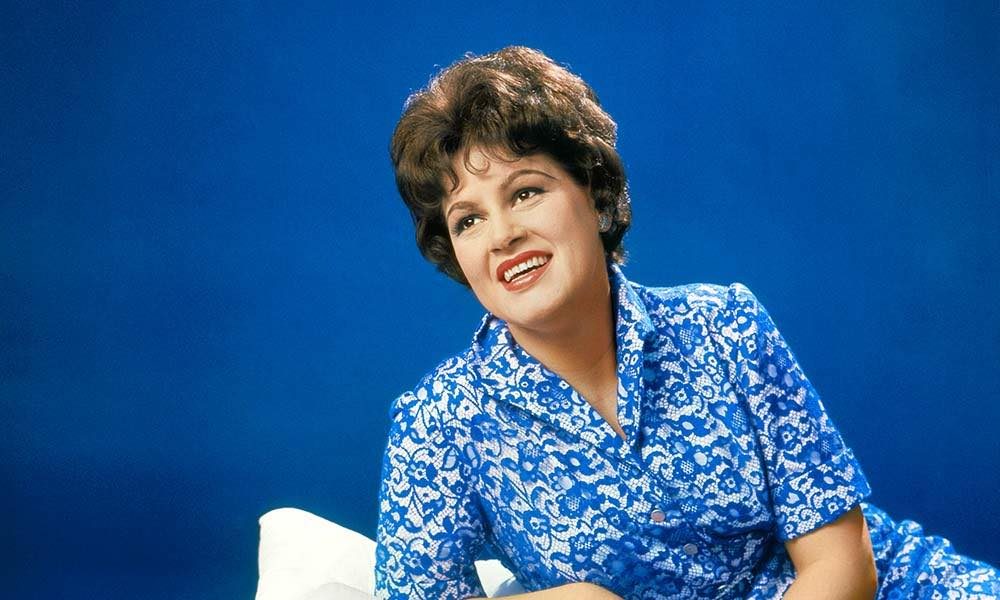
Patsy Cline – “Crazy”: The Song That Turned Heartbreak Into Immortality
Some songs fade with time. Others refuse to age, no matter how many decades pass or how many voices try to imitate them. “Crazy”, sung by Patsy Cline, belongs firmly to the second category. It is not just one of the most beloved country songs ever recorded—it is a quiet earthquake that reshaped popular music, emotional honesty, and the role of women in country storytelling.
When “Crazy” was released in 1961, it didn’t announce itself with noise or spectacle. It arrived gently, almost cautiously, like a confession spoken too late at night. Yet within moments, listeners understood they were hearing something different. Patsy Cline’s voice didn’t plead or dramatize the pain. It accepted it. And that acceptance made the heartbreak feel devastatingly real.
Written by a young Willie Nelson, “Crazy” was initially passed over by other artists who didn’t quite understand it. Its phrasing was unusual, its melody subtle, its emotion understated. But in Patsy Cline’s hands, the song found its true home. She sang it not like a woman collapsing under love, but like a woman fully aware of her vulnerability—and brave enough to admit it.
That distinction matters.
At a time when female singers were often expected to sound sweet, submissive, or ornamental, Patsy Cline brought something deeper. Her voice carried maturity, dignity, and a lived-in sadness that suggested experience rather than fantasy. When she sings “I’m crazy for trying, and crazy for crying”, she doesn’t sound ashamed. She sounds honest. And that honesty was radical.
Musically, “Crazy” is deceptively simple. The slow tempo, the gentle swing, the restrained instrumentation—all of it serves one purpose: to make room for Patsy’s voice. She stretches words just slightly, letting them linger like thoughts you can’t quite push away. Every note feels deliberate, controlled, and emotionally precise. There is no excess. No wasted breath. Just a steady unfolding of feeling.
What makes the song even more powerful is the tension beneath its calm surface. Patsy doesn’t explode with pain; she contains it. And anyone who has lived long enough knows that kind of restraint is often where the deepest suffering lives. “Crazy” speaks to listeners who understand that heartbreak isn’t always loud. Sometimes it’s quiet, dignified, and carried alone.
Patsy Cline herself embodied that contradiction. Offstage, she was known for her warmth, humor, and generosity. Onstage, she projected confidence and command. But behind the scenes, her life was marked by struggle—health scares, personal turmoil, and an unrelenting determination to be taken seriously in a male-dominated industry. That tension between strength and vulnerability is exactly what gives “Crazy” its lasting power.
The song crossed boundaries that country music rarely crossed at the time. It reached pop audiences. It reached international listeners. It reached people who didn’t consider themselves country fans at all. Because “Crazy” isn’t really about genre—it’s about recognition. The moment when a listener hears a song and thinks, That’s me. I’ve felt that.
Tragically, Patsy Cline’s life was cut short in 1963, just two years after “Crazy” was released. She was only 30 years old. Yet in that brief time, she left behind a body of work that continues to resonate across generations. And among all her recordings, “Crazy” remains the one people return to when they want to remember what true emotional singing sounds like.
Today, countless artists cite Patsy Cline as an influence. Many have covered “Crazy.” Some have sung it beautifully. But none have replaced it. Because what Patsy gave to that song cannot be replicated. It came from who she was, not just how she sang.
More than sixty years later, “Crazy” still feels current. It still feels brave. And it still reminds listeners that admitting love—even when it hurts—is not weakness. It is humanity.
In the end, Patsy Cline – “Crazy” is not just a classic. It is a mirror held up to the heart. Quiet. Unflinching. Eternal.