Introduction

“Fraud Exposed”… Or a Conspiracy Script With Better Lighting? The Viral Lloyd’s–Elvis Payout Claim—and What the Paper Trail Actually Supports
A new YouTube narrative is racing through comment sections with the confidence of a courtroom verdict: an alleged “buried” Lloyd’s of London memo has finally surfaced, and it supposedly proves executives refused to pay a $2 million death benefit after Elvis Presley died on August 16, 1977—because an investigator “found evidence” Elvis was alive weeks later in the Bahamas.
It’s the kind of story that sounds like it must be true, simply because it’s told so smoothly. It’s paced like a thriller, dressed in official-sounding language, and sprinkled with the most seductive words in modern folklore: sealed, classified, gag order, deathbed interview.
But when you put the narration down and pick the record up, the spell starts to crack. Because the stronger the claim, the simpler the standard: show the memo, show who held it, show who verified it, show where it lives now. And that’s exactly where this story goes quiet.
The solid ground: what is actually documented about Elvis’s death
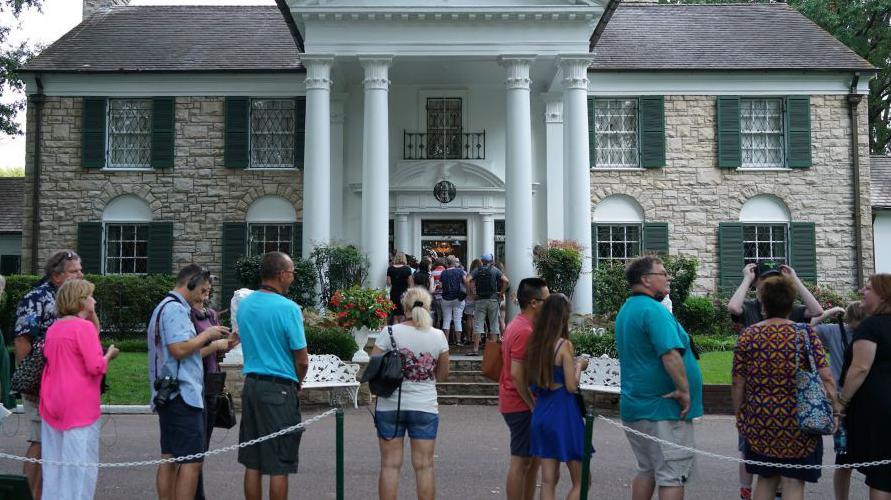
Elvis Presley was found unresponsive at Graceland and was pronounced dead at Baptist Memorial Hospital in Memphis at 3:30 p.m. on August 16, 1977. His funeral followed on August 18, with massive crowds lining the route as he was taken for burial. Early public statements acknowledged a cardiac event, and later reporting explored how prescription medications and long-term health issues fit into the larger, tragic picture.
Why does this matter? Because the video’s emotional “evidence” depends on making the official timeline feel impossibly rushed, suspicious, and cinematic—when, in reality, the timeline is consistent with what often happens after a sudden, high-profile death in that era: fast-moving logistics, public pressure, and an intense media storm.
The Lloyd’s hook: why the insurance angle is the story’s most convenient weapon
The narration leans heavily on the reputation of “Lloyd’s of London” as if it were a single, shadowy corporation that can simply slam a vault door shut. But Lloyd’s isn’t one monolithic insurer—it’s a marketplace of syndicates and underwriters. That doesn’t automatically disprove anything, but it’s a bright warning light: when a story flattens complex institutions into a movie villain, it’s often because the story needs a villain.
More importantly, “Lloyd’s policy” claims have long been used as rocket fuel for “Elvis lives” mythology—frequently repeated, rarely documented, and often passed along with the same missing piece: the policy details, the underwriting parties, the claim records, the correspondence, the verification.
So when a video says, “They refused to pay,” the immediate adult question isn’t “Wow, how bold.” It’s:
Which syndicate? Which policy number? Which dated letters? Which archive? Who authenticated the memo?
If the story can’t answer those questions, it isn’t exposing fraud. It’s selling atmosphere.
The FBI badge: a real moment, stretched into a fantasy conclusion
Yes—Elvis met President Richard Nixon on December 21, 1970. That meeting is real and documented. Elvis’s fascination with law enforcement symbolism and his request tied to narcotics enforcement has been widely discussed, often in “honorary” terms.
But the YouTube story doesn’t stop there. It turns a documented photo-op into a sweeping claim: Elvis as an FBI informant, “national security” overriding an insurance payout, and secrecy swallowing the truth whole.
That leap isn’t “new evidence.” It’s a familiar trick: start with something real, then use it as a ramp into something unprovable. And it works—because the brain remembers the real part and emotionally carries the invented part along with it.
Why the story works on smart people, too
Here’s the uncomfortable honesty: these narratives thrive because they offer something grief never does—a second ending. For many fans, the idea that Elvis simply collapsed under the weight of fame, illness, and medication feels too ordinary for someone so extraordinary. A conspiracy gives the heart a plot twist: escape instead of loss, mystery instead of finality.
And the formula is almost always the same:
-
a “buried memo” no one can independently verify
-
a named investigator no credible archive can confirm
-
a sealed photograph that can’t be examined
-
a gag order that conveniently blocks scrutiny
-
anonymous interviews that cannot be cross-checked
It’s not journalism. It’s story engineering.
The bottom line: entertainment can be fun—evidence has to be testable
If you enjoy the tale as modern folklore, fine. America has always built legends around its legends.
But if the claim is presented as fact, the burden is simple and fair:
produce the memo, establish chain of custody, provide corroboration from credible archives, and show documentation that survives independent review.
Until then, the “Fraud Exposed” headline doesn’t read like a breakthrough.
It reads like something older Americans recognize instantly—because we’ve seen it before:
a story polished until it shines… and empty where the proof should be.