Introduction

When a Gentle Giant Is Imitated by a Machine: The Disturbing Misuse of Don Williams’ Legacy
There are some voices in country music that do more than entertain. They steady people. They sit beside grief. They soften lonely nights. Don Williams was one of those voices. For generations of listeners, he was never simply a singer with hits on the radio. He was reassurance in human form — calm, warm, unhurried, and deeply believable. That is precisely why the recent appearance of a fake AI-generated album released under his name feels so unsettling. It was not merely a music scam. For many fans, it felt personal.
Williams, a Country Music Hall of Fame member, died on September 8, 2017, in Mobile, Alabama, from emphysema at the age of 78. By then, he had already secured his place as one of country music’s most treasured stylists, admired for the gentle authority of songs like “I Believe in You,” “Tulsa Time,” and “Lord, I Hope This Day Is Good.” His influence reached well beyond his own records; artists across generations have spoken about the power of his phrasing, his humility, and the quiet emotional depth he brought to country music.
That is why the emergence of “God and the Horses,” an unauthorized album distributed under Don Williams’ name in late 2025, landed with such a shock. Reports from both Saving Country Music and American Songwriter said the album appeared across major streaming services, including Spotify, Apple Music, Amazon Music, and YouTube, making it look, at first glance, like a legitimate posthumous release. For fans who still miss Williams deeply, the idea of “new” Don Williams music felt like a small miracle. But what they were hearing was not the man they loved. It was an AI imitation presented in a way that many listeners understandably mistook for real.
The details make the episode even more troubling. According to those reports, the album included songs such as “Back Where the River Bends,” “Leaves on the Wind,” and “Morning Feels Like Home,” and the copyright was attributed to Gary Wayne Moore. Saving Country Music described the project as plainly artificial, pointing to repeated musical patterns, an AI-looking cover image, and the fact that it had been routed onto Williams’ official artist pages. American Songwriter likewise reported that the material was not Williams’ original voice and that some fans genuinely believed a lost album had surfaced.
That last detail matters more than it may seem. This was not simply a novelty project labeled as “inspired by” Don Williams. The outrage comes from the impression of authenticity. When music appears under an artist’s official streaming profile, ordinary listeners are not unreasonable for assuming it belongs there. Older audiences in particular — the very listeners who sustained artists like Williams for decades — are often the most trusting. They hear a familiar name, see a streaming service they already use, and assume someone in authority has verified the material. In that sense, the harm is not only commercial. It is emotional. It turns devotion into vulnerability.
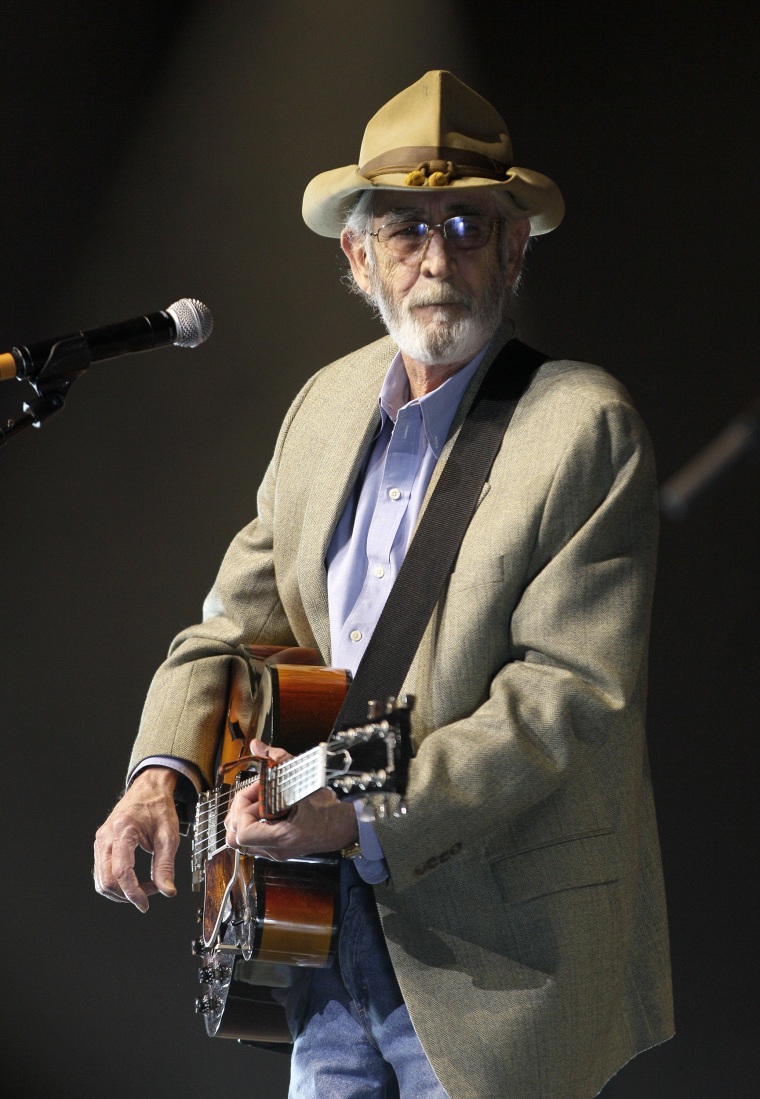
And that is the larger sadness here. Don Williams built a legacy on sincerity. He was called the “Gentle Giant” not because he demanded attention, but because he never had to. His music carried dignity. His delivery was so plainspoken and calm that it often felt less like performance than conversation. To use artificial tools to mimic that spirit without consent is not a tribute. It is a counterfeit. It borrows the trust he earned over a lifetime and spends it recklessly in a marketplace already crowded with confusion.
This is also why the Don Williams case feels like a warning, not an isolated oddity. AI in music can be used creatively and transparently, but it can also be used to impersonate, mislead, and exploit. We have already seen adjacent harms in other corners of popular culture. In January 2024, the White House said it was “alarmed” by the spread of fake AI-generated images of Taylor Swift, and Reuters reported that officials urged social media companies to enforce their rules against misinformation and non-consensual intimate imagery of real people. The point is not that these cases are identical; it is that they are part of the same moral failure — technology moving faster than ethics, platforms, and protection.
For country music, the danger runs especially deep when the victims are no longer here to speak for themselves. Living artists can post a denial, contact lawyers, or warn their fans directly. Don Williams cannot. His family, his estate, and his listeners are left to defend a voice that once needed no defense at all. That is what makes this feel so bitter. Machines can imitate the texture of a sound, but they cannot reproduce the life behind it — the years of heartbreak, restraint, tenderness, and lived experience that made Don Williams believable in the first place.
There is, perhaps, one hopeful truth in all of this. The very reason people were outraged is that Don Williams still matters. His name still means something sacred to country listeners. Fans recognized that something precious had been mishandled because they still carry him in their hearts. That kind of loyalty cannot be generated by software. It must be earned across years, across songs, across lives.
In the end, this story is about more than one fake album. It is about the duty to protect memory. Don Williams gave country music a voice of grace, steadiness, and truth. The least the modern music world can do is make sure that when his name appears, it still stands for exactly that.