Introduction
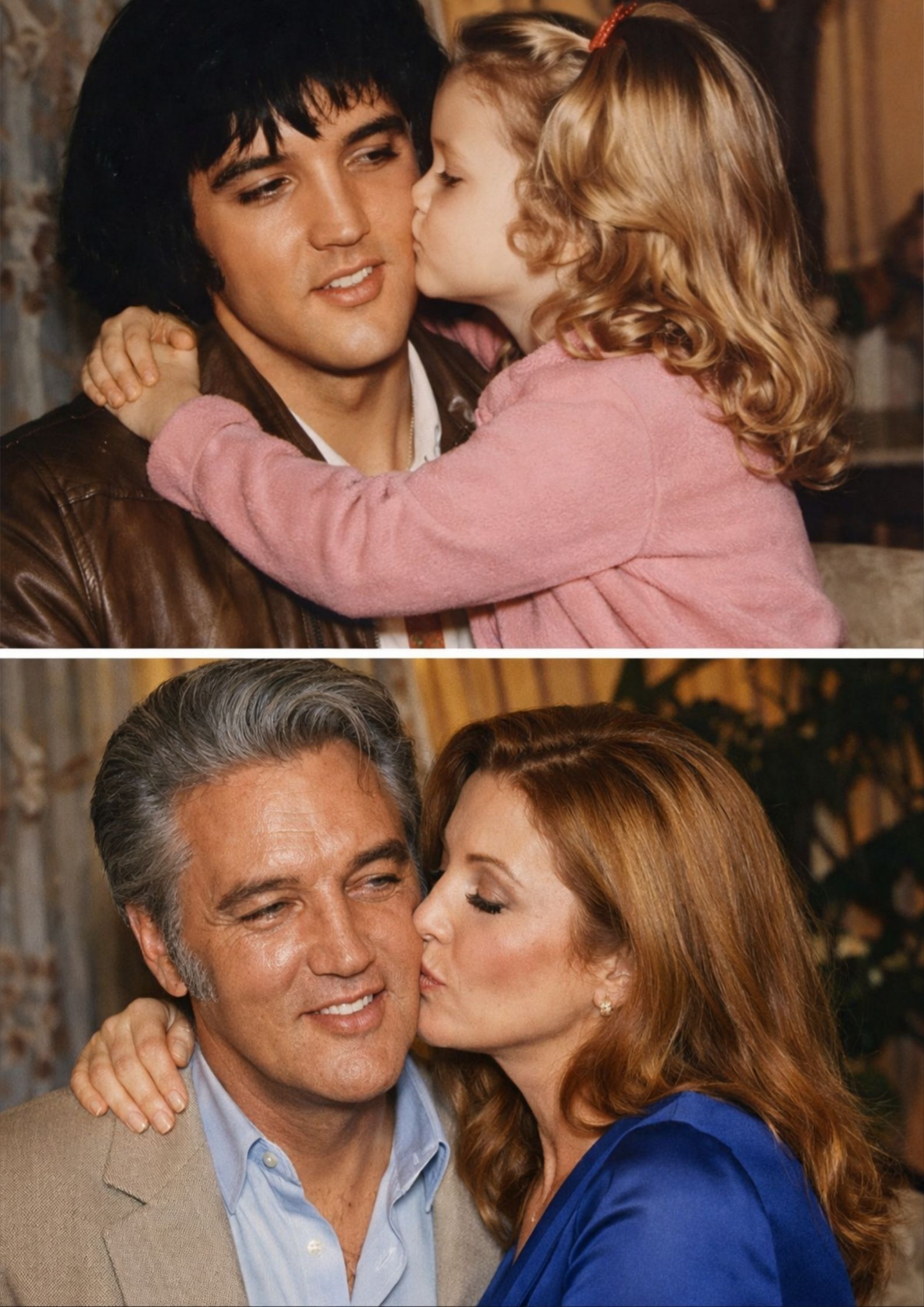
A Promise Passed Down in Quiet Faith: Why “I Love You Because” Still Echoes Through the Presley Legacy
Some songs survive because they’re clever. Some survive because they’re loud. But “I Love You Because” has lasted for a different reason: it speaks like an adult speaks—plainly, without performance, without trying to win an argument. It’s gratitude set to melody. And when you connect that kind of song to Elvis Presley, it stops being “just a recording” and starts feeling like a thread—one that ties together voice, memory, and the kind of love that doesn’t need an audience.
The song itself begins in an earlier America. Written and recorded by Leon Payne in 1949, “I Love You Because” was already a country standard built on simple truth: I love you not for perfection, but for presence—because you understand, because you stay. That plainspoken foundation is exactly what made it a natural fit for Elvis, whose deepest musical roots were never only rock-and-roll swagger. Underneath the fame, Elvis carried a lifelong devotion to gospel feeling and traditional sincerity—the emotional “straight lines” that older listeners recognize instantly.
Elvis recorded “I Love You Because” at Sun Studio on July 5, 1954, during the same sessions that famously led to “That’s All Right.” If you know the lore, you know those hours were tense. Sam Phillips was searching for a sound. Elvis was searching for himself. And early takes that day reportedly felt stiff before the breakthrough arrived.
But what’s striking about Elvis’s approach to “I Love You Because” is the lack of urgency. He doesn’t sell the sentiment with big theatrical pushes. He lets it sit where it belongs—right in the center of the listener’s lived experience. His voice is warm, steady, and composed. The phrasing feels less like a declaration meant to impress and more like a promise meant to be trusted.
That tone is why the song hits older audiences so hard.
When you’ve lived long enough to know what lasts, you learn that the strongest bonds are often expressed quietly. Not in sweeping speeches, but in reliability—showing up, staying kind, keeping your word when life stops being easy. “I Love You Because” reflects that mature form of love: appreciation without conditions, affection without a sales pitch.

Musically, it’s restrained on purpose. The arrangement doesn’t compete with the lyric. It supports it. The song’s architecture is almost humble—an insistence that meaning doesn’t require ornament. In an age that often confuses excess with depth, “I Love You Because” stands apart by refusing to decorate the truth.
And then, decades later, something happened that gave the song a second life inside the Presley story.
In 2012, Lisa Marie Presley released a modern “duet” version with her father’s vocals—paired with a music video that included the next generation of Presleys. The release wasn’t just a novelty. It landed like a family letter being read out loud. For many fans, hearing Lisa Marie woven into the same lyric—“I love you because you understand”—turned the song into something bigger than romance. It became about continuity.
Because legacy isn’t only built through public triumphs. It’s carried through private values: gratitude, humility, emotional clarity. When you hear Lisa Marie connected to that message, the song begins to sound like a promise passed down—one generation reminding the next that love is not proven by spotlight, but by steadiness.
That’s why “I Love You Because” continues to return during reflective seasons of life—anniversaries, quiet mornings, long drives, moments when the heart wants something honest instead of flashy. The song doesn’t demand attention; it invites it. Its calm assurance creates room for the listener’s memories to speak.
Within Elvis’s vast catalog, this track is an important reminder: his power wasn’t only charisma and spectacle. It was also tenderness without performance—the ability to make sincerity sound credible. And when the Presley legacy is viewed through Lisa Marie’s presence, that credibility deepens. It suggests that what lasts longest isn’t noise. It’s meaning.
So here’s the question that separates a casual listener from a lifelong one: When you hear “I Love You Because,” who do you think of—and what memory does it unlock?