Introduction
Charley Pride’s Final Bow: The Voice That Broke Barriers and Left Country Music Forever Changed
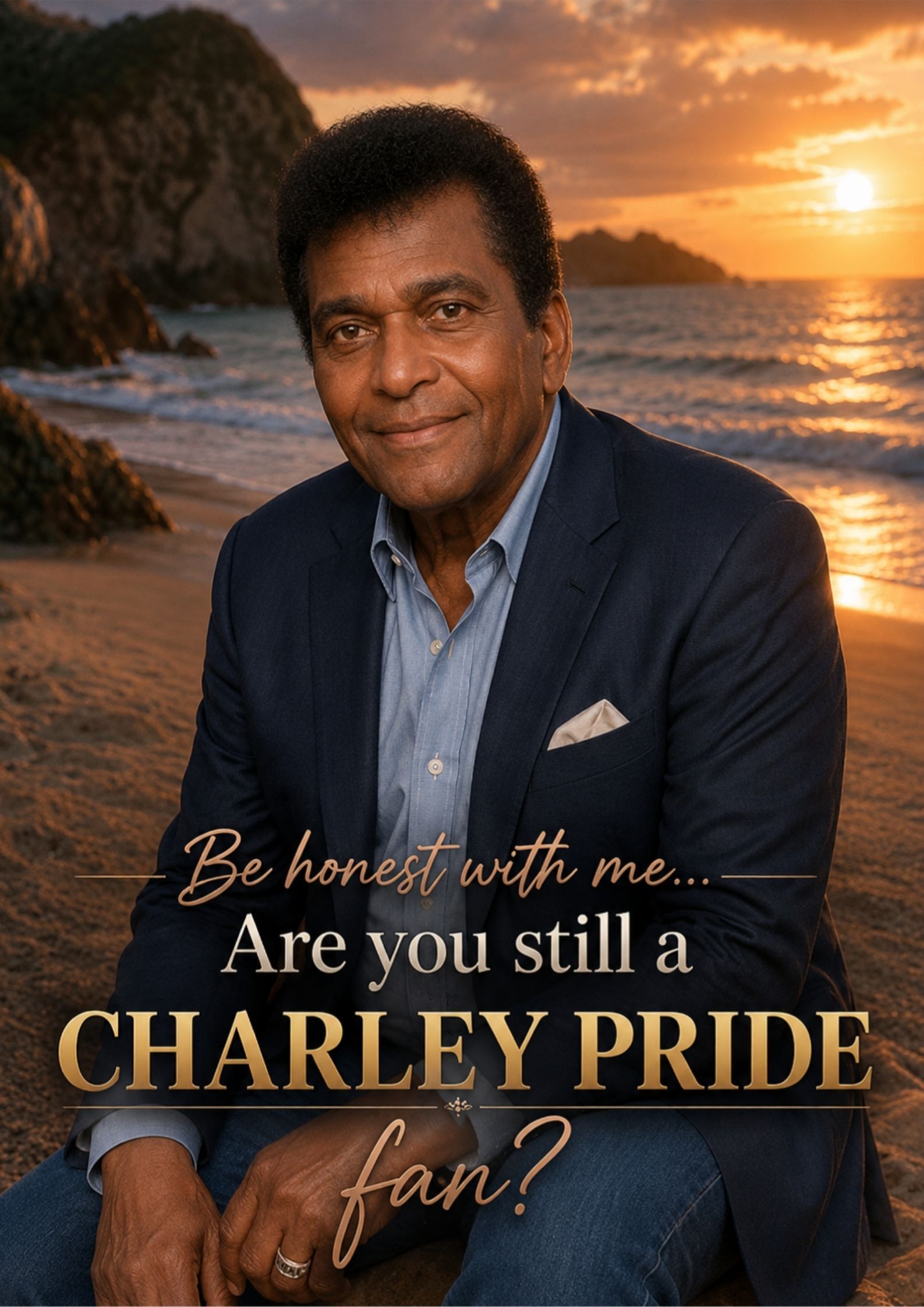
Charley Pride: The Loss of A Legend
There are country music careers measured in hit records, and then there are lives measured in doors opened for everyone who came after. Charley Pride belonged to both categories. When the world lost him on December 12, 2020, at the age of 86, following complications from COVID-19, country music did not simply lose a beloved singer. It lost one of its great pioneers — a man whose voice carried warmth, dignity, discipline, and a quiet courage that changed the shape of the genre forever.
To call Charley Pride a star is accurate, but not enough. He was one of the most successful country artists of all time, placing 67 titles on the country charts, earning 52 Top 10 hits, and reaching No. 1 on Billboard 29 times. Those numbers alone would secure almost anyone a permanent place in country music history. But Pride’s story was never only about statistics. His importance lies in what he achieved while walking through barriers many others never had to face.
He will always be remembered as country’s first Black superstar, often called “the Jackie Robinson of country music.” That comparison was especially meaningful because Pride himself once dreamed of making his life in baseball. Before the awards, before the Grand Ole Opry, before millions of records sold, he was a young man from Mississippi chasing the crack of a bat and the hope of a different future. Born Charley Frank Pride on March 18, 1934, near Sledge, Mississippi, he was the fourth of eleven children raised by sharecroppers. His beginnings were humble, demanding, and deeply rooted in the American South.

That background shaped the emotional honesty of his music. When Pride sang, there was no artificial polish hiding the truth. His voice was smooth, but never empty. It carried the discipline of hard work, the restraint of a man who understood struggle, and the grace of someone who knew that dignity could be its own kind of power. Songs like “Kiss an Angel Good Morning,” “All I Have to Offer You Is Me,” “Is Anybody Goin’ to San Antone,” “Mountain of Love,” and “We Could” became standards because they sounded sincere. They were not merely performed; they were trusted.
For older country listeners, Pride’s music belongs to a very specific emotional place. It recalls radios playing in kitchens, road trips across open highways, Saturday-night dances, and quiet mornings when a familiar voice could make the world feel steady again. His delivery never relied on spectacle. It relied on clarity, feeling, and the rare ability to make a simple lyric feel personally meaningful.
The story of how Pride reached Nashville is almost as remarkable as the career that followed. He taught himself guitar at age 14, inspired in part by the Grand Ole Opry broadcasts his father loved. Yet baseball pulled him first. He played in the American Negro League, including time with the Memphis Red Sox, served in the Army, and later worked in Montana while singing locally. Only after repeated encouragement from country figures did he make the move toward Nashville more seriously.
When producer Jack Clement brought Pride’s recordings to Chet Atkins at RCA, country music history changed. Atkins later believed he would be remembered as the man who signed Charley Pride — and he was right. Pride broke through with songs like “Just Between You and Me” and “I Know One,” and by the late 1960s and early 1970s, he was no longer simply a promising artist. He was a phenomenon.

His rise came at a time when America was still wrestling painfully with race, identity, and who was allowed to belong in certain cultural spaces. That context makes his achievements even more extraordinary. Pride did not enter country music as a novelty. He entered as a master. He did not ask audiences to lower expectations. He exceeded them.
By 1971, Charley Pride had been named CMA Entertainer of the Year and Male Vocalist of the Year, honors that reflected not only his commercial success but the deep affection audiences felt for him. His performance of “Did You Think to Pray” won a gospel Grammy, and “Kiss an Angel Good Morning” became one of the defining country songs of its era. In 1975, he became the first Black artist to co-host the CMA Awards, further proving that his place in country music was not temporary. It was foundational.
His later years only deepened that legacy. In 1993, he finally became a member of the Grand Ole Opry, and in 2000, he was inducted into the Country Music Hall of Fame. By then, his record sales had exceeded 35 million, but even that figure does not fully capture his influence. Charley Pride helped expand the imagination of country music itself. He proved that truth in a song is not limited by race, background, or expectation.
His passing came just weeks after he received the CMA Lifetime Achievement Award, a final public acknowledgment of a career that had shaped generations. The timing made the loss feel especially heavy. Fans had just seen him honored, remembered, celebrated — and then suddenly, country music was grieving him.
But legends like Charley Pride do not disappear with the final headline. They remain in the songs, in the artists they inspired, in the barriers they broke, and in the memories of listeners who still know every word. His voice continues to stand as proof that country music is strongest when it recognizes every heart that helped build it.
In the end, Charley Pride was more than a trailblazer.
He was a gentleman with a golden voice.
A barrier-breaker with quiet strength.
And a country legend whose place in history will never be taken away.