Introduction
ELLA LANGLEY’S LONG ROAD FROM AN ALABAMA FIELD TO A COUNTRY MUSIC TAKEOVER

Every once in a while, country music gives us a story that feels almost too honest to be planned. It does not begin with bright lights, a polished image, or a sudden overnight miracle. It begins quietly, in a small place, with a young voice singing before anyone important is listening. That is the heart of Ella Langley’s story — a story built on patience, faith, family, rejection, persistence, and the stubborn belief that a dream can still come true even after years of getting nothing back.
Before the packed venues, before fans were singing every lyric back to her, before people began asking whether she might become one of country music’s defining new voices, Ella Langley was simply a girl from Hope Hull, Alabama, a small community just south of Montgomery. It was the kind of place that does not always appear on maps of fame, but it gave her something more valuable than attention. It gave her roots.
Her childhood was surrounded by church, family, and music. She grew up in the same house where her father had grown up, and her early world was shaped by the kind of Southern tradition that cannot be manufactured. Her church, as she has described it, began in a barn with hay bales for seats before becoming a proper building. That detail alone says something important about her background. It was humble, close-knit, and deeply connected to community.
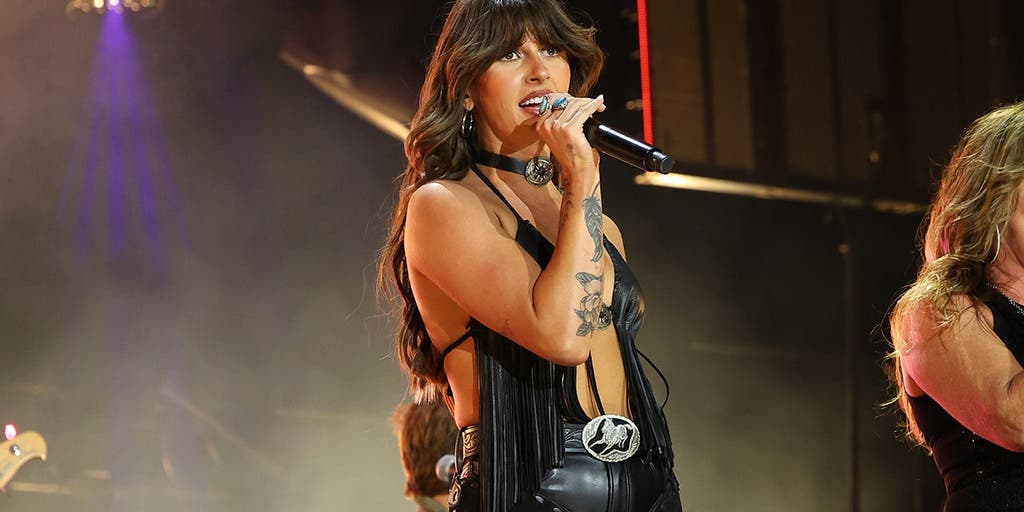
For Ella Langley, music was never something distant or glamorous. It was part of daily life. Her grandfather could play by ear. Her grandmother loved to sing. Ella sat beside them at the piano, learning rhythm, pitch, and confidence before she fully understood the size of the gift she carried. In many families, talent is noticed slowly. In hers, people seemed to recognize early that music was not just a hobby for her. It was part of who she was becoming.
Even as a child, Ella Langley had the spirit of a performer. She sang at family reunions, in church, and anywhere someone would listen. Sometimes, her audience was not even human. She has joked about climbing onto a barn and singing out across a pasture, with cattle as her first listeners. It is a charming image, but also a revealing one. Long before applause, she learned how to keep singing into silence.
That may be one of the most important lessons in her rise. Many people chase a dream only as long as they are encouraged. But the real test comes when no one is clapping, no one is calling, and no one is promising that the work will ever pay off. Ella Langley spent years giving her energy, her time, and her heart to music without receiving much in return. That kind of waiting can discourage even the most gifted artists. But in her case, it seems to have strengthened her.
Her musical influences were wide and honest. In her father’s truck, she heard rock, old-school country, and other classic sounds. In her mother’s car, she absorbed folk, 1980s music, and artists with emotional depth. She was drawn to performers like Stevie Nicks and Willie Nelson, not because they were polished beyond recognition, but because they made listeners feel every word. That influence matters. It helps explain why Langley’s own music carries both grit and vulnerability.
There is also a beautiful moment in her story involving her grandfather’s guitar. After he passed away, her father had the instrument restrung and gave it to her. Before the night was over, she had already taught herself “Three Little Birds” by Bob Marley. That scene feels almost symbolic: a family instrument, a young artist, and a song about hope. It was not fame yet. It was not a career yet. But it was the beginning of a voice finding its own path.
What makes Ella Langley’s rise feel so authentic is that it does not appear rushed. She did not simply arrive fully formed. She grew. She worked. She played rooms where people barely knew her name. She stood in front of audiences that had not yet decided whether they cared. Then, slowly, something changed. The rooms got louder. The crowds got bigger. The songs began coming back to her from the mouths of fans who knew every word.
That transformation is one of the most powerful sights in music. For an artist, hearing strangers sing your lyrics back to you is more than success. It is proof that the lonely years meant something. It is proof that the songs found a home. And for Ella Langley, that moment feels especially earned.
Today, many are asking whether her album places her among the strongest new women in country music. The question is understandable. She has the voice, the backstory, the songwriting instinct, and the unmistakable presence of someone who has lived inside her songs before sharing them with the world. But perhaps the better question is not whether she is becoming a queen of country. Perhaps the better question is why her story feels so necessary right now.
In an age when fame can seem quick and disposable, Ella Langley represents something older and sturdier. She reminds listeners that country music still values truth. It still values hard work. It still values a voice that sounds connected to real places and real people. Her journey from Hope Hull, Alabama to sold-out crowds is not just a career story. It is a reminder that dreams often grow in silence long before the world hears them.
And when the world finally does hear them, the sound can be unforgettable.