Introduction
“Fraud Exposed” or Fiction Polished as Fact? The Viral Claim That Lloyd’s Refused Elvis’s 1977 Death Benefit—And What the Record Actually Shows
A new YouTube story making the rounds claims a long-buried insurance memo has finally surfaced: executives at Lloyd’s of London supposedly refused to pay a $2 million death benefit after Elvis Presley died on August 16, 1977—because an investigator allegedly found evidence Elvis was alive weeks later in the Bahamas. It’s gripping, cinematic, and built like a thriller.
But when you step away from the narration and compare it to what’s documented, the story reads less like a revelation and more like an expertly assembled conspiracy script—one that borrows real historical touchpoints and stitches them to unverified characters, anonymous “deathbed interviews,” and “sealed” photographs that no independent archive can corroborate.
The solid ground: what’s well documented about Elvis’s death
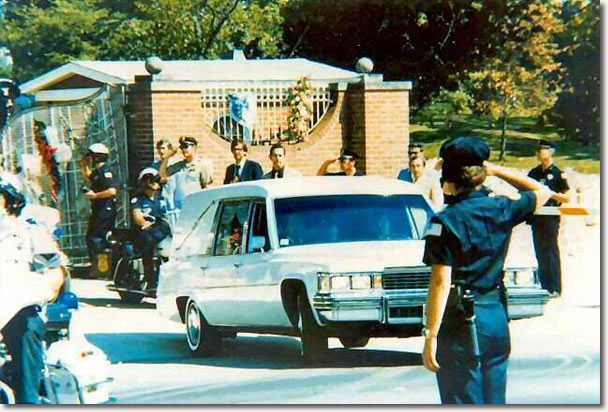
Elvis Presley was found unresponsive at Graceland and was pronounced dead at Baptist Memorial Hospital in Memphis at 3:30 p.m. on August 16, 1977. His funeral was held on August 18, with large crowds lining the route as he was taken to Forest Hill Cemetery. Early public statements from the medical examiner described the cause as cardiac arrhythmia, and later reporting explored how prescription medications and underlying health issues contributed to the larger picture.
Those details matter because the video’s most emotionally persuasive “evidence” depends on implying an impossibly rushed, suspicious chain of events—while the mainstream timeline is neither mysterious nor unique for a high-profile death in that era.
The Lloyd’s hook: why the insurance angle is especially suspicious
The narration leans hard on Lloyd’s of London’s reputation—“the company that always pays.” But Lloyd’s is not a single, monolithic insurance company; it’s a marketplace of syndicates and underwriters. That doesn’t disprove any claim by itself, but it’s a red flag when a story simplifies complex institutions into a movie villain.
More importantly: long-running “Elvis lives” narratives have repeatedly used a supposed Lloyd’s life insurance policy as “proof,” and skeptical investigators have argued that this Lloyd’s policy claim is a myth—one that often circulates without verifiable documentation. In other words, the video is leaning on a rumor that already has a history of being used as conspiracy fuel.
The FBI badge: real photo, exaggerated conclusion
Yes, Elvis met President Richard Nixon on December 21, 1970, and the meeting is documented through archival materials. Accounts of the encounter note Elvis’s interest in law enforcement symbolism and his request connected to the Bureau of Narcotics and Dangerous Drugs—often described as honorary in nature.
But the YouTube story makes a much bigger leap: it implies Elvis became an FBI informant and that “national security” concerns overrode an insurance payout. That’s where the documented record pushes back. The FBI’s own FOIA library notes Elvis was not investigated by the FBI; his name appears across files largely because of correspondence, extortion attempts, and public reactions—not because he was secretly deployed as an informant. Major mainstream coverage of Elvis “still alive” theories also frames the “undercover/witness protection” idea as a recurring claim—compelling to believers, but not supported by hard evidence.
The video works because it exploits a human truth: Elvis’s fame was so large that ordinary endings feel emotionally unsatisfying. Conspiracy narratives give grief a plot twist—mystery instead of finality, escape instead of collapse. They also use a familiar toolkit: a “buried memo,” a named investigator no one can verify, a sealed photograph, and a legal gag order—devices that conveniently prevent independent confirmation.
If you enjoy the story as modern folklore, that’s one thing. But as journalism? The burden is simple: show the memo, show the chain of custody, show corroboration from credible archives, and show documentation that can survive scrutiny. Until then, the “insurance fraud exposed” pitch looks far more like entertainment than evidence.