Introduction
ROBIN GIBB’S “I STARTED A JOKE” — The Haunting Bee Gees Ballad That Became A Farewell Across Time
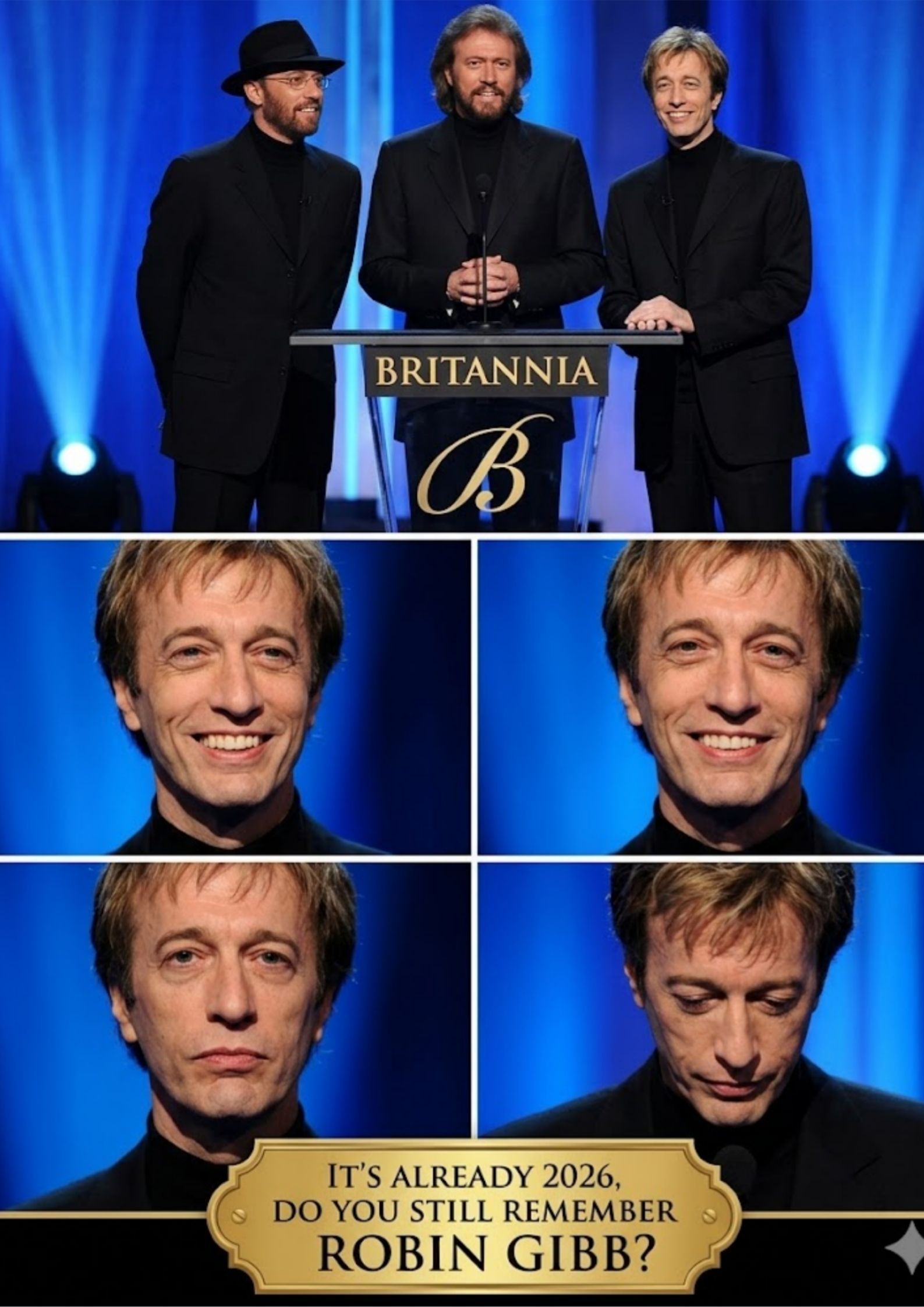
Some songs are remembered because they were popular. Others remain with us because they seem to grow heavier with every passing year. Robin Gibb and the haunting echo of I Started a Joke across time belongs to that second, rarer kind of musical legacy. It is not merely a Bee Gees classic from 1968. It is a song that began as a mysterious melody in Robin Gibb’s imagination and, over the decades, became something far more profound: a meditation on loneliness, misunderstanding, brotherhood, mortality, and the aching silence left behind when voices once joined in harmony are gone.
The origin of I Started a Joke already feels almost dreamlike. According to Robin Gibb’s own recollections, the song’s melody came to him not from a piano, a guitar, or a formal writing session, but from the steady engine sound of an airplane. That detail matters because it gives the song its strange floating quality. It feels as if it was overheard rather than composed, as though Robin caught a fragment of sorrow traveling through the air and turned it into music before it disappeared.
When the Bee Gees recorded the song for their 1968 album Idea, they were still young, still evolving, and still associated with the richly melodic, introspective pop of their early years. This was long before the disco explosion transformed them into global symbols of a different era. In I Started a Joke, there is no glittering rhythm, no celebration, no attempt to fill the room with joy. Instead, the song moves inward. It sounds like someone standing alone inside a private confusion, trying to understand why the world laughs when he cries, and cries when he laughs.
That contradiction is the emotional heart of the song.

For older listeners, especially those who have lived through seasons of misunderstanding, the lyric’s ambiguity feels deeply human. Life often places people in situations where their intentions are misread, their pain goes unnoticed, or their feelings arrive out of step with everyone around them. I Started a Joke captures that lonely dislocation with remarkable economy. It does not explain too much. It does not solve the ache. It simply allows the listener to sit inside the mystery.
That may be why Robin resisted reducing the song to a single meaning. He described it as a spiritual song, something listeners had to interpret for themselves. And he was right. Some hear it as a reflection on ego. Some hear it as a confession of regret. Some hear it as the cry of a man who feels separated from the world around him. The beauty of the song is that all of these meanings can exist at once.
But time changed the way the world hears it.
In archival performances, Robin Gibb often appears almost isolated at the microphone, his slender figure held in dim light, his distinctive voice carrying the weight of the song with fragile intensity. Behind him, Barry Gibb and Maurice Gibb provide the structure, the harmony, and the shared emotional foundation that made the Bee Gees so unforgettable. Watching those performances now is difficult because we know what the young men onstage did not. We know that the harmony would not last forever.
That knowledge transforms the song.
The Bee Gees would go on to achieve extraordinary success, becoming one of the defining groups of popular music history. Yet their story was also shaped by tremendous loss. Maurice Gibb died suddenly in 2003, breaking the brotherly unit that had carried the group through decades of reinvention. Then, in 2012, Robin Gibb died after a long illness, leaving Barry Gibb as the last surviving brother. The music remained, but the voices behind it had become ghosts in the public memory.
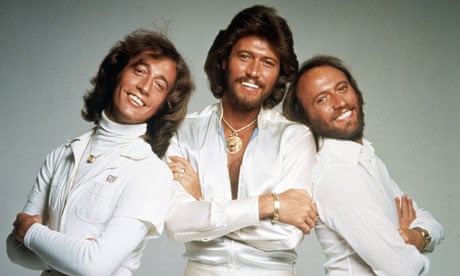
That is why I Started a Joke now sounds different than it did in 1968. What once felt like an enigmatic ballad about contradiction has become a vessel for grief. Robin’s voice no longer feels merely beautiful; it feels preserved. Every note seems to carry the presence of someone who is no longer here, yet somehow still speaking through the recording. The song becomes less about the narrator alone and more about the fragile miracle of three brothers singing together before history separated them.
The most heartbreaking layer came near the end of Robin’s life, when his son, Robin-John Gibb, reportedly played I Started a Joke beside him after his passing. That intimate moment gave the song a final meaning no critic could have predicted. A melody born from an airplane engine became a farewell between father and son. A public song became a private goodbye. A performance once shared with millions became, in one room, a final act of love.
For thoughtful listeners, that is almost too moving to separate from the music itself. It reminds us that songs do not remain fixed in time. They travel with us. They gather memory. They change after funerals, after losses, after reunions, after long drives, after the people we love are no longer sitting beside us. A song may begin as art, but life can turn it into testimony.
That is the enduring power of Robin Gibb and I Started a Joke. The song refuses to settle into one explanation because life itself rarely offers one. It is fragile and grand at the same time, personal and universal, old and somehow still painfully present. It speaks to anyone who has ever felt misunderstood, anyone who has ever looked back with regret, and anyone who has learned that the songs we love can outlive the voices that first gave them to us.
In the end, I Started a Joke is not simply a Bee Gees ballad. It is an echo across time. It is the sound of a young Robin Gibb reaching into mystery, and an older world hearing grief in every note. It is the sound of brothers bound by harmony, then separated by fate. It is the sound of a song becoming a farewell long after it was written.
And perhaps that is why it still haunts us.
Because the joke was never really the point.