Introduction
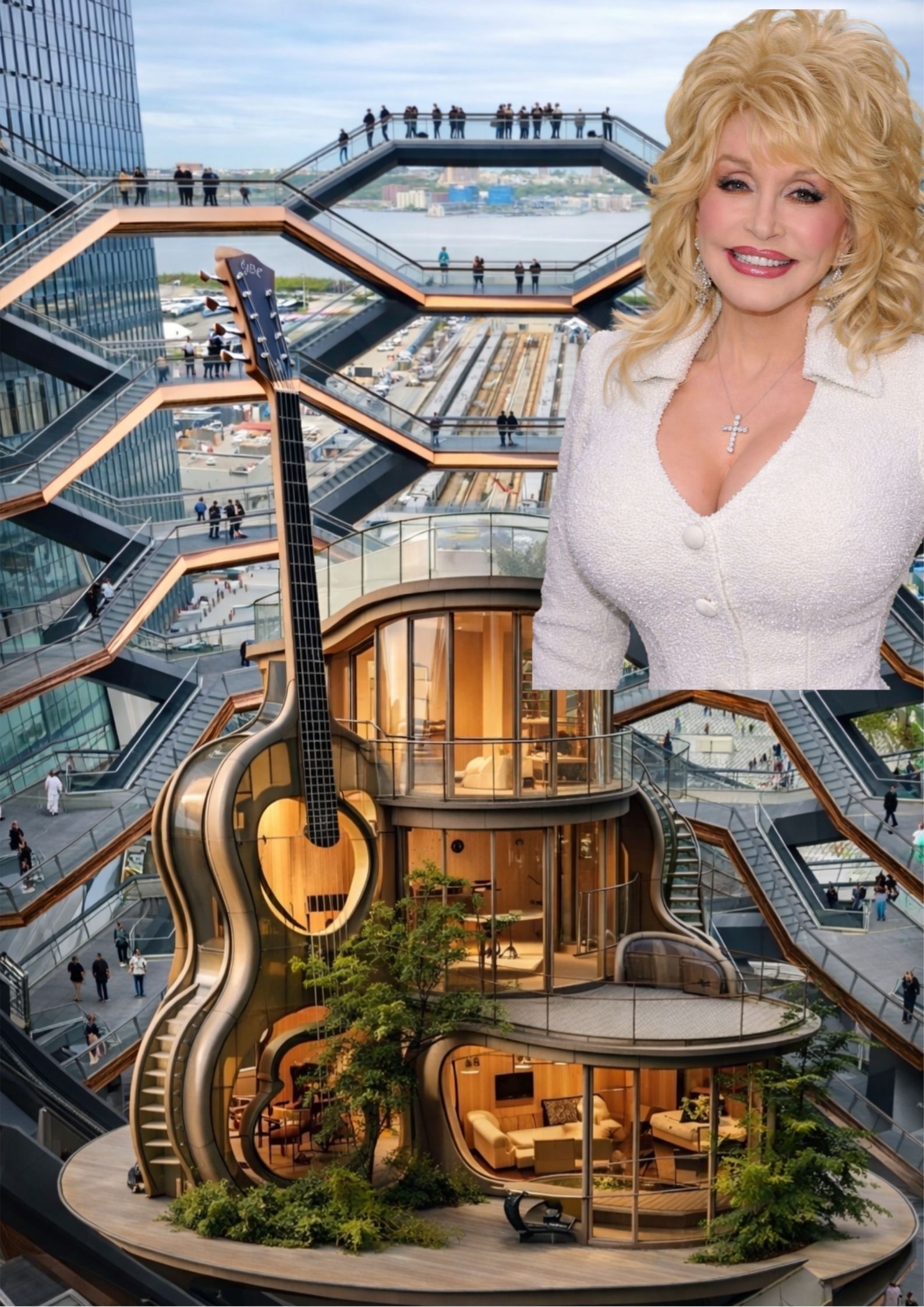
“The $10 Million ‘Guitar Mansion’ in New York”—A Dolly Parton Headline So Perfect It Almost Feels True… Until You Look Closer
It’s the kind of headline that doesn’t just travel—it glides.
“Breaking News: Dolly Parton Acquires $10 Million ‘Guitar Mansion’ in New York’s Upper Hudson.”
A grand estate. A nickname that sounds like it was invented by fans over coffee. Curving driveways shaped like a guitar. Secret rooms. A private recording studio. A music-themed library. An outdoor garden stage—because of course Dolly would create a place where songs can bloom.
If you’re a longtime Dolly admirer—especially the kind of reader who still believes celebrity news should carry at least a little dignity—this story hits an emotional sweet spot. It paints Dolly as she’s always been in our minds: warm, creative, intentional, still writing new chapters without needing to shout about them.
But here’s the honest truth, delivered with the respect Dolly deserves:
This “Upper Hudson Guitar Mansion” story appears to be viral fan-fiction style celebrity content, not verified reporting.
Where the story is coming from—and why it feels “official”
In recent months, a wave of social-media posts (especially Facebook pages and repost-driven sites) has circulated nearly identical “Breaking News” formats about different celebrities supposedly buying a $10 million ‘Guitar Mansion’ in New York’s Upper Hudson—sometimes naming Taylor Swift and Travis Kelce, sometimes George Strait, sometimes other stars.
That repetition matters. When the same property nickname and price point are recycled across unrelated celebrity couples, it’s a classic sign of engagement bait—content designed to trigger curiosity and shares, not documentation.
And yes, there are posts explicitly attaching this exact claim to Dolly—again in the same templated style.
What’s missing: the “boring” details real reporting always has
When a true $10 million purchase happens—especially involving a world-famous figure—reputable coverage almost always includes at least one of the following:
-
a location you can verify (town/county, not a vague “Upper Hudson neighborhood”)
-
property listing details, a brokerage record, or a public real-estate reference
-
confirmation from credible entertainment or real-estate outlets
In the material pushing the “Guitar Mansion” narrative, those verifiable anchors are absent. Instead, you get dreamy interior descriptions—“guitar-string woodwork,” “secret rooms,” “a private studio”—without hard identifiers.
That doesn’t mean Dolly can’t buy property. It means this specific story doesn’t come with the fingerprints of trustworthy reporting.
What we can responsibly say about Dolly and “home”
Here’s what’s genuinely true—and, frankly, more moving than any viral mansion myth:
Dolly Parton has long been associated with real estate stories tied to purpose, privacy, and personal history. For example, mainstream lifestyle coverage has discussed her broader portfolio and the way her homes reflect a life built from humble beginnings into extraordinary success.
And there are legitimate real estate headlines connected to Dolly, such as coverage of properties associated with her past (including a former retreat/cabin that’s been reported through established financial news).
Dolly’s story has never been “look how expensive.” It’s always been “look how meaningful.”
That’s why this particular rumor spreads: it uses the language of meaning—music motifs, hidden rooms for creativity, a garden stage for intimate nights—because those details feel emotionally consistent with who Dolly is in the public imagination.
Why older fans should care about getting it right
Because Dolly Parton isn’t just “content.” She’s a cultural comfort. A symbol. A person whose reputation has been built on authenticity and generosity.
And when the internet turns her into a character in a luxury fairytale—without proof—it doesn’t honor her. It uses her.
So here’s a gentle standard to keep your heart safe without hardening it:
If it’s real, it will show up somewhere credible—with details you can check.
One last thought—and a question for you
Maybe the most revealing part of this rumor isn’t the mansion.
It’s us.
We want Dolly to have a sanctuary so badly—some beautiful, quiet place where kindness can rest—that we’ll believe a headline before we ask for receipts.
So I’ll ask you, sincerely:
If Dolly did build a “Guitar Mansion,” what would you want it to stand for—peace, creativity, family, faith, or something else?