Introduction
The Song They Never Meant to Write: How the Bee Gees Turned Andy Gibb’s Loss Into One of Their Most Heartbreaking Confessions

There are songs that begin as melodies, and there are songs that begin as wounds. For the Bee Gees, the song “Wish You Were Here” belonged unmistakably to the second kind. It was not written as a planned tribute, not shaped in advance as a formal farewell, and not introduced to the world with the careful distance of publicity. Instead, it seemed to rise quietly from grief itself, from the unspoken ache left behind after the death of Andy Gibb, the gifted younger brother whose bright promise had been shadowed by personal struggle and public scrutiny.
Andy’s passing at only 30 years old was not simply another tragic headline in the music world. It was a family heartbreak played out under the harshest lights imaginable. He had known fame early, perhaps too early, and with that fame came pressures that the public often misunderstood. His struggle with cocaine addiction became tabloid material, reducing a human life to sensational phrases and cruel speculation. Yet behind every headline was a son, a brother, a voice, and a young man deeply loved by those who knew him beyond the stage.
What makes the Bee Gees’ reflection on Andy so moving is its honesty. They did not pretend that success protected them from pain. In fact, they seemed to understand more deeply than most that fame can magnify loneliness, grief, and misunderstanding. Their words reveal a truth that many older listeners may recognize: the dream rarely arrives as cleanly as we imagine it. The applause may come, the records may sell, and the world may know your name — but no amount of success guarantees peace, respect, or a life untouched by sorrow.
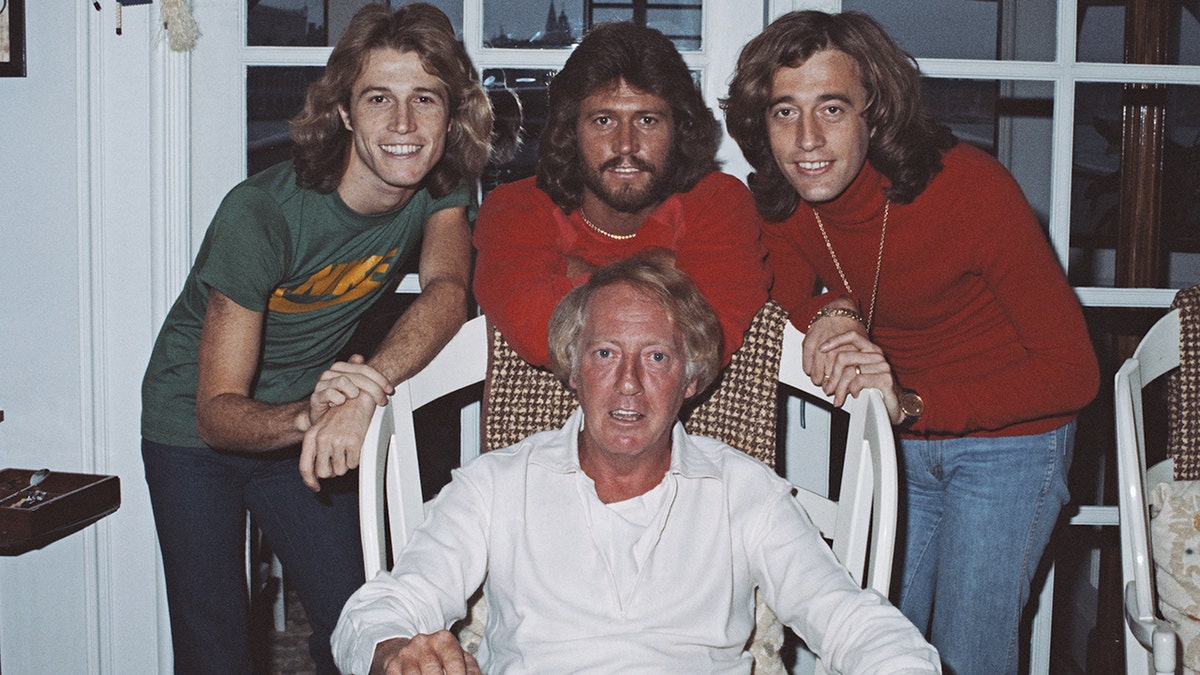
When they spoke about “Wish You Were Here,” they described something almost accidental, almost spiritual. They were writing the song without fully realizing who it was for. Then, somewhere near the heart of the process, they understood: this was about Andy Gibb. That realization gives the song its emotional weight. It is not merely a memorial piece. It is the sound of brothers discovering, through music, what their hearts had been trying to say all along.
The tragedy was made even harder by the way the press treated Andy’s death. The family had to grieve while strangers searched for a dramatic angle. The comment about a reporter being disappointed that the cause was “natural causes” captures something deeply unsettling about celebrity culture. For the public, tragedy can become a story. For the family, it is a chair left empty, a voice no longer heard in the room, a lifetime of memories suddenly sharpened by absence.
The Bee Gees’ grief also changed how they saw their parents. Losing a brother was devastating, but watching their mother and father lose their youngest child opened another level of understanding. It revealed a kind of sorrow they had not fully grasped before, even as parents themselves. That is one of the most profound parts of this story: grief does not only break people; it teaches them. It changes the way they see love, family, time, and responsibility.
Their belief that someone lost is “out there somewhere” gives the story a quiet spiritual dimension. It is not presented as a grand statement, but as the fragile hope many people hold after losing someone close. You do not truly “get over” such a loss. You learn to live beside it. You carry it differently with time. You may laugh again, sing again, work again — but the absence remains part of your inner life.
:max_bytes(150000):strip_icc():focal(539x0:541x2)/andy-gibb92-4ea9928a1a7349e3a5b6d01ab64f1071.jpg)
Perhaps the most powerful outcome of Andy’s death was the way it awakened the Bee Gees to their own purpose. They realized they had been in danger of wasting what they still had: their voices, their bond, their ability to stand before audiences and give something real. After years away from touring, they began to feel the urgency of returning not just as a studio group, but as a live group — musicians who still had something meaningful to share.
In that sense, “Wish You Were Here” became more than a song for Andy. It became a turning point. It reminded the Bee Gees that music is not only about perfection or success. It is about presence. It is about giving while you still can. It is about singing the words that grief, love, and memory place in your heart before time takes the chance away.
For anyone who has lost a brother, a son, a parent, or a dear friend, this story reaches beyond celebrity. It speaks to the universal ache of wishing someone were still here — not as an idea, not as a memory preserved in photographs, but as a living voice in the room. And that is why this moment still matters. Because behind the fame of the Bee Gees, behind the tragedy of Andy Gibb, and behind the haunting beauty of “Wish You Were Here,” there is a truth as old as music itself: love does not end when a life does. It simply finds another way to sing.