Introduction
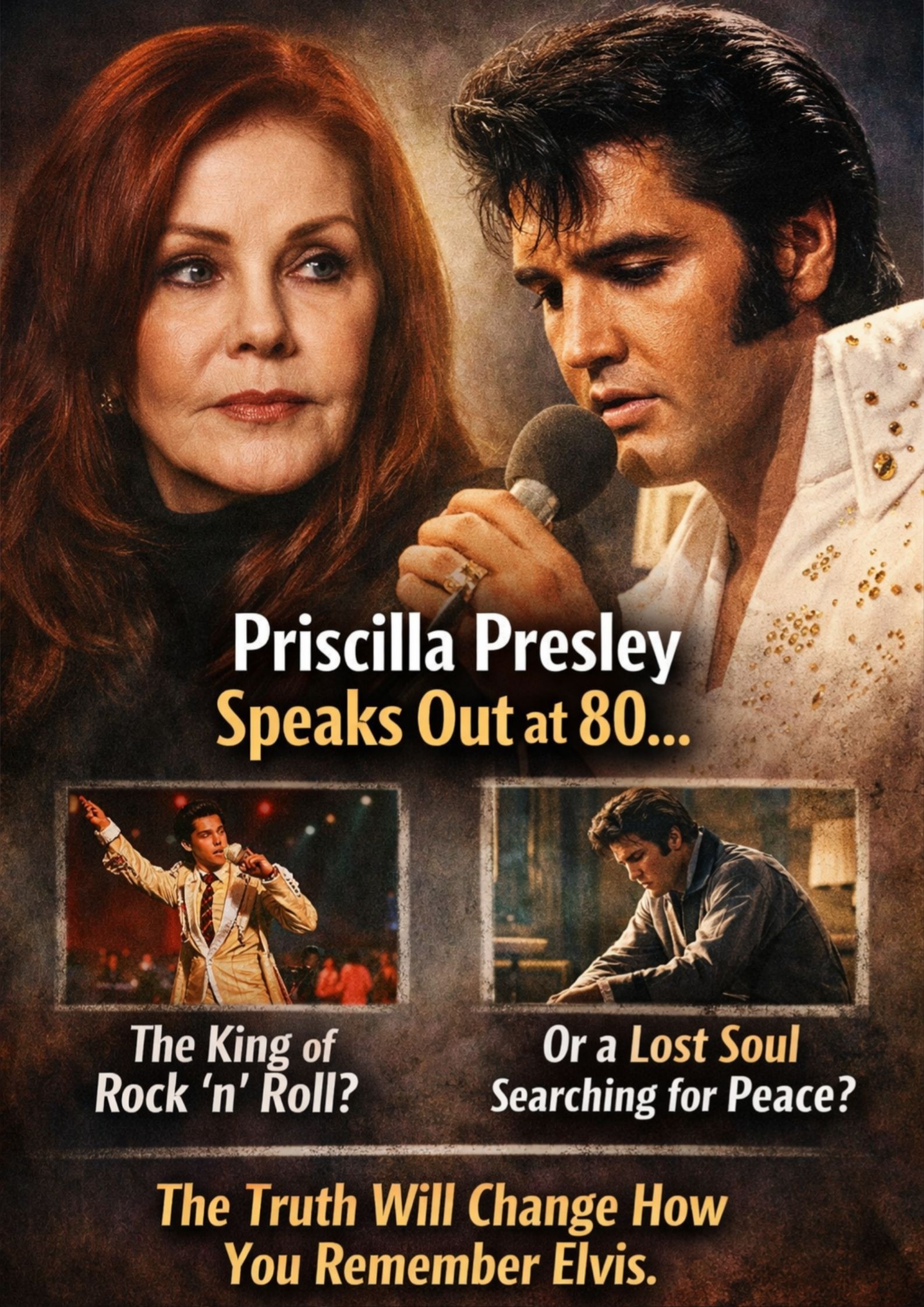
The Viral Priscilla Presley “Confession” Is Everywhere—But Here’s What She’s Actually Saying About Elvis at 80
A headline has been racing through Facebook feeds like a match tossed into dry grass: “At 80, Priscilla Presley Confirms the Rumors: ‘Elvis Presley Was Not Who You Think…’”
It’s the kind of line that practically begs to be clicked—because it suggests a locked vault has finally been opened, and the woman who stood closest to the legend has decided to dismantle the myth in one devastating sentence.
But here’s the part most people miss: that exact “quote” and the dramatic “quiet, unfiltered sit-down” framing appear to be viral storytelling, not a verifiable transcript from a mainstream interview. What is verifiable—what Priscilla Presley has said recently in reputable coverage—is both calmer and, in its own way, more revealing: she’s been trying to correct the record, push back against conspiracy culture, and describe Elvis as a human being rather than a cartoon crown.
So why are so many readers convinced they’ve just witnessed a bombshell?
Because the internet loves a “final truth” narrative—especially when it involves Elvis Presley, a figure so enormous that people still argue over where the man ends and the myth begins.
The “Rumors” Priscilla Has Actually Addressed—And Why It Matters
One of the loudest modern rumors around Elvis is also the most sensational: that he didn’t die in 1977. In a PEOPLE cover story, Priscilla Presley directly confronted that claim, describing how much untruth has swirled for years—and bluntly rejecting the idea that Elvis was secretly living somewhere in hiding.
That alone may not sound “shocking,” but consider what it represents: an 80-year-old woman who has lived inside the echo chamber of a global legend for most of her life, saying—again—enough. Elvis died in 1977 at age 42, and the fantasy that he escaped fame is exactly that: a fantasy.
And then comes the deeper layer—less clickbait, more human truth.
In that same reporting, Priscilla also pushes back on the modern packaging of their relationship as constant chaos, noting that portrayals can make it seem more “disruptive” than she experienced it. She’s not rewriting history with glitter; she’s sanding it down—insisting that real life, even under spotlights, doesn’t fit neatly into a two-hour storyline.
That’s not a scandal. It’s something rarer: an attempt at clarity.
So Was Elvis “Not Who You Think”?
If you came looking for a scandalous secret, you may be disappointed.
If you came looking for a more honest portrait of fame—especially the kind that older, experienced readers recognize—you may find something more unsettling than gossip: the possibility that Elvis wasn’t one person to begin with.
Not because he was fraudulent. Not because he was secretly evil. But because fame at that altitude forces a split—between the public symbol and the private self—until even the people closest to you sometimes don’t know which one walked into the room.
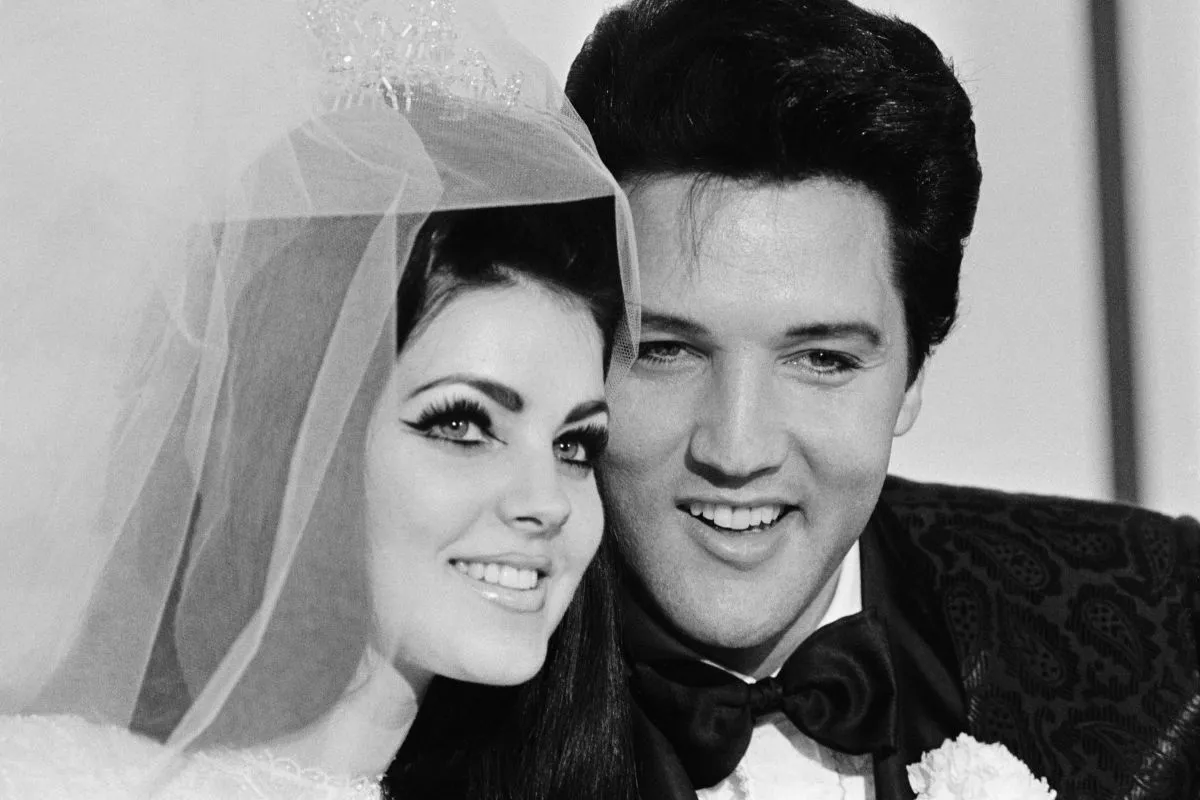
Priscilla has described the strain of being young inside Elvis’s orbit, including the loneliness of not having many people to talk to while he had an entire machine of demands surrounding him. In a more recent PEOPLE item about her reflections on their early romance, she recalled how their nights could be filled with movies at Graceland—small, domestic rituals happening inside a life the world imagines only as spectacle.
That contrast—ordinary habits inside an extraordinary cage—is the real “revelation,” even if it doesn’t trend as fast.
The Internet’s Favorite Trick: Turning Nuance Into a “Confession”
Look closely at the viral wording and you’ll see the pattern:
-
It promises “rumors confirmed.”
-
It frames a dramatic “final admission.”
-
It uses sweeping psychological language—imposterhood, spiritual exile, sabotage—without the boring burden of a primary-source transcript.
-
It wraps complexity in a neat moral bow: Elvis wasn’t who you thought.
That’s not journalism. That’s content.
And it spreads because it flatters the reader with a feeling: You’re about to learn what the public wasn’t allowed to know.
But credible coverage suggests something different is happening. Priscilla has been speaking in connection with her writing and public appearances, and she’s repeatedly focused on setting records straight—especially when wild claims distort Elvis into either a saint, a monster, or a conspiracy mascot.
The Most Grown-Up Interpretation
Here’s a more adult way to read what’s unfolding—one that will resonate with older, educated American readers who’ve lived long enough to watch public figures become brands:
Elvis can be both a towering talent and a complicated man.
Priscilla can protect a legacy and still correct the myths that grow around it.
And “not who you think” doesn’t have to mean “dark secret.”
It can mean this:
You thought you knew him because you knew the performances.
You thought you understood him because you knew the headlines.
But human beings are never as simple as their best-known photograph.
Priscilla’s most credible recent message isn’t that Elvis was a stranger. It’s that the world keeps insisting on turning him into one.
What You Should Take Away Before You Share That Headline
If you see the viral post again, treat it like you’d treat a dramatic movie trailer: emotionally effective, not necessarily factual.
And if you want the real story, look for reporting that cites verifiable interviews and clearly attributed statements—like Priscilla’s direct rejection of “Elvis is still alive” rumors, and her ongoing effort to separate memory from mythology.
Because the truth—especially the kind that lasts—rarely arrives as a single explosive quote.
It arrives as something quieter:
A person, at 80, refusing to let a legend be swallowed by the internet’s appetite for fiction.