Introduction
WHEN TWO LEGENDS SANG “WORDS,” TIME SEEMED TO STOP: Barry Gibb and Dolly Parton Turned a Bee Gees Classic Into a Moving Conversation Between Memory, Loss and Generations
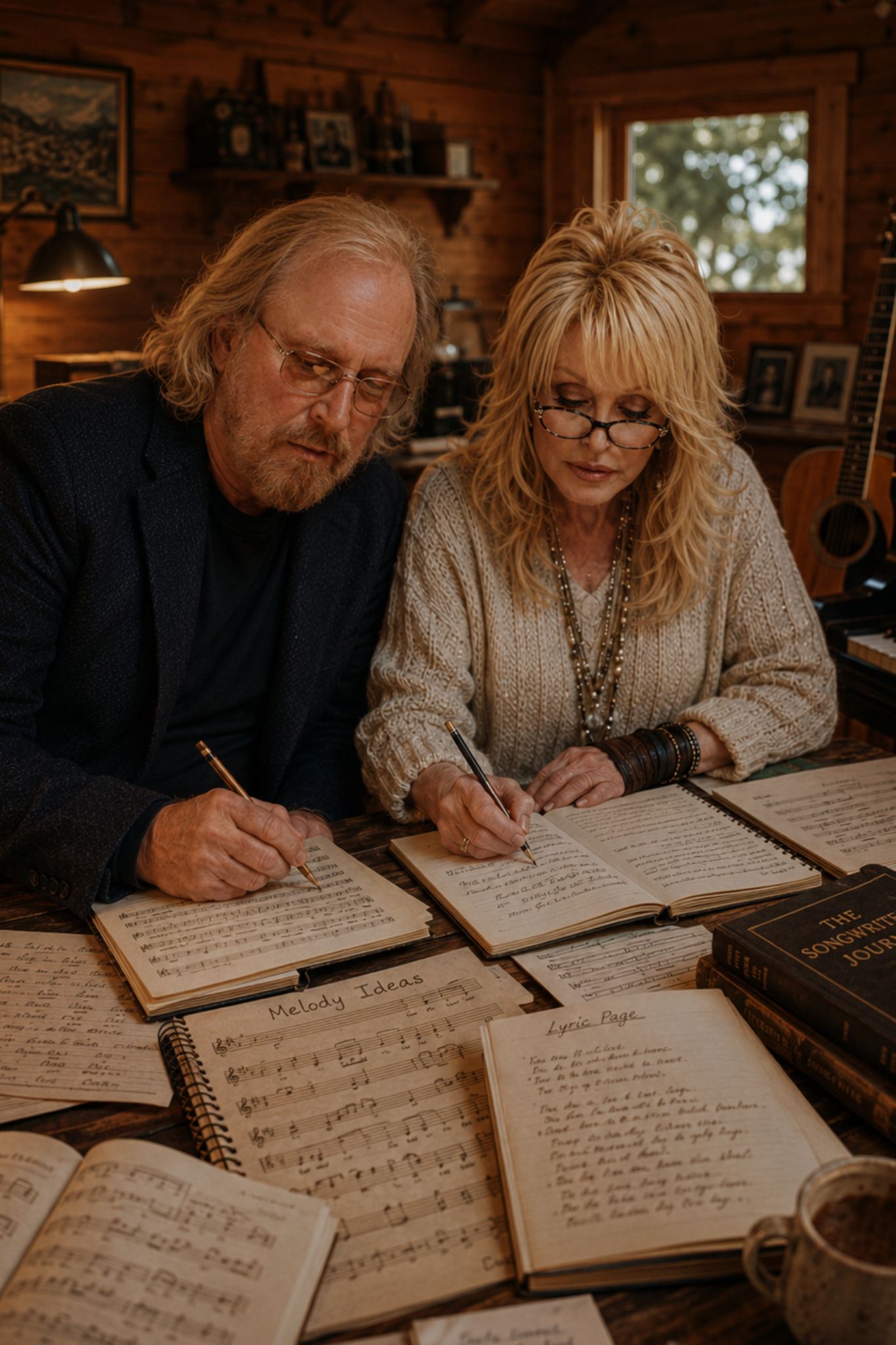
Some songs are remembered because they once dominated the radio. Others survive because they become part of the emotional vocabulary of a generation. “Words” belongs unmistakably to that second group. Written by Barry, Robin and Maurice Gibb during the Bee Gees’ extraordinary ascent in the late 1960s, the song has endured far beyond the era that first produced it. Its melody is simple enough to feel immediately familiar, yet its message carries a wisdom that becomes more meaningful with age: words may appear small, but they can preserve affection, repair distance, express regret and sometimes say what years of silence could not. More than half a century after the song first entered popular culture, Barry Gibb returned to it alongside Dolly Parton, and the result felt less like an ordinary duet than a conversation between two artists who had lived long enough to understand every emotional consequence hidden inside those famous lines.
Their recording appeared on Greenfields: The Gibb Brothers’ Songbook, Vol. 1, Barry Gibb’s 2021 collection of newly interpreted compositions from the Gibb family catalog. Rather than attempting to recreate the polished sound of earlier Bee Gees recordings, the project placed the songs in the warmer surroundings of country, folk and Americana music. Working with producer Dave Cobb, Barry revisited material that had followed him across decades, inviting a remarkable group of collaborators to meet those songs from their own musical traditions. The album included voices such as Alison Krauss, Keith Urban, Brandi Carlile, Sheryl Crow, Miranda Lambert, Olivia Newton-John, Little Big Town, and others, but the pairing with Dolly Parton possessed a particularly powerful symbolism.

Her presence does not interrupt the song. She seems to walk gently into it.
There is a remarkable patience in the way Barry Gibb and Dolly Parton sing together. Neither appears interested in overpowering the other. They listen. They leave room. Their phrases meet and separate with the ease of musicians who understand that restraint can be more powerful than demonstration. Younger performers often approach a duet as an opportunity to prove what their voices can do. Barry and Dolly seem more interested in revealing what a song can still mean after fifty years.
For older listeners, that distinction can be deeply moving.
Many people hearing “Words” today first encountered the song when life itself looked very different. They may remember hearing the Bee Gees on a small radio in a family kitchen, purchasing a record after work, dancing in a local hall or listening beside someone who is no longer there. Music has an extraordinary ability to preserve those private scenes. A melody can disappear for decades and then return unexpectedly, bringing with it a room, a face, a season, even the feeling of being young again.
When Barry sings the song now, he carries something his younger voice could never have contained: the knowledge of what happened afterward.
The Bee Gees’ story became one of extraordinary achievement, but it was also marked by profound family loss. Barry lived through the deaths of his brothers Andy Gibb, Maurice Gibb and Robin Gibb, and that history inevitably changes the emotional atmosphere surrounding any return to the Gibb songbook. Even when a performance is not explicitly presented as a memorial, listeners who know the family story hear another layer beneath the melody. A song written by three brothers becomes, decades later, a song carried forward principally by the brother who remains.
That reality gives the word “Words” itself an almost unexpected poignancy.
Words are what survive when conversations can no longer continue.
Songs are words given memory.
Perhaps that is why Dolly Parton becomes such an appropriate companion for this particular interpretation. Her own career has been built upon storytelling, remembrance, family and the ability to find extraordinary emotional truth in ordinary human experiences. She does not treat the Bee Gees composition as an artifact belonging to someone else’s history. She enters it respectfully and allows her unmistakable voice to add another lifetime to the song.
The duet therefore becomes something larger than a meeting between pop and country. It becomes an encounter between two musical traditions that have always depended upon the same fundamental truth: audiences remember songs because they recognize themselves inside them.
Barry Gibb brings the history of the composition.
Dolly Parton brings a lifetime of understanding how songs become companions.
Together, they bring age—not as a limitation, but as an advantage.
There is something refreshing about hearing two legendary performers who make no attempt to disguise the passing years. Popular culture often celebrates youth as though music becomes less meaningful once its performers grow older. This recording quietly argues the opposite. A song about communication can acquire greater authority when sung by people who have spent decades discovering how difficult communication can actually be. A lyric about tenderness may sound entirely different after marriages, children, friendships, separations, triumphs and farewells have accumulated behind the voice singing it.
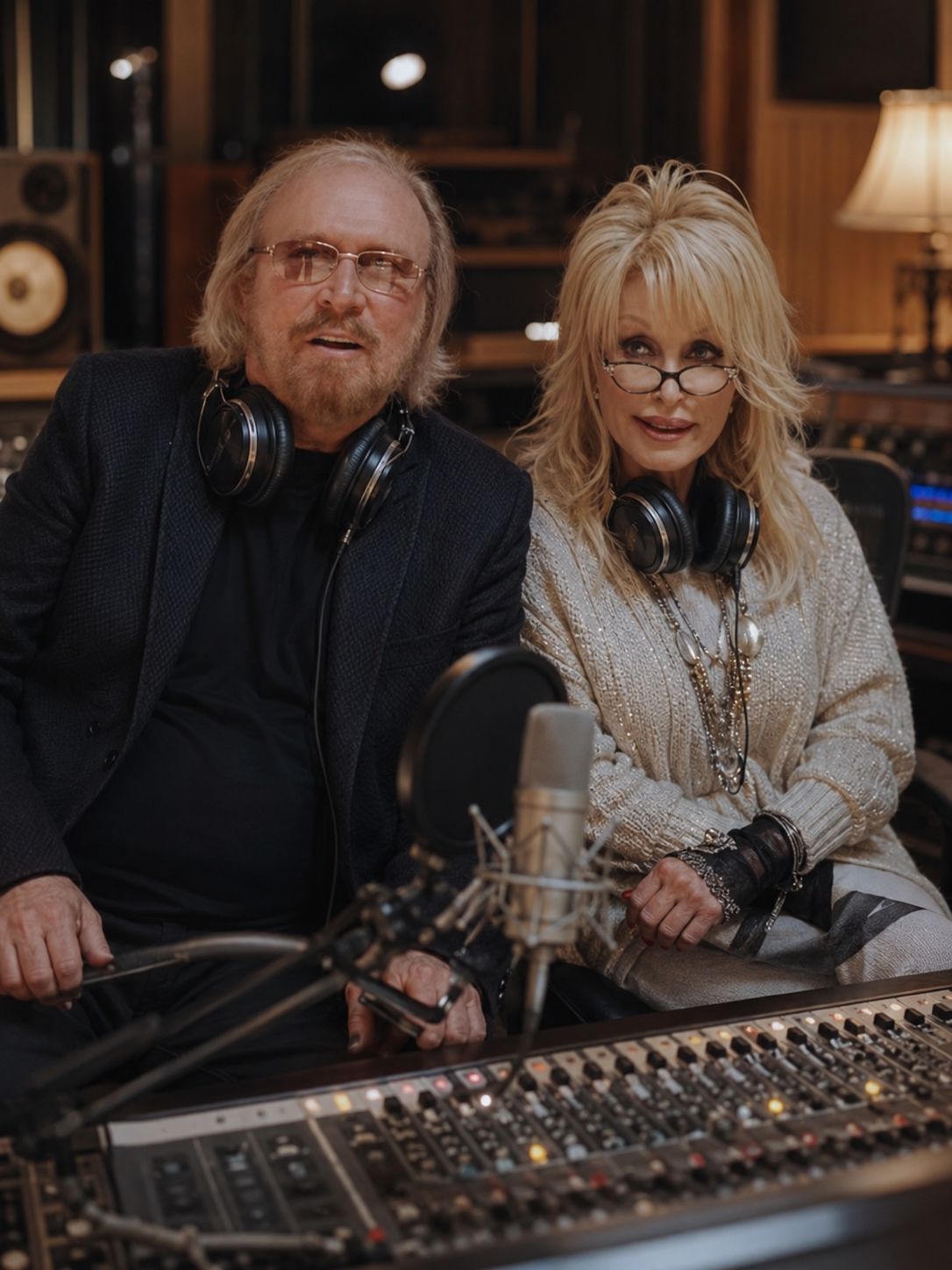
Near the end of the performance, the emotional strength does not come from a dramatic climax. It comes from the realization that these two voices have traveled extraordinary distances to meet inside a song first written when much of their lives still lay ahead. The young songwriter who helped create “Words” could not have known everything Barry Gibb would eventually experience. The young Dolly Parton beginning her own remarkable journey could not have imagined every stage, every success and every goodbye that would follow.
Yet decades later, there they are.
Two voices.
One song.
And more history between the notes than any arrangement could possibly contain.
That may ultimately be the greatest achievement of Barry Gibb and Dolly Parton’s “Words.” They do not attempt to rescue the song from the past because it was never trapped there. Instead, they reveal that a truly enduring composition continues aging with its listeners. It gathers memories. It loses people. It finds new voices. It becomes something slightly different every time another generation understands it.
What began as a Bee Gees classic therefore returns as something gentler and perhaps even more profound: a meditation on everything time takes away—and everything music somehow allows us to keep.