Introduction
49 YEARS AFTER ELVIS LEFT THE STAGE — WHY THE WORLD STILL REFUSES TO LET THE KING GO
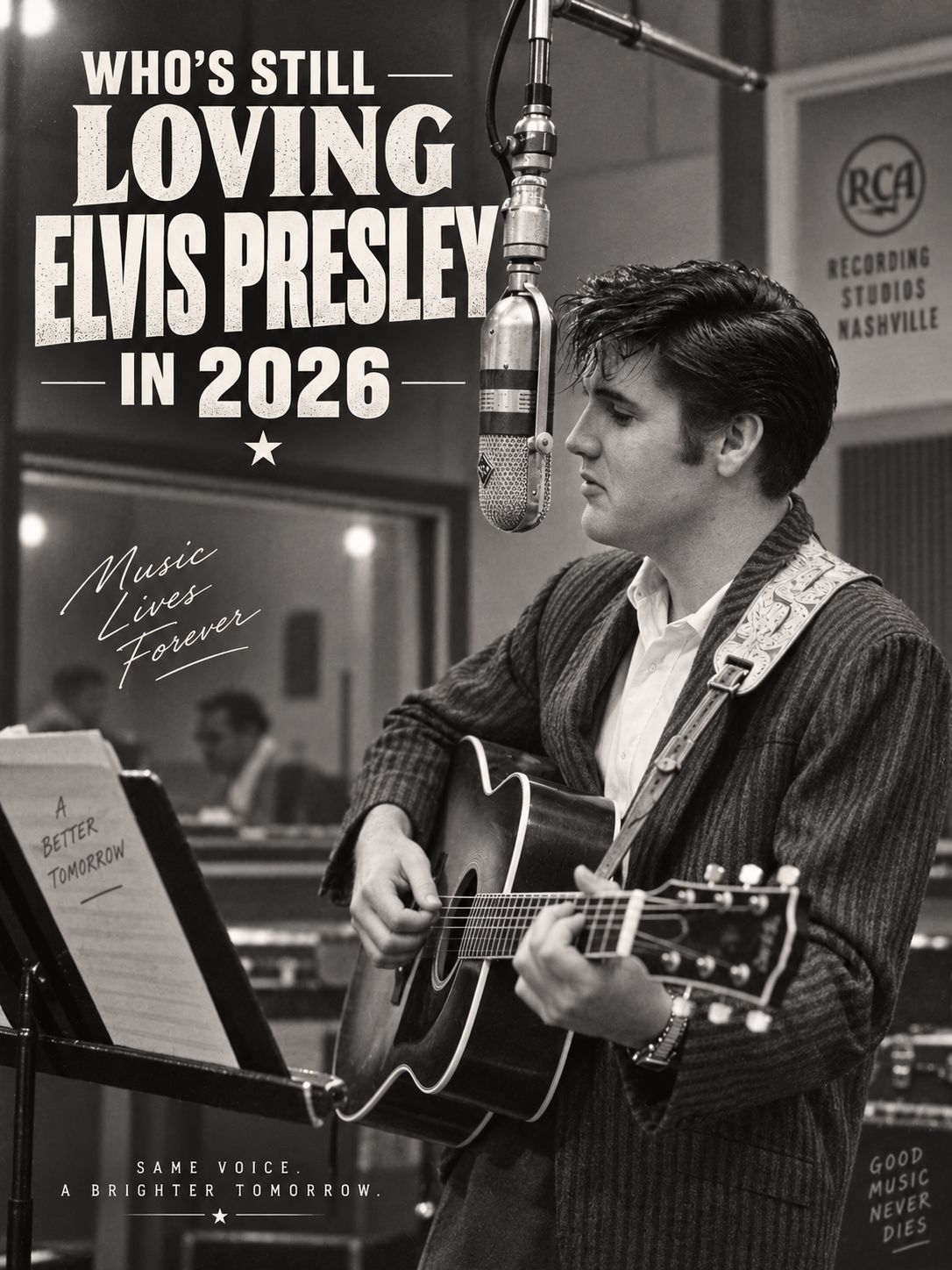
Nearly half a century has passed since Elvis Presley died on August 16, 1977, yet something remarkable has happened during those decades: the world never truly said goodbye. The hairstyles changed, musical formats disappeared, generations grew older, and countless stars rose and faded, but Elvis remained. His records continued playing. His photographs remained instantly recognizable. Young listeners who were not even born when he died began discovering “Can’t Help Falling in Love,” “Suspicious Minds,” “If I Can Dream,” “Always on My Mind,” “Love Me Tender,” and “Heartbreak Hotel.” Somehow, a singer from another era continued finding his way into completely new lives.
The evidence can be found in Memphis. Graceland, the home Elvis purchased in 1957 and where he lived for the remainder of his life, opened to the public in 1982. Today it continues to attract more than half a million visitors annually, while Graceland itself says more than 20 million people have passed through its gates since public tours began. Those visitors are not all members of the generation that witnessed Elvis in his prime. Parents bring children. Grandparents arrive with grandchildren. Visitors travel from countries where Elvis never performed, sometimes crossing oceans simply to walk through the rooms where he once lived.
Why?
Why does Elvis Presley still matter when so many enormously successful performers from his generation have gradually become names primarily remembered by historians?
Perhaps the first answer lies in the voice.
Listen again to Elvis without watching the famous photographs or thinking about the mythology surrounding him, and something extraordinary becomes obvious. His voice was remarkably flexible. He could move from rock and roll to gospel, country, blues-influenced music, pop ballads, and deeply reflective songs without sounding as though he were merely visiting those styles. The Smithsonian describes Presley as one of popular music’s best-known and most influential figures and notes how he incorporated pop, gospel, country, and blues into his distinctive musical identity.
That combination mattered because Elvis emerged at precisely the moment American popular culture was undergoing enormous change. He did not invent rock and roll by himself, and any serious appreciation of his legacy should recognize the Black musicians and earlier performers whose blues, gospel, rhythm-and-blues, and country traditions helped create the musical foundations from which rock developed. What Elvis did extraordinarily well was bring those musical currents together through a voice, personality, and performance style that reached an enormous mainstream audience. The Rock & Roll Hall of Fame credits him with helping transform the popular-music landscape through his combination of blues, country, gospel, R&B, and pop influences.
But musical importance alone cannot explain nearly fifty years of affection.
History contains many important artists whom people respect without loving.
Elvis is different because audiences still feel personally connected to him.
Perhaps part of that connection comes from the contradictions inside his story. Elvis could look impossibly confident beneath the stage lights while appearing surprisingly shy in quieter moments. He became extraordinarily wealthy yet never seemed able to completely erase the memory of growing up with very little. He became one of the world’s most famous men, but some of his most moving recordings concern loneliness, faith, longing, home, and the desire to be understood.
Older listeners often recognize something in those contradictions.
They remember where they were when they first heard his voice. Some remember buying a record with money saved from a weekly allowance. Others remember watching him on television while their parents complained about this strange new music their children suddenly loved. For them, Elvis is not merely an artist. He is a doorway into their own youth.