Introduction
“THE BOY FROM FREEHOLD WHO MADE AMERICA LISTEN” — Bruce Springsteen’s Long Road From Small-Town Dreams to the Living Soul of Rock Music
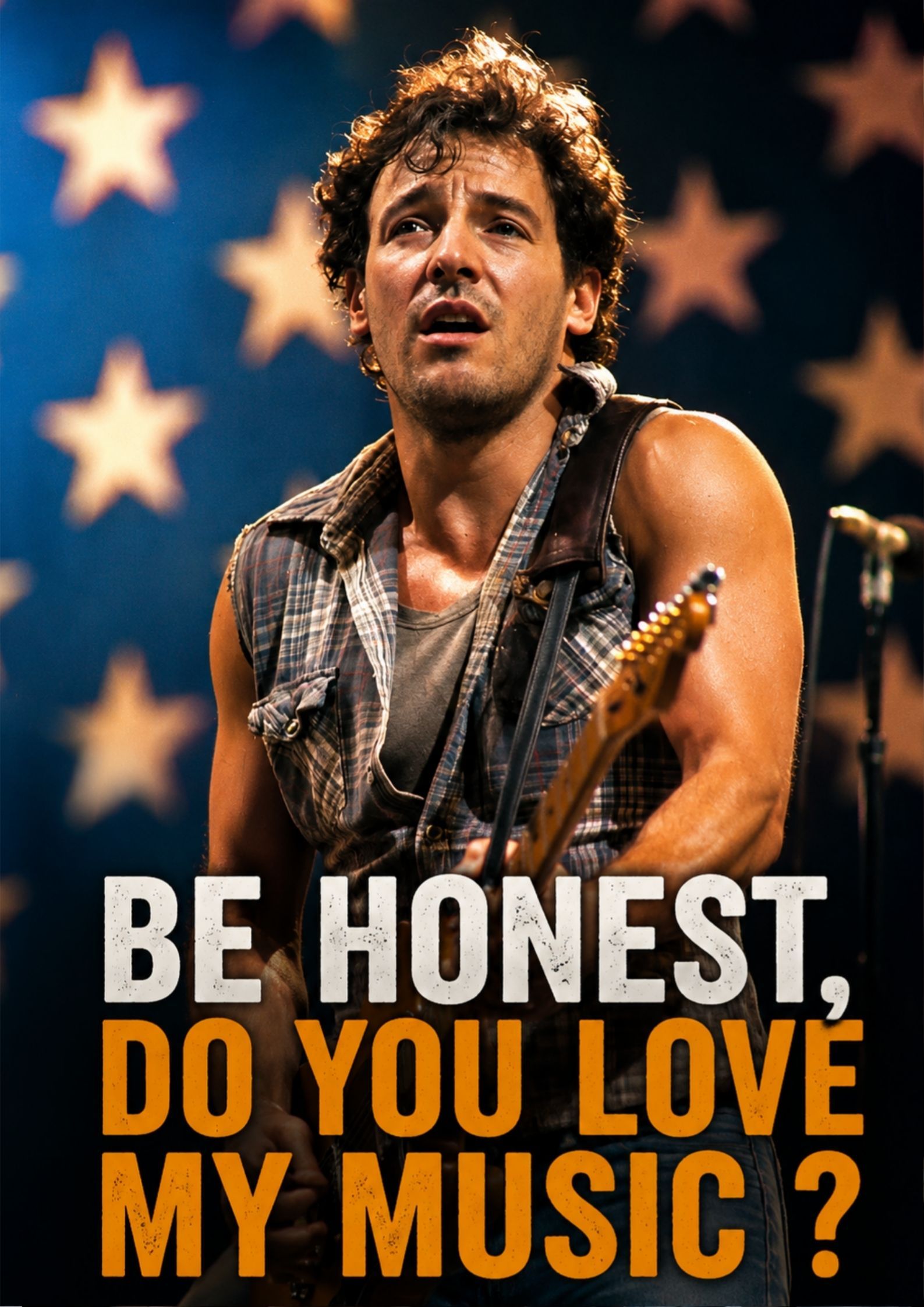
There are artists who become famous because they write songs people enjoy, and then there are rare artists whose songs become part of the emotional memory of a nation. Bruce Springsteen belongs to that second group. His career has never been only about rock music, hit records, or sold-out arenas. It has been about work, struggle, family, hometowns, broken promises, stubborn hope, and the ordinary people who carry quiet burdens without expecting applause. From Freehold, New Jersey, to the world’s biggest stages, Springsteen built a body of work that feels less like entertainment and more like a long conversation with America itself.
Born on September 23, 1949, Bruce Springsteen grew up in a working-class New Jersey town that would later become one of the great symbols of his songwriting. Freehold was not just where he came from. It became the emotional ground beneath much of his music — a place of factories, streets, families, churches, disappointments, and dreams too large to stay hidden forever. Unlike artists who tried to escape their beginnings by pretending they came from somewhere grander, Springsteen turned his hometown into a mirror. He showed that ordinary American lives contained extraordinary drama.
His musical awakening came early. Hearing Frank Sinatra on the radio gave him one kind of New Jersey pride, but seeing Elvis Presley on television opened another door entirely. Elvis showed him that music could change the air in a room. Later, when The Beatles appeared on The Ed Sullivan Show, Springsteen understood that a guitar could be more than an instrument. It could be a passport, a weapon, a prayer, and a way out. He locked himself away and learned, not because success was guaranteed, but because the music had already claimed him.
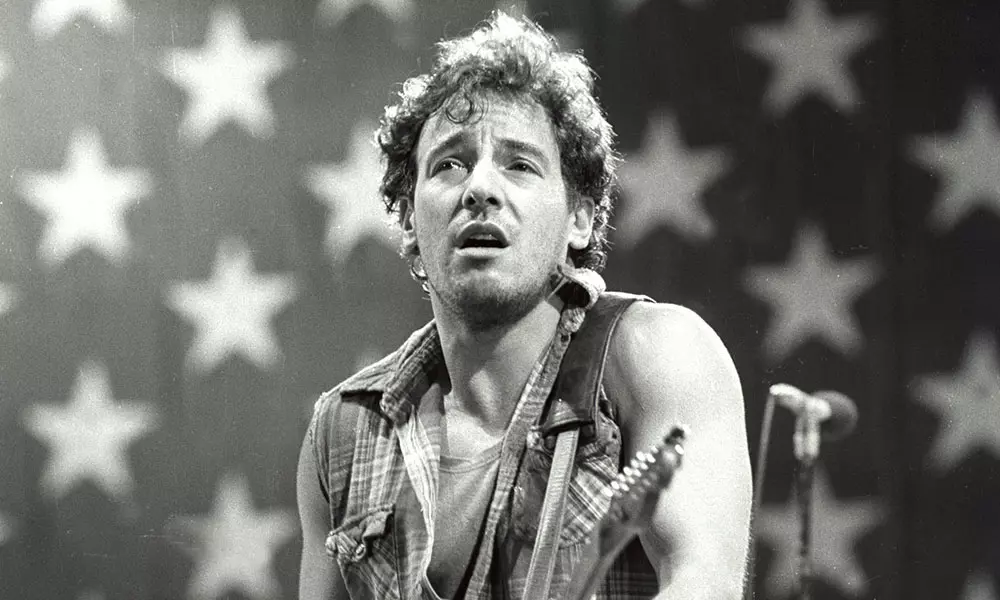
Before the world knew him as The Boss, Springsteen moved through bands, clubs, experiments, and restless beginnings. He played in groups such as The Castiles, Steel Mill, and other early projects that helped shape his sound. Those years mattered because they taught him the discipline of the stage. He learned how to hold an audience, how to stretch a song until it felt alive, and how to turn a local performance into something almost mythic. By the time Columbia Records talent scout John Hammond heard him in 1972, Springsteen was not polished in a conventional way, but he was unmistakable. Hammond heard what others would soon understand: this was a songwriter with urgency in his bones.
His debut album, Greetings from Asbury Park, N.J., introduced a young writer bursting with language, street scenes, restless characters, and poetic ambition. Commercial success did not arrive immediately, but the promise was clear. Then came The Wild, the Innocent & the E Street Shuffle, a record that expanded his world with cinematic detail and the growing power of what would become the legendary E Street Band. Still, the true turning point came with Born to Run in 1975.
Born to Run was more than an album. It was a declaration. Springsteen wanted it to sound enormous, romantic, desperate, and alive — like youth trying to outrun defeat before dawn. The title track captured the central dream of rock and roll: escape, motion, love, fear, and the belief that somewhere beyond the next road there might be a better life. When the album broke through, Springsteen was no longer simply a promising songwriter from New Jersey. He became a national figure, appearing on the covers of Time and Newsweek, carrying with him the expectations of a generation searching for authenticity.
But what makes Bruce Springsteen’s legacy so powerful is that he did not remain frozen in one triumphant moment. He kept digging deeper. Darkness on the Edge of Town brought a harder, more adult vision, one shaped by work, responsibility, silence, and moral endurance. The River widened his canvas, moving between celebration and sorrow. Nebraska, recorded at home on simple equipment, stripped everything down to the barest form and revealed how haunting his storytelling could be without stadium lights or full-band thunder.

Then came Born in the U.S.A., one of the most successful albums in rock history. Yet beneath its anthemic sound was something far more complicated than easy patriotism. Springsteen wrote about veterans, wounded communities, lost jobs, fading towns, and the emotional cost of American promises that did not always come true. That tension — between uplift and pain, between pride and criticism — is central to his greatness. He loves America enough to question it.
Over the decades, Springsteen continued to evolve without losing his center. Tunnel of Love turned inward, examining relationships and doubt. The Ghost of Tom Joad returned to stripped-down storytelling and social conscience. The Rising, created after national tragedy, offered grief, mourning, and resilience when many listeners needed a voice that could carry collective sorrow. Again and again, Springsteen proved that rock music could still be serious, compassionate, and deeply human.
For older, educated listeners, Bruce Springsteen endures because his songs respect life’s complexity. He does not write about ordinary people as symbols. He writes about them as souls. The factory worker, the veteran, the mother, the restless son, the lonely driver, the dreamer at the edge of town — all of them matter in his world. His music insists that dignity can survive hardship, and that hope, though often bruised, is still worth carrying.
That is why Springsteen remains more than a performer. He is a witness. His songs have traveled through decades because they speak to people who have worked, lost, loved, endured, and kept going. From Freehold to Born to Run, from Nebraska to The Rising, his journey has become one of the great American stories in modern music.
Bruce Springsteen did not simply sing about America.
He listened to it — and then gave its ordinary people a voice loud enough to echo for generations.