Introduction
Elvis Presley’s Final Concert: The Night Indianapolis Saw the King Take His Last Bow
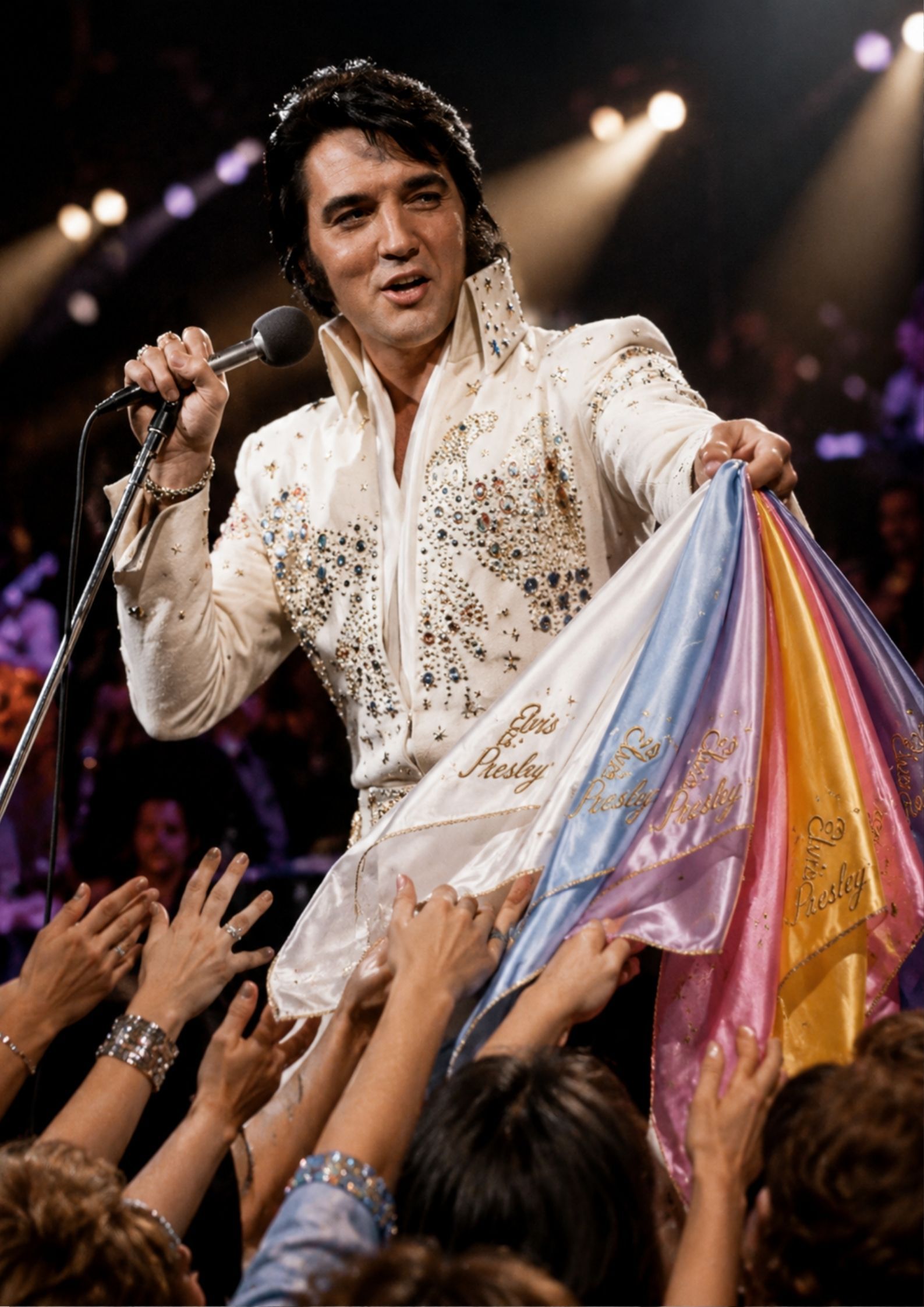
On June 26, 1977, inside Market Square Arena in Indianapolis, Elvis Presley walked onto a concert stage for what no one in the audience could have known would be the final time. To the 18,000 fans gathered that night, it was another chance to witness the man they still called The King — the voice, the presence, the cultural force who had changed American music forever. But history would later give that evening a heavier meaning. Less than two months later, on August 16, 1977, Elvis would be gone.
That is what makes Elvis Presley’s final concert so haunting. It was not announced as a farewell. There was no grand speech telling fans this was the last chapter. No one stood in that arena thinking they were watching the closing scene of one of the most extraordinary careers in entertainment history. The crowd came for music, memories, and the familiar electricity that had followed Elvis since the 1950s. What they received was a final glimpse of a legend still trying to give everything he had.
By 1977, Elvis was clearly not the young, explosive performer who had shocked television audiences two decades earlier. His health had visibly changed. He appeared tired, heavier, and physically worn by years of pressure, fame, demanding tours, and private struggles. Yet when he stepped under the lights, something unmistakable remained. The voice. The instinct. The ability to make thousands of people feel they were part of something larger than an ordinary concert.
The show opened with “Also Sprach Zarathustra,” the dramatic introduction that had become part of the Elvis concert experience. Then came “See See Rider,” “I Got a Woman,” “Love Me,” “Jailhouse Rock,” and other familiar songs that carried fans through the eras of his career. Each number was more than entertainment. It was a reminder of the distance Elvis had traveled — from Memphis poverty to worldwide fame, from scandalized television viewers to devoted audiences who never stopped believing in him.
One of the most emotional parts of the set was the way Elvis reached across different chapters of his musical identity. He moved from early rock-and-roll fire to ballads filled with longing and vulnerability. Songs like “You Gave Me a Mountain,” “Bridge Over Troubled Water,” “Hurt,” and “I Can’t Stop Loving You” carried a deeper sadness when heard in hindsight. At the time, fans may have simply heard passion. Today, many listeners hear a man singing from the edge of exhaustion, still searching for connection through music.
That night also included classics such as “Hound Dog,” “Teddy Bear,” “Don’t Be Cruel,” and “It’s Now or Never.” These songs reminded the audience of the Elvis who had once seemed almost impossible to contain — the young man who turned American culture upside down with a voice, a rhythm, and a kind of charisma that felt dangerous and thrilling. Even in his final months, that history still followed him onto the stage.
:max_bytes(150000):strip_icc():focal(499x0:501x2)/elvis-presley-performace-111324-19a754bc80a74c6dba408f44c419fa5c.jpg)
But the most unforgettable moment came near the end, when Elvis performed “Can’t Help Falling in Love.” For years, that song had served as his closing number, a graceful goodbye wrapped in tenderness. On June 26, 1977, it became something far more profound. As the final notes faded and the closing vamp played, Elvis left the stage without knowing he had just given his final concert performance.
For older fans, this fact remains almost unbearable. They remember where they were when Elvis died. They remember the shock, the radio reports, the magazine covers, and the feeling that an entire era had ended overnight. But the Indianapolis concert gives that loss a specific place and time. It tells us that the last public chapter of Elvis Presley’s stage life happened not in Las Vegas or Memphis, but before a devoted crowd in Indiana.
The tragedy of Elvis Presley’s final performance is that it was both ordinary and historic at the same time. It was a scheduled concert, a familiar setlist, another stop on the road. Yet now, every song from that night feels like a farewell message no one knew how to hear.
In the end, Market Square Arena became the place where the King took his last bow. Elvis may have been physically fragile, but he was still Elvis — still singing, still reaching, still giving the audience what they came to feel. And perhaps that is why the night remains so powerful. It reminds us that legends do not always leave with thunder. Sometimes they leave after one final song, one final wave, and a silence the world only understands later.