Introduction
Before Freddie, Plant, and Jagger Took the Stage, Elvis Presley Built the Road They Would All Walk On
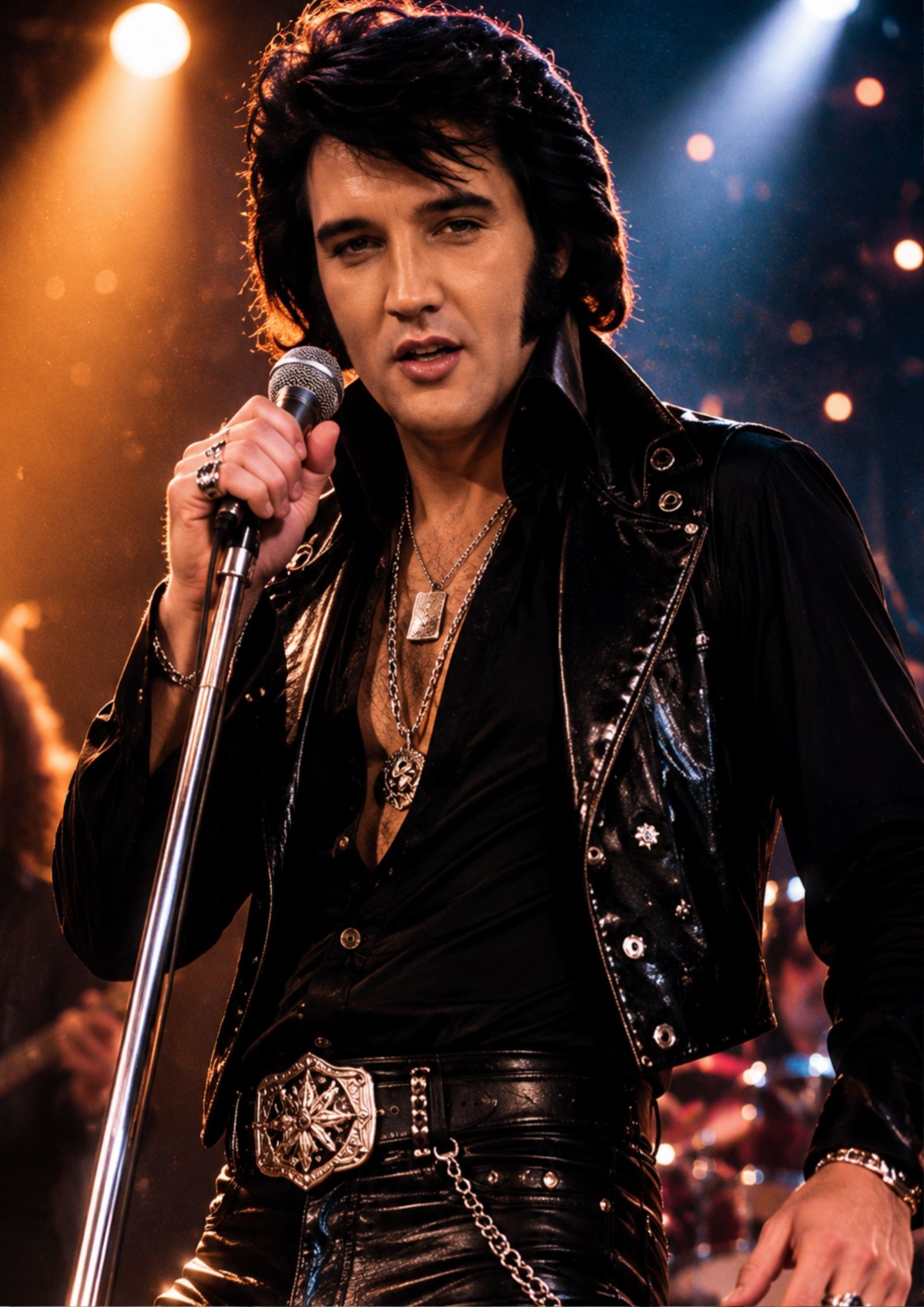
People often compare Elvis Presley to the great rock frontmen who came after him, and the comparison is understandable. Music history is filled with extraordinary performers whose voices, confidence, and stage presence changed the way audiences experienced live entertainment. Names such as Freddie Mercury, Robert Plant, Mick Jagger, and many others are often mentioned when people discuss the greatest performers of all time. Yet when we speak about Elvis, the conversation must begin from a different place. He was not simply another brilliant singer standing on a road already built by others. Elvis Presley helped create the road itself. That is why his place in music history remains so unusual, so powerful, and so difficult to compare.
When Elvis Presley emerged in the mid-1950s, popular music was still divided into separate rooms. Country music had its own audience. Gospel had its own sacred tradition. Rhythm and blues carried deep emotional force but was often kept away from mainstream platforms. Pop music followed a more controlled and polished path. Then a young man from Memphis walked into Sun Studio, carrying the sounds of the American South inside him, and something changed forever. He did not invent those musical traditions, and no honest listener should claim that he did. But he became one of the rare performers capable of bringing them together in a way that reached millions.
That is one of the great reasons Elvis Presley still feels different. He was a bridge at a moment when music needed one. Producer Sam Phillips had long believed there was an audience waiting for a singer who could cross musical boundaries with authenticity and feeling. In Elvis, he found a voice that could carry country warmth, gospel devotion, blues feeling, and rock and roll energy without sounding artificial. The result was not merely a new recording artist. It was the beginning of a cultural shift that changed how America listened, watched, danced, and dreamed.

What made Elvis Presley extraordinary was not only the sound of his voice, though that voice remains one of the most flexible and recognizable in popular music. He could move from tenderness to excitement, from spiritual reflection to youthful fire, from heartbreak to celebration, with remarkable ease. But his deeper gift was connection. When Elvis sang, listeners did not feel as if they were hearing a manufactured product. They felt as if they were witnessing someone who had absorbed the music of his upbringing and released it with instinctive sincerity.
His arrival on national television made that connection impossible to ignore. Audiences had seen singers before. They had seen polished entertainers before. But Elvis Presley brought a different kind of electricity. His presence seemed to unsettle the old rules. Some viewers were thrilled. Others were uneasy. Parents debated him. Young people embraced him. Critics argued over him. But nearly everyone watched. That reaction alone tells us something important. Elvis did not enter popular culture quietly. He forced the culture to respond.
This is where comparisons with later rock legends become especially interesting. Freddie Mercury brought theatrical brilliance and vocal command that remain astonishing. Robert Plant helped define the sound and spirit of hard rock. Mick Jagger turned movement, attitude, and stagecraft into a language of their own. These artists expanded the possibilities of popular performance in remarkable ways. Yet they arrived in a world that Elvis had already helped transform. They inherited a stage that had been made larger, louder, and freer partly because Elvis Presley had once stepped onto it and changed what audiences expected from a singer.

That does not diminish those who came after him. In fact, it helps us appreciate them more clearly. Every great artist builds upon something. The most important performers do not appear out of nowhere. They absorb influence, challenge tradition, and carry music forward. But Elvis Presley stands at one of the great turning points. He arrived when the modern popular performer was still being defined. He showed that a singer could be more than a voice on a record. A singer could become a cultural event.
John Lennon once famously said, “Before Elvis, there was nothing.” Taken literally, that statement overlooks the many brilliant artists, especially Black rhythm and blues performers, country musicians, gospel singers, and blues pioneers, whose work helped shape the music Elvis loved. But as an emotional statement, Lennon’s words captured something many listeners understood. Before Elvis, popular music had not yet felt quite the same to young audiences around the world. After Elvis, the possibilities seemed wider. The performer could be dangerous, tender, humble, defiant, spiritual, and exciting all at once.
For older and more thoughtful readers, this is why Elvis Presley continues to matter beyond nostalgia. He represents a moment when music stopped behaving politely and began speaking directly to a new generation. He gave young people a sound that felt alive. He gave older traditions a new platform. He made American music feel as if it could move across boundaries that had once seemed fixed. His greatness was not only in the records he sold or the crowds he drew. It was in the door he opened.
Nearly seventy years later, the influence of Elvis Presley still echoes through popular music. Every performer who steps onstage with total commitment, every singer who blends genres without apology, every artist who understands that presence can change a room, carries some part of the world Elvis helped shape. He arrived as a young singer with a remarkable voice. He became a phenomenon because the world recognized something larger happening through him.
Some legends follow history.
Elvis Presley helped make it.