Introduction
Before the Bee Gees Became Legends: The Family Secret Behind the Harmonies That Changed Music Forever
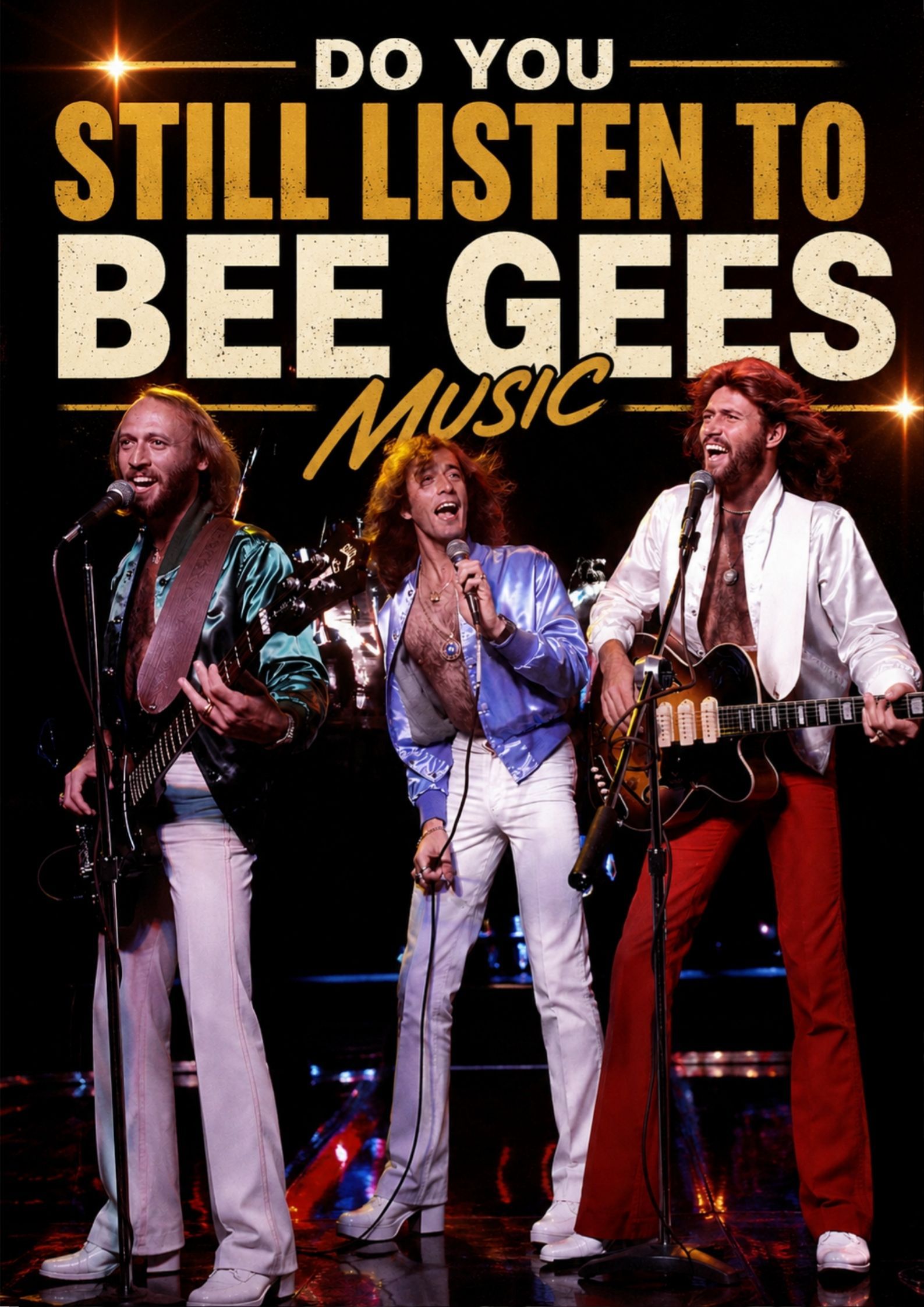
Long before the Bee Gees became a worldwide symbol of harmony, reinvention, and musical brilliance, their story began in the most ordinary and extraordinary place of all: home. Unlike many famous groups that were formed through auditions, chance meetings, or professional arrangements, Barry Gibb, Robin Gibb, and Maurice Gibb did not need to search for one another. They were brothers before they were bandmates, and that simple fact gave their music an emotional foundation no studio could manufacture. Their voices were not merely trained to blend; they had grown together through childhood, family life, shared rooms, shared dreams, and the quiet understanding that only siblings can know.
The oldest of the three, Barry Gibb, was born on September 1, 1946, on the Isle of Man, a small island between Great Britain and Ireland. Three years later, on December 22, 1949, fraternal twins Robin Gibb and Maurice Gibb followed. From the beginning, music surrounded the family. Their father, Hugh Gibb, was a drummer and bandleader, a man who understood rhythm, discipline, and the demands of performance. Their mother, Barbara Gibb, was remembered as a gifted singer, adding another musical thread to the household. It would be easy to say the boys simply inherited talent, but that explanation feels too small for what eventually happened. Talent may have lived in the family, but ambition, imagination, and creative hunger belonged to the brothers themselves.
Even before anyone recognized them as future stars, the signs were there. Neighbors remembered young Barry strumming a tennis racket like a guitar, pretending to perform on a dock, while Robin and Maurice followed closely behind. That picture is charming, but it is also revealing. It shows a child already hearing music in his head before he had the proper instrument in his hands. It shows younger brothers naturally drawn into his orbit, not by pressure, but by shared instinct. In those early moments, the pattern of the Bee Gees was quietly forming: Barry leading, the twins surrounding him, and all three discovering that together they could create something stronger than any one of them alone.
Their family moved to Manchester, England, in 1955, and that relocation became a crucial turning point. Manchester after the war was not an easy place. It was a city still carrying the marks of hardship, rebuilding, and working-class determination. Yet sometimes difficult surroundings sharpen artistic dreams rather than weaken them. For the Gibb brothers, life in Manchester brought their music closer to public view. The family home became the first stage, and childhood imagination slowly began turning into performance. The boys were not yet famous, not yet polished, not yet carrying the name that would one day fill record shops and concert halls around the world. But their sound was becoming undeniable.
What made their early development so remarkable was that no one appeared to force it into existence. By many accounts, the brothers discovered their gift naturally. They sang because they wanted to sing. They performed because something inside them needed an audience, even if that audience was only family, neighbors, or passersby. This is one of the most powerful parts of the Bee Gees story. Their greatness did not begin as a business plan. It began as childhood play, family closeness, and the mysterious chemistry of three related voices finding one another before the world knew how much it needed them.

For older and more thoughtful listeners, this origin story adds deeper meaning to the music. When we hear the Bee Gees now, we are not simply hearing famous harmonies from another era. We are hearing the echo of brothers who learned to listen to each other long before fame complicated everything. Their songs carry that early closeness even when the arrangements became grand, sophisticated, and commercially successful. Whether in the aching ballads of their early years or the confident sound that later dominated the 1970s and 1980s, the heart of the group remained the same: three brothers joined by blood, memory, and sound.
It is also worth remembering that the Bee Gees did not emerge from privilege or easy circumstance. Their rise was built on movement, uncertainty, and perseverance. From the Isle of Man to Manchester, and later to Australia, their journey reflected a family searching for opportunity while the boys searched for their musical identity. That movement gave their songs a feeling of longing that would appear again and again throughout their career. Perhaps that is why so many of their recordings seem to understand distance, home, regret, and return. Those emotions were not invented for entertainment; they were woven into the brothers’ lives.
The story of Barry, Robin, and Maurice Gibb reminds us that musical history is often born quietly. Before the awards, before the fame, before the global success, there was a boy with a tennis racket, two younger brothers following him, and a family whose everyday life became the cradle of an extraordinary sound. The world would later know them as the Bee Gees, but first they were simply three brothers learning that when they sang together, ordinary life became unforgettable. That is the real beginning of their legend—and perhaps the reason their music still feels so deeply human today.