Introduction
They Were Told Their Time Was Over—Then the Bee Gees Changed Popular Music Forever
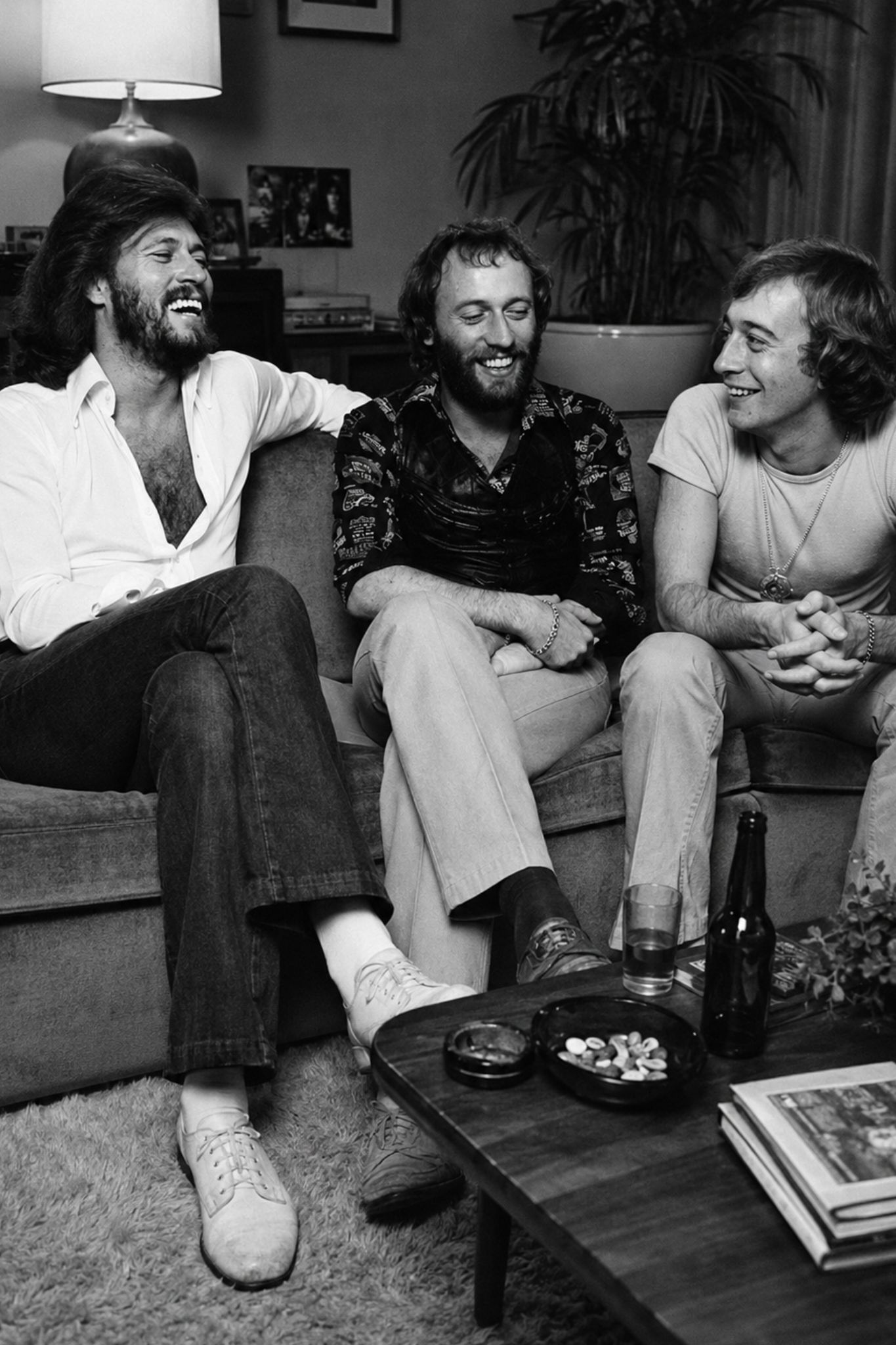
Few musical journeys contain as many dramatic reinventions as the story of the Bee Gees. To many listeners, the name immediately brings back the bright pulse of the late 1970s: crowded dance floors, glittering lights, white stage costumes, and the unmistakable opening rhythm of “Stayin’ Alive.” Yet reducing Barry, Robin, and Maurice Gibb to one musical era overlooks the true scale of their achievement. Before they became symbols of disco, they had already built a respected career through melancholy ballads, orchestral pop, expressive storytelling, and some of the most distinctive family harmonies ever placed on record. Their lasting importance lies not merely in how successful they became, but in how courageously they changed when the world around them changed.
The brothers’ story began far from the wealth and international attention that later surrounded them. Barry Gibb and his younger twin brothers, Robin and Maurice, discovered their natural harmony while still children. Their first public performance took place in 1956 at a neighborhood cinema, where a broken record forced them to sing rather than simply imitate another performer. The reaction from the young audience convinced them that music could become more than a childhood amusement. When the Gibb family emigrated to Australia in 1958, the brothers continued performing wherever an audience could be found, including local television programs, clubs, theaters, and even a speedway. Their name gradually developed from the B.G.’s into the Bee Gees, representing the Brothers Gibb.
Those early years were not a smooth journey toward success. The brothers recorded several singles that attracted little attention, learning disappointment long before they experienced international fame. Their persistence finally produced the Australian hit “Spicks and Specks” in 1966, although the family had already begun returning to England by the time the record’s popularity became clear. Soon after their arrival, manager Robert Stigwood heard their recordings, recognized the unusual quality of their writing and harmony, and signed them in 1967. Their first major international album, Bee Gees’ 1st, included “New York Mining Disaster 1941,” announcing the arrival of three young writers with an instinct for drama, melody, and emotional atmosphere.
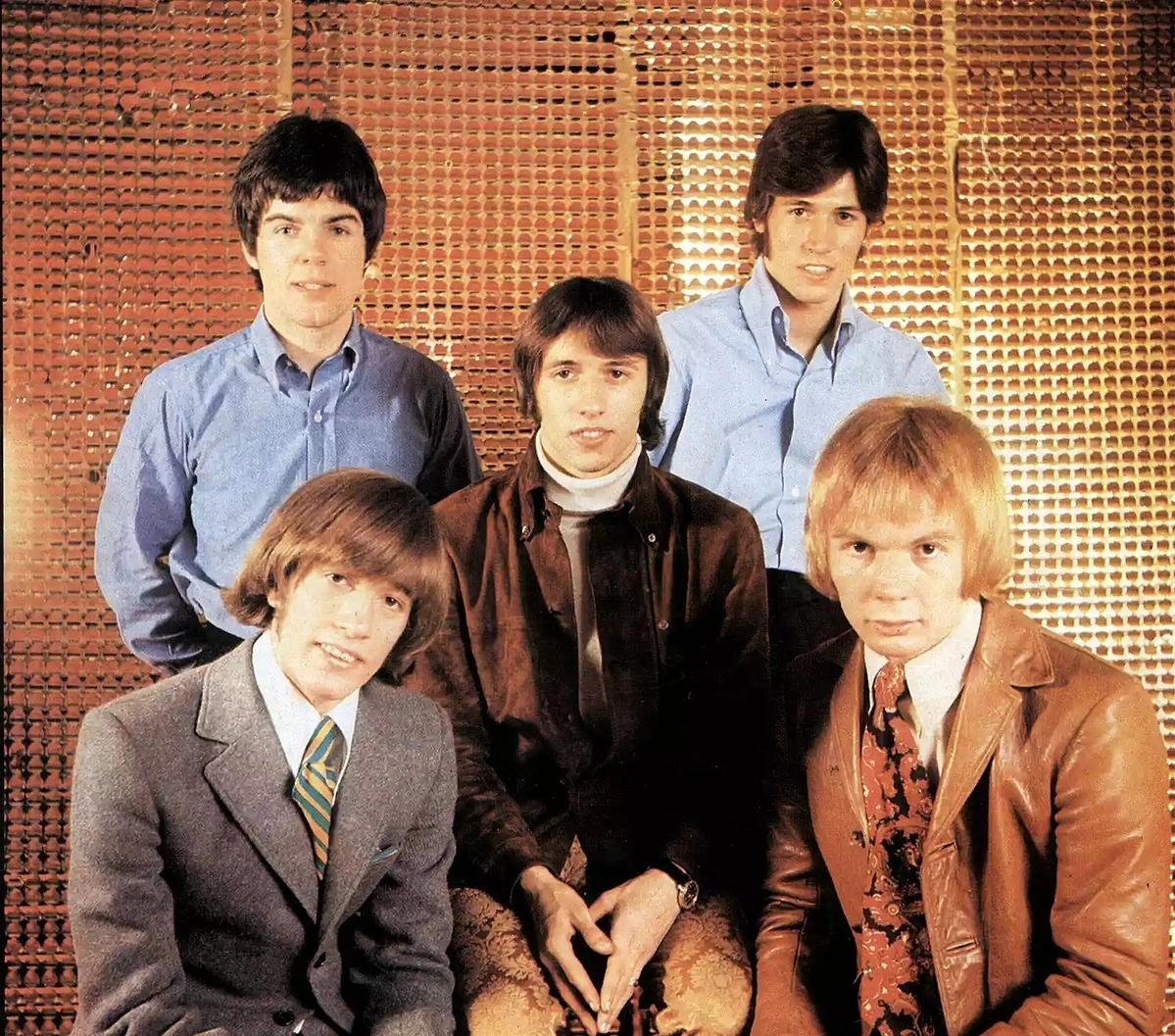
The early Bee Gees did not sound like the group many casual listeners associate with the disco era. Their recordings from the late 1960s and early 1970s often possessed a reflective, sometimes sorrowful quality. Songs such as “Massachusetts,” “To Love Somebody,” “I Started a Joke,” and “How Can You Mend a Broken Heart” revealed an ability to express loneliness without becoming cold or distant. Robin’s trembling lead voice could make a lyric sound almost unbearably vulnerable, while Barry supplied warmth and melodic strength. Maurice, a versatile musician and arranger, helped create the instrumental foundation that allowed the brothers’ voices to move together with remarkable precision.
The harmony was not simply a decorative feature placed behind the lead singer. It was the heart of the group. The brothers often recorded around a single microphone, blending their parts at the moment of performance rather than depending upon studio technology to correct them later. Engineers who worked with them remembered that the brothers might complete dozens of takes to achieve the balance they wanted. Their voices had been shaped by years of singing together, and each brother appeared to understand instinctively where the others would move next.
That musical closeness did not mean their relationship was always peaceful. Like many families working under extraordinary pressure, Barry, Robin, and Maurice argued, separated briefly, and struggled with the competing demands of individual ambition and brotherly loyalty. Their disagreements could be intense because each understood the abilities of the others and refused to accept anything less than their finest effort. Yet the conflict was balanced by a creative connection that no outside musician could reproduce. They might challenge one another sharply in the studio, but they repeatedly returned to the work—and to each other.

By the middle of the 1970s, however, the musical world had changed, and the Bee Gees faced the possibility of becoming associated with an earlier generation of pop. Their career had experienced difficult periods, and younger audiences were turning toward new rhythms and styles. Instead of trying to recreate the sound of their first success, the brothers made one of the boldest transformations in popular-music history. Working with producer Arif Mardin during the making of Main Course in 1975, Barry began exploring the high falsetto that would soon become one of the group’s defining sounds. The transformation was not a rejection of their earlier identity. It was an extension of their greatest strengths: melody, harmony, rhythm, and emotional immediacy.
The new approach introduced a harder rhythmic foundation and a greater influence from soul and dance music. Songs such as “Jive Talkin’” demonstrated that the Bee Gees could sound contemporary without losing their identity. Their harmonies remained unmistakable, but they now moved across bass lines and dance rhythms with an urgency that appealed to an entirely new audience. The familiar voices had discovered another language.
Then came “Saturday Night Fever.”
The Bee Gees did not merely contribute a few songs to an already completed cultural phenomenon. Their music became central to the identity of the film and its era. They performed six tracks included on the soundtrack and wrote seven, including material recorded by other artists. “Stayin’ Alive,” “Night Fever,” and “How Deep Is Your Love” offered different dimensions of the same creative breakthrough. One carried a rhythm of urban survival, another captured the excitement of the dance floor, and the third proved that the brothers had not abandoned the tenderness of their earlier ballads.
The soundtrack’s achievement was extraordinary. “How Deep Is Your Love” earned the brothers their first Grammy Award, and the following year the soundtrack received four more, including Album of the Year. It remains the only disco album to receive that honor, and it was later inducted into the Grammy Hall of Fame. The success did more than produce enormous sales. It helped place dance music at the center of international popular culture and made the Bee Gees among the most recognizable performers in the world.
Yet the scale of that triumph eventually created another problem. The brothers became so closely connected with disco that many people forgot how broad their musical history had been. When public enthusiasm for the style declined, the Bee Gees faced ridicule and rejection despite having spent years creating music before the disco explosion. Once again, they were treated as though their moment had ended.
Once again, they endured.
Their ability to survive reflected a truth that longtime listeners already understood: the Bee Gees were never merely performers following a fashionable sound. They were songwriters first. Barry, Robin, and Maurice possessed a rare understanding of how a melody should rise, when a harmony should enter, and how a simple phrase could carry emotional meaning. Even when changing trends affected their public image, the craftsmanship beneath the recordings remained strong.
This is why their songs have continued to travel so easily between generations. A younger listener may first encounter “Stayin’ Alive” in a film, television program, or family celebration, then discover the quiet heartbreak of “How Can You Mend a Broken Heart.” Another may begin with the drama of “Night Fever” and eventually find the gentle beauty of “Words.” The musical surface changes, but the emotional center remains recognizable.
The numbers confirm the extraordinary reach of that work. The Recording Academy credits the Bee Gees with 30 American Top 40 hits and nine No. 1 singles, while the Rock & Roll Hall of Fame states that their worldwide record sales exceeded 200 million. They were inducted into the Rock & Roll Hall of Fame in 1997 and later received the Recording Academy’s Lifetime Achievement Award in 2015.
Still, statistics cannot fully explain why the music endures. Records are remembered because they become part of people’s lives. The Bee Gees provided songs for first dances, long journeys, family gatherings, private heartbreaks, and evenings when listeners simply needed to feel younger again. Their music could be elegant without becoming distant, dramatic without losing sincerity, and joyful without ignoring the difficulties beneath the celebration.
The story of the Bee Gees is therefore not simply the story of three brothers who helped define disco. It is the story of artists who refused to remain frozen inside the sound that first made them successful. They experienced rejection, family conflict, changing fashions, and the burden of overwhelming fame, yet continued to create because music was not merely their profession. It was the language they had shared since childhood.
They began as boys harmonizing together with little more than a guitar and an ambition. They became balladeers, pop stars, dance-music pioneers, respected producers, and members of the Rock & Roll Hall of Fame. Through every transformation, one element remained constant: three voices joined by blood, memory, and an instinct for melody that the passing decades could never silence.