Introduction
Andy Gibb Was Only 30 When the Music Stopped—And the Gibb Family Was Never the Same Again
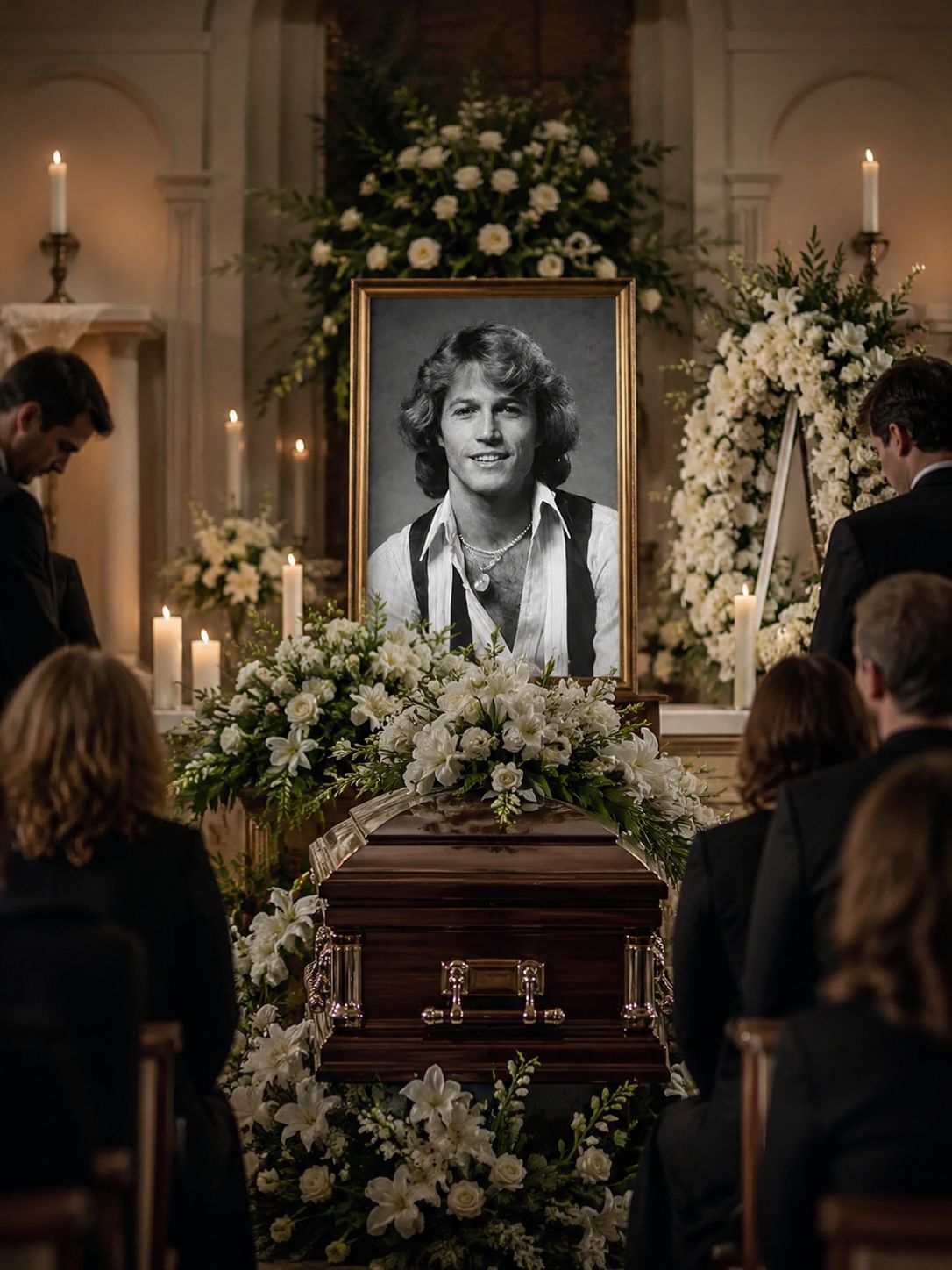
On March 10, 1988, the music world lost one of its brightest young voices. Andy Gibb, the gifted singer whose romantic ballads and effortless charm had made him an international star, died only five days after celebrating his thirtieth birthday. His passing was sudden, devastating, and almost impossible for his admirers to comprehend. Less than a decade earlier, he had appeared unstoppable, becoming the first solo artist in history to send his first three singles to the top of the Billboard Hot 100. Yet behind the golden records, television appearances, and youthful confidence was a deeply sensitive man struggling beneath pressures that fame could neither explain nor heal.
Andy was born in England on March 5, 1958, the youngest child in a family already destined to transform popular music. That same year, his older brothers—Barry, Robin, and Maurice Gibb—began the musical journey that would eventually make the Bee Gees one of the most successful groups in recording history. Their extraordinary harmonies, emotional songwriting, and ability to adapt across changing musical eras produced enduring classics such as “You Should Be Dancing,” “How Deep Is Your Love,” and “Stayin’ Alive.”
Growing up as the youngest Gibb meant that Andy was surrounded by music from childhood. He admired his brothers, learned from their discipline, and absorbed the instinctive understanding of melody that seemed to run through the entire family. Yet he was never simply an extension of the Bee Gees. Andy possessed his own vocal personality—softer, more vulnerable, and perfectly suited to the sweeping love songs that dominated radio during the late 1970s.
His international breakthrough arrived with the release of “Flowing Rivers” in 1977. The album introduced a young performer with movie-star looks, a warm voice, and an emotional directness that immediately connected with listeners. His brothers supported him creatively, particularly Barry, who helped write and produce several recordings, but Andy’s ability to communicate the songs belonged entirely to him.
The first single, “I Just Want to Be Your Everything,” became a major success. Its gentle melody and heartfelt performance established Andy as far more than the younger brother of famous musicians. He followed it with “(Love Is) Thicker Than Water,” another chart-topping recording that demonstrated his ability to sing with both confidence and tenderness.
Then came “Shadow Dancing.”
Released in 1978, the song became the defining hit of Andy’s career. It remained at the top of the American charts for several weeks and transformed him into one of the most recognizable young entertainers in the world. With those three consecutive No. 1 singles, Andy achieved something no solo artist had accomplished before: each of his first three releases reached the summit of the Billboard Hot 100.
For a young man still in his early twenties, the rise was breathtaking. Television programs wanted him. Magazines placed him on their covers. Concert audiences responded to him with extraordinary enthusiasm. His albums “Shadow Dancing” and “After Dark” extended his popularity, while songs such as “An Everlasting Love,” “Our Love (Don’t Throw It All Away),” and “Desire” confirmed his gift for turning emotional uncertainty into memorable pop music.
Andy also expanded beyond recording. He appeared in theatrical productions, including “The Pirates of Penzance” in 1981 and “Joseph and the Amazing Technicolor Dreamcoat” in 1982. He also co-hosted the television music program “Solid Gold,” where his natural charm made him a familiar presence in American homes.
From the outside, his life appeared complete. He had wealth, fame, family connections, and an audience that adored him. Yet success arrived before he had developed the emotional stability needed to withstand its demands. The same sensitivity that gave his voice such warmth may also have made him particularly vulnerable to criticism, loneliness, and disappointment.
At the height of his popularity, Andy struggled with substance dependency and serious emotional distress. Professional opportunities began disappearing as his health and reliability deteriorated. Performances were canceled, television work ended, and the young star who had once seemed destined for decades of success watched his career begin to collapse.
In a candid 1982 television interview, Andy acknowledged how far he had fallen. He described having endured a severe emotional breakdown and admitted that he had damaged the life he had once dreamed of possessing. His honesty was painful because it revealed that he understood the consequences of his choices, even while struggling to escape them.

The Gibb family repeatedly attempted to help him. His brothers remained protective, and Barry shared an especially close connection with him. Unlike Maurice and Robin, who were twins and naturally bonded to each other, Barry and Andy were closely matched in temperament and interests. They spent considerable time together, wrote music together, and understood one another in a way that went beyond professional collaboration.
With his family’s encouragement, Andy entered treatment at the Betty Ford Center in 1985. There were periods when recovery seemed possible. He spoke about rebuilding his life and hoped to return to recording. His brothers were reportedly preparing to work with him again, and the possibility of an artistic comeback offered him something he desperately needed: a future.
But the years of physical and emotional strain had taken a severe toll.
On March 9, 1988, Andy collapsed in England after experiencing chest pain and was taken to the hospital. The following day, doctors were unable to save him. His death was attributed to myocarditis, an inflammation of the heart muscle. He was only thirty years old.
The timing made the tragedy even more unbearable. Andy had celebrated his birthday just days earlier. He had been discussing new plans. His family believed that another chapter might still be possible. Instead, they were forced to confront a loss unlike anything they had previously endured.
Years later, Barry spoke openly about the devastation Andy’s death brought to the Gibb family. He described it as heartbreaking and explained that the family had never truly experienced such a loss before. Andy’s passing changed the relationship among the surviving brothers because his absence could not be repaired or replaced.
The tragedy became even more poignant as time passed. Maurice Gibb died in 2003, and Robin Gibb followed in 2012. Barry eventually became the last surviving Gibb brother, carrying not only the Bee Gees’ musical history but also the memories of three brothers whose voices had once surrounded him.
For longtime listeners, Andy Gibb’s story remains difficult because his success and decline occurred with such extraordinary speed. He did not gradually fade from public attention after a long career. He rose, dazzled the world, struggled publicly, and disappeared before reaching an age when many artists have only begun to understand themselves.
Yet his life should not be remembered only as a warning about fame. Andy Gibb was a genuinely gifted singer whose finest recordings still possess emotional warmth and melodic beauty. His voice carried hope, uncertainty, affection, and longing with an honesty that continues to reach listeners decades after his passing.
When “Shadow Dancing” plays today, it does not sound like a historical curiosity. It still moves with youthful energy. When “I Just Want to Be Your Everything” begins, Andy’s voice remains tender and immediate, untouched by the years that have passed. The records preserve the young man at his brightest, even as history reminds us of the private struggle behind the smile.
Andy Gibb died far too young, but his voice never truly left. It survives in the songs, in the memories of his family, and in the hearts of listeners who still wonder what he might have achieved had time, recovery, and another chance been granted to him.