Introduction
110,905 PEOPLE CAME TO SEE GEORGE STRAIT—BUT THE MOST POWERFUL MOMENT WAS NOT A SONG
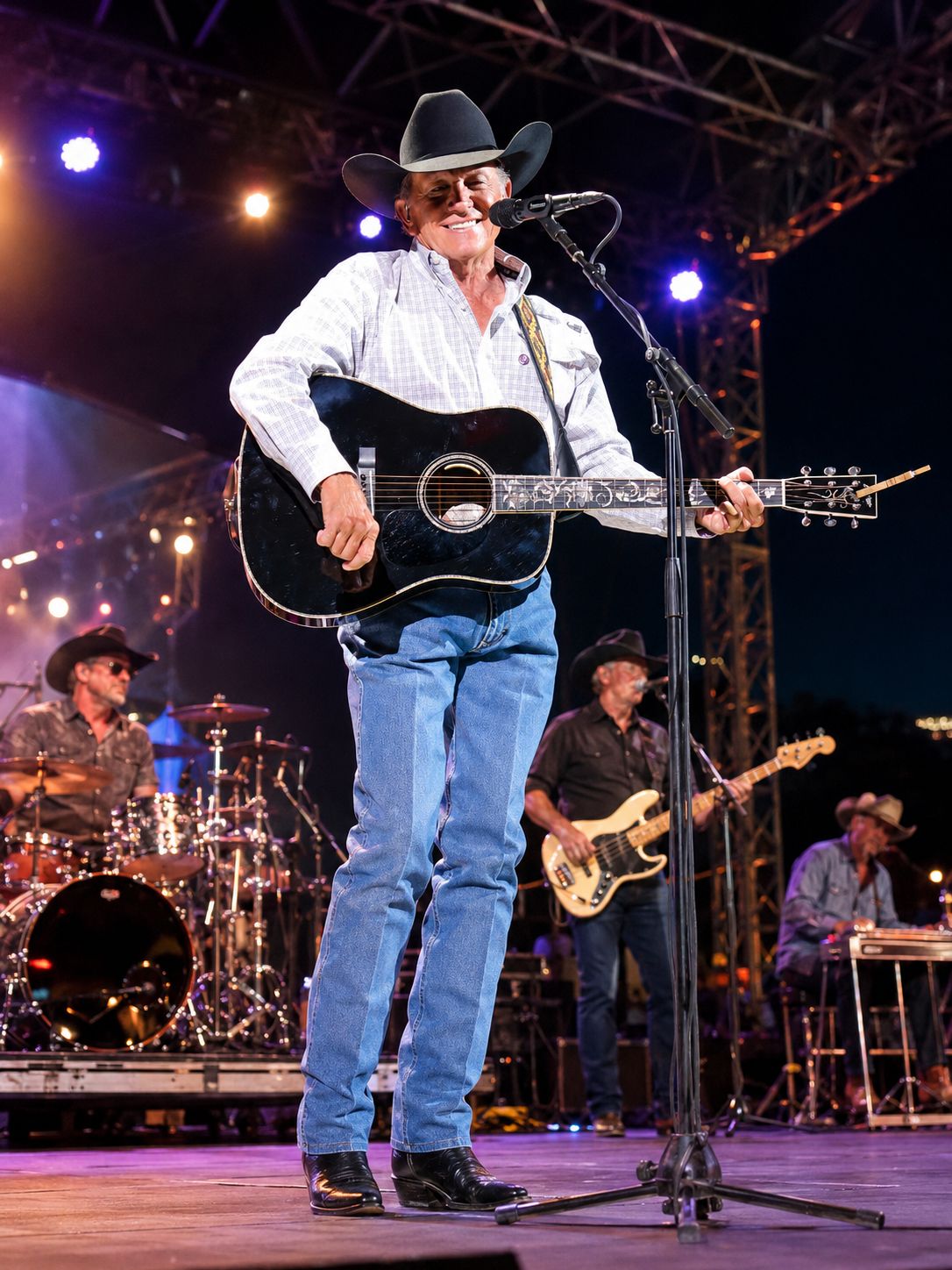
For most performers, breaking a national attendance record would become the loudest chapter of an already celebrated career. There would be dramatic speeches, elaborate declarations, and endless reminders of the achievement. But George Strait has never measured his life through noise. Even when more than 110,000 people gathered to witness him make American concert history, the man beneath the cowboy hat responded with the same modesty, discipline, and quiet gratitude that had defined him for more than four decades.
On June 15, 2024, the vast stands of Kyle Field at Texas A&M University became the setting for an event that appeared almost impossible in the modern music business. Every section seemed filled, every aisle carried movement, and the enormous stadium became a sea of cowboy hats, raised hands, and generations of listeners who had grown up with George Strait’s songs. The official attendance reached 110,905, establishing what was widely reported as the largest ticketed concert crowd for a single artist in United States history at that time.
The number itself was extraordinary, but numbers alone cannot explain what happened that evening. More than one hundred thousand people did not gather merely to observe a famous singer completing another engagement. They came because George Strait had become part of their lives. His music had accompanied marriages, family journeys, military service, quiet mornings, painful farewells, and the long stretches of ordinary life that rarely appear in headlines. Songs such as “Amarillo by Morning,” “The Chair,” “Troubadour,” “I Can Still Make Cheyenne,” and “Love Without End, Amen” had become more than recordings. They had become containers for memory.
At seventy-two, George walked before the largest audience of his career and admitted that the scale of the moment had frightened him. That confession was remarkable precisely because it was so human. Here was a performer who had spent decades commanding arenas without theatrical excess, yet even he could feel overwhelmed by the sight of Kyle Field filled beyond anything he had previously experienced. His fear did not weaken the moment. It gave the achievement dignity.
George Strait has never pretended to be invulnerable. He simply refuses to turn vulnerability into spectacle. He allows it to exist briefly, honestly, and without exaggeration. Then he steps toward the microphone and does what he has always done: he sings.
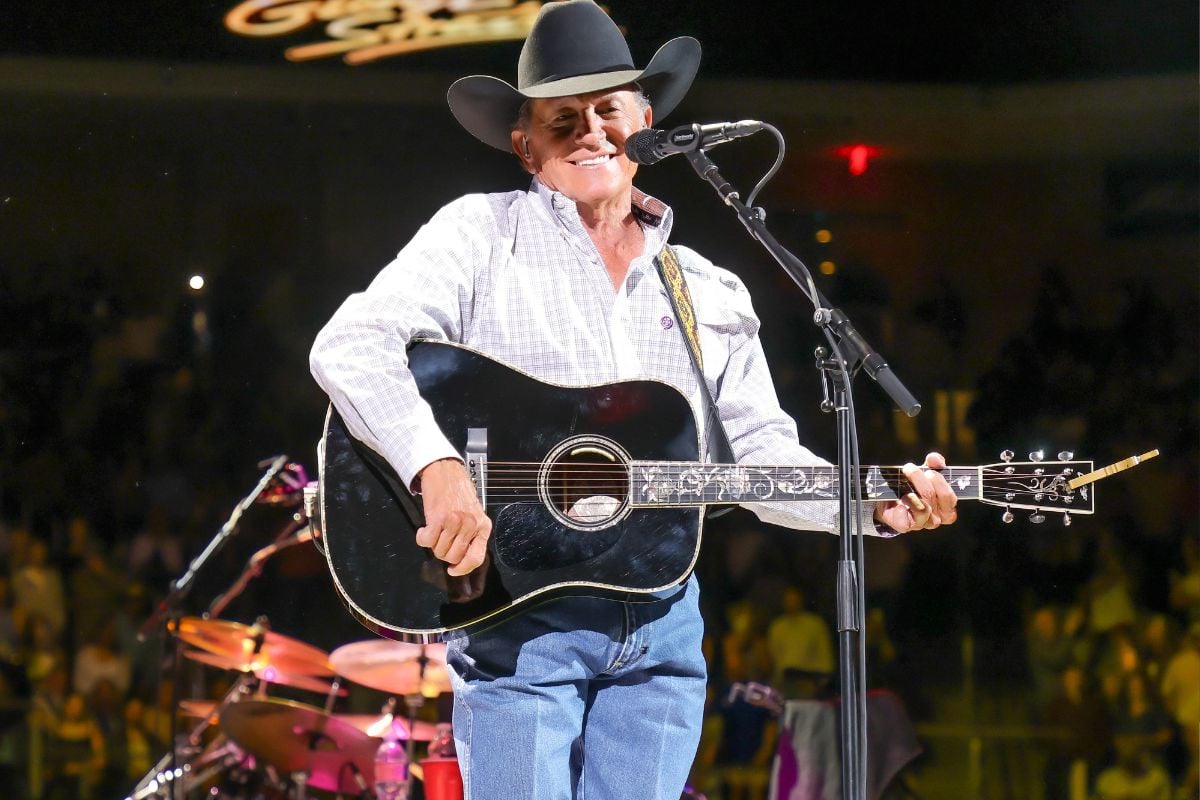
That quality helps explain why the Kyle Field concert felt so different from the usual celebration of celebrity. The crowd was not there because George had exposed every private chapter of his life. They were there partly because he had not. Across decades of fame, he protected his family, resisted the demands of gossip, and rarely offered personal grief as public entertainment. He trusted the songs to create a relationship with the audience while keeping the most fragile parts of his life beyond the reach of the spotlight.
His silence became especially significant after the death of his daughter, Jenifer Strait, in 1986. George and his wife, Norma, experienced the loss no parent wishes to imagine. Rather than repeatedly discussing the tragedy for public sympathy, the family withdrew and grieved privately. The decision was sometimes misunderstood, but it was consistent with everything George had learned from childhood: when life causes a wound too deep for language, protect what remains and continue with dignity.
Yet grief did not make him indifferent to the suffering of others. It quietly shaped a legacy of giving. The Jenifer Strait Memorial Foundation, created in their daughter’s memory, has supported charitable causes involving children in Texas. Through that work, private sorrow became practical kindness. The foundation did not erase the family’s loss, but it allowed Jenifer’s name to remain connected to hope, assistance, and compassion.
At Kyle Field, George reinforced that commitment by auctioning an item from the historic evening, with proceeds directed toward the memorial foundation. The symbolic power was difficult to miss. On the night when he achieved one of the greatest public victories of his career, he redirected attention toward the daughter whose absence had permanently changed his private world. The record belonged to George Strait, but part of the meaning belonged to Jenifer.
The evening also reflected another long-standing commitment: his support for members of the military. During the concert, George paused to recognize a wounded combat veteran and participate in the presentation of a mortgage-free home through the Military Warriors Support Foundation. For a man whose own career began taking shape while serving in the United States Army, this was not an empty gesture designed for applause. It was part of an enduring connection to the people whose service continued long after public ceremonies ended.
A home is more than a financial gift. It represents security, stability, and a place where a family can rebuild without the pressure of a mortgage. By supporting such presentations, George turned the enormous visibility of his concerts into something concrete. The audience did not merely watch generosity being discussed. It watched a life change in real time.
This is where the deeper meaning of George Strait’s double life becomes clear. Onstage, he is the King of Country Music, the performer capable of drawing a crowd larger than many American towns. Offstage, he remains a rancher, husband, father, grandfather, veteran, and intensely private Texan who has never appeared completely comfortable with celebrity for its own sake.
The contrast is not evidence of secrecy or contradiction. It is evidence of boundaries. George understood that a public career did not require the surrender of every private emotion. He gave audiences his voice, his discipline, his professionalism, and a catalogue of songs that spoke honestly about the human condition. He did not owe the world access to every family wound.
That understanding was shaped long before fame. As a boy, George experienced his parents’ separation and remained with his father and older brother while his mother and sister lived elsewhere. Ranch life demanded work regardless of emotional difficulty. Cattle needed attention, fences required repair, and the Texas heat did not pause for personal confusion. From those years came the steadiness later recognized onstage.
His early path through music was equally demanding. Nashville did not immediately welcome him as the future of country tradition. He faced rejection and uncertainty at a time when the industry was not convinced that his restrained style could compete with more polished trends. Instead of reshaping himself into something more fashionable, he remained loyal to the sound he understood: fiddle, steel guitar, dance-hall rhythm, strong melodies, and clear storytelling.
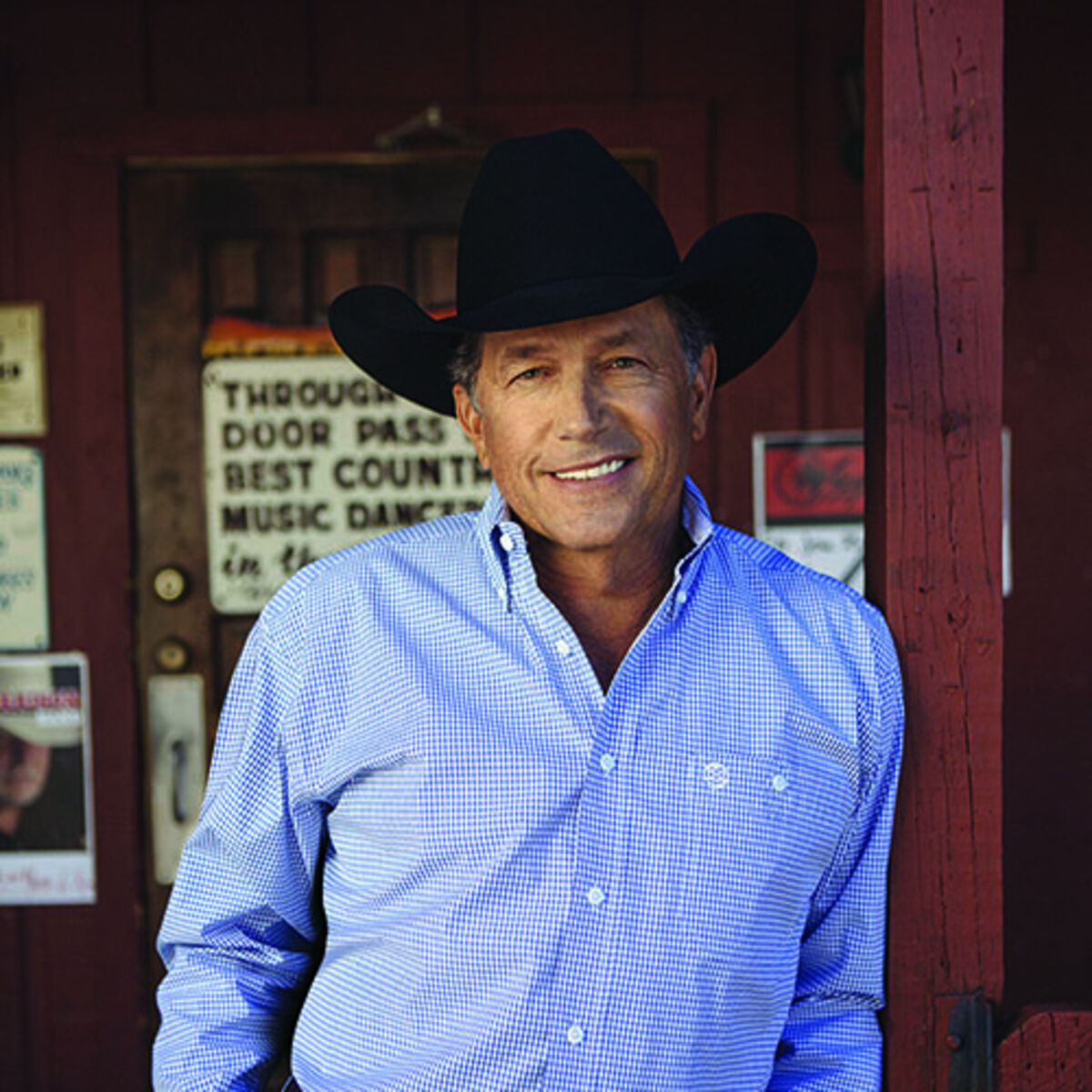
When the breakthrough finally arrived, George did not behave like a man seeking revenge upon everyone who had doubted him. He simply continued working. That response became the defining rhythm of his life. When wounded, he withdrew. When rejected, he persisted. When grief threatened to overwhelm him, he protected his family. Then he returned to the stage and let the music carry what he refused to explain.
The Kyle Field audience understood that history, even when many details remained unspoken. Those 110,905 fans did not gather in search of scandal. They came because George Strait had earned something rarer than temporary attention: trust. He had remained faithful to his music, his family, his roots, and the people who supported him before enormous stadiums became possible.
There was also a profound generational quality to the night. Some spectators had listened to George since the beginning of his career. Others had discovered him through parents and grandparents. Families sat together while songs first released decades earlier passed naturally from one age group to the next. The concert was not only a record-breaking event. It was evidence that traditional country music could remain meaningful without disguising itself as something younger, louder, or more fashionable.
George’s voice carried the signs of maturity, but it also retained the calm emotional authority that made his earliest recordings distinctive. He did not need to chase youth because the audience was not asking him to become young again. They wanted the man who had traveled the full distance, carrying triumph and sorrow without abandoning the values that first defined him.
That is the real significance of his later recognition and continuing cultural stature. Awards, honors, and record crowds may confirm his importance, but they do not create it. George Strait’s place in American music was built gradually through reliability. He arrived, sang the songs honestly, treated the audience with respect, and returned year after year without manufacturing controversy to remain visible.
At Kyle Field, the size of the crowd finally matched the scale of that accumulated respect. Yet the most revealing moments remained characteristically quiet: a confession of nervousness, a veteran receiving a home, and the memory of a daughter being carried into an act of generosity.
George Strait’s story did not end in silence. The silence became the foundation of something stronger. It taught him to protect what mattered, to give without demanding attention, and to stand before an impossible crowd without pretending the moment belonged entirely to him.
When more than 110,000 people filled Kyle Field, they were not simply witnessing the largest concert of his career. They were honoring a man who had repeatedly turned pain into discipline, success into service, and private grief into a reason to help others. The record will always be impressive, but the deeper achievement cannot be measured by a ticketing system.
George Strait filled one of America’s largest stadiums because he had spent a lifetime filling something far more difficult to earn: the trust of the people listening.