Introduction
GEORGE STRAIT’S QUIET KINGDOM: WHY THE KING OF COUNTRY STILL CHOOSES RANCH DUST OVER THE ROAR OF 100,000 FANS
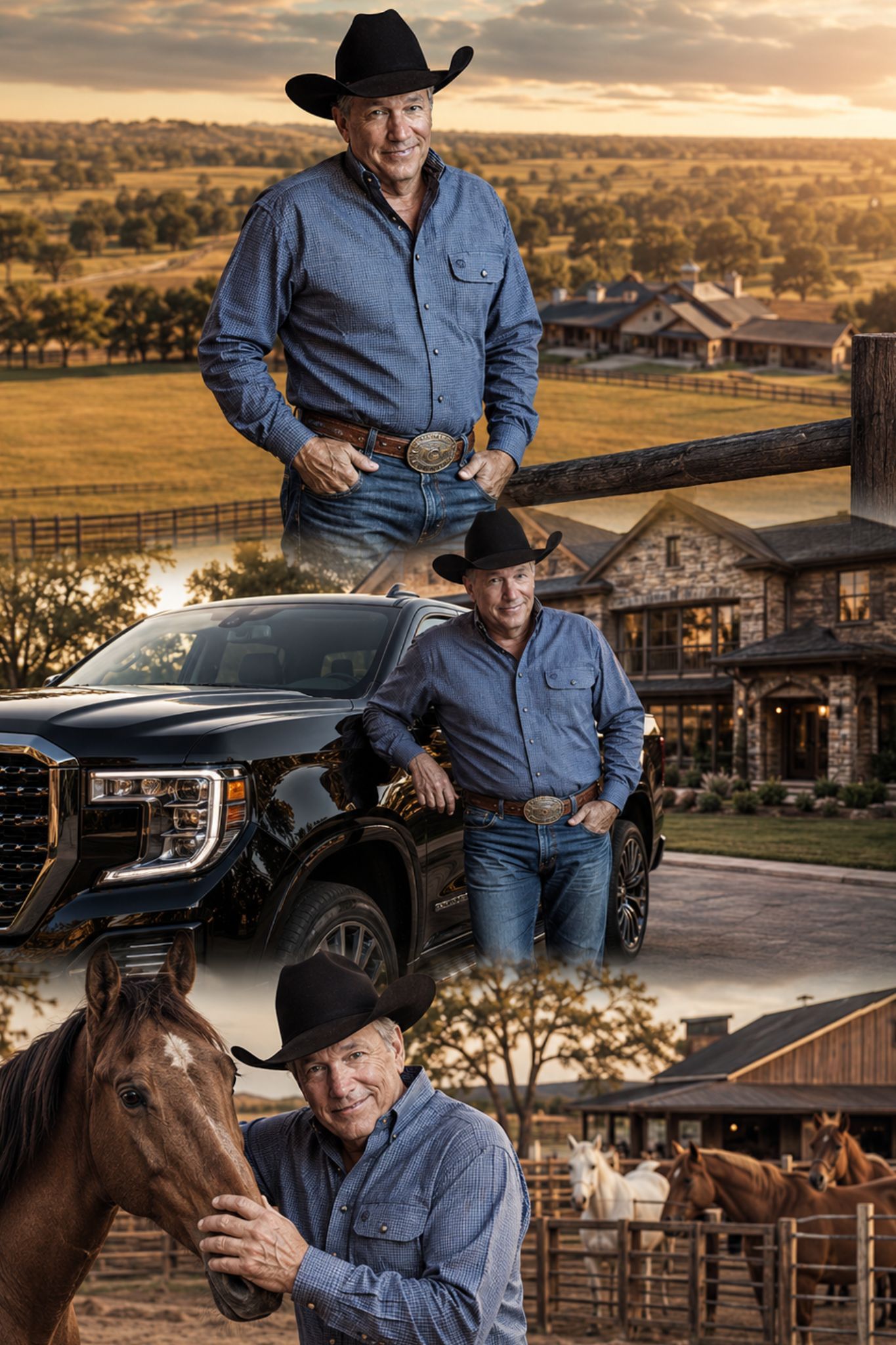
Far from the stadiums that made him an American legend, George Strait returns to a world where no one announces his arrival and no spotlight follows his every step. There are horses to be checked, fences that do not repair themselves, open ground stretching toward the horizon, and long hours governed by weather rather than a concert schedule. It is a life built upon routine, responsibility, and the quiet satisfaction of completing necessary work.
Some online portraits place this private world among the distant hills of Wyoming, imagining a secluded log home beneath the western sky. The image is certainly fitting, but the more reliable public record keeps Strait’s ranching life firmly connected to Texas. He has long maintained close ties to the Lone Star State, including a ranch near Laredo, and has spoken warmly about hunting, roping, riding, and simply traveling across the land to inspect what needs attention.
The precise address matters less than what the ranch represents. For George Strait, the land has never been decorative scenery surrounding a famous man’s retreat. It is the foundation beneath his character. Long before the record contracts, sold-out arenas, and sixty chart-topping songs, he was a boy learning that work must be finished whether anyone is watching or not.
George Harvey Strait grew up near Pearsall, Texas, on his family’s approximately 2,000-acre ranch. When his parents separated while he was still in grade school, George and his older brother, Buddy, remained with their father, John Strait, a mathematics teacher who also managed the family land. The boys learned ranching early, participating in the demanding work that shaped daily life.
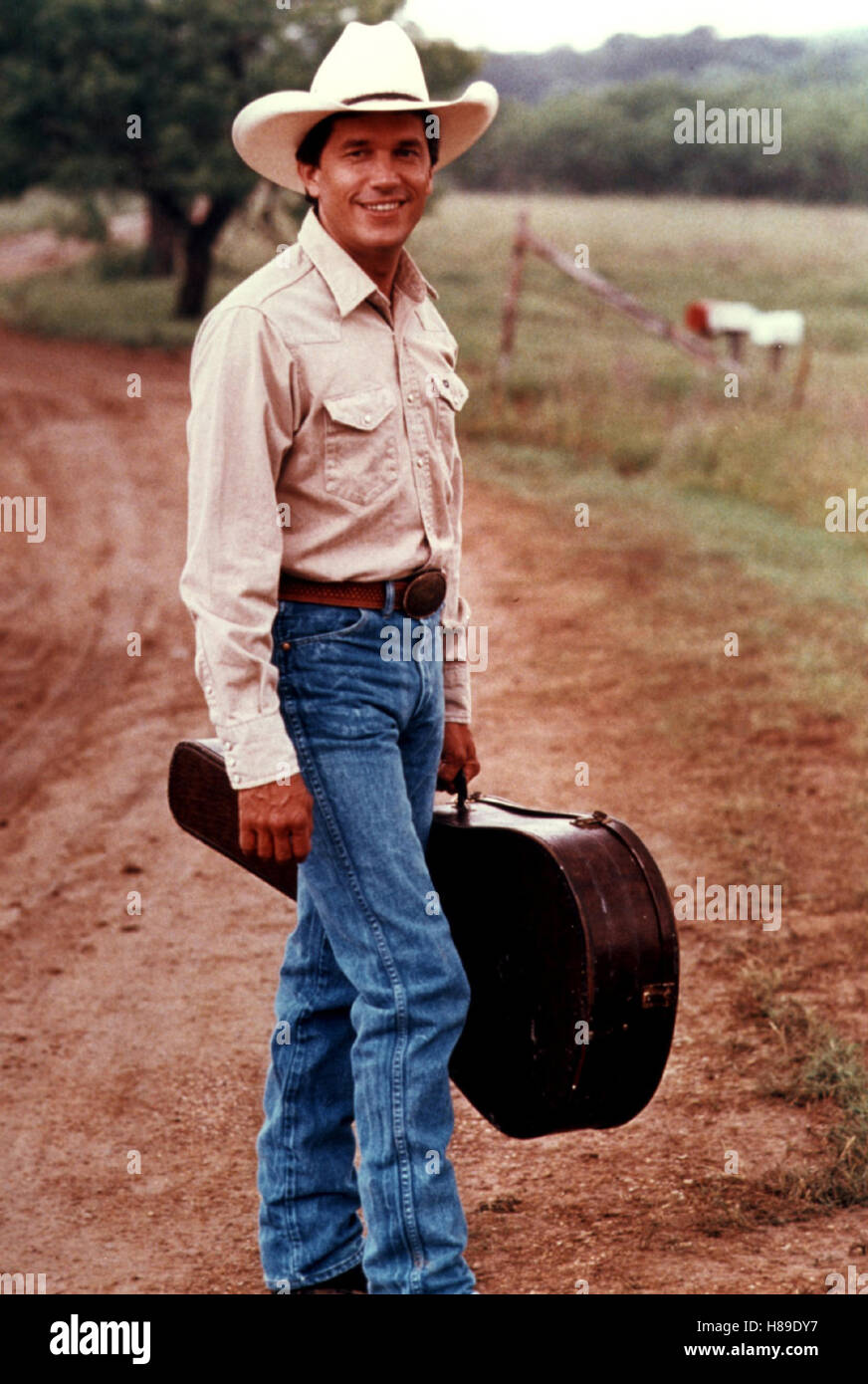
That childhood did not offer much room for theatrical emotion. Animals still required care during periods of family uncertainty. Repairs could not be postponed because someone felt discouraged. The sun rose, the work began, and the ranch continued according to its own unchanging logic.
Those lessons later became visible in George Strait’s public career. He rarely gave lengthy explanations, manufactured controversy, or chased attention beyond the music. Like ranch work, performing was approached through preparation and consistency. He arrived on time, surrounded himself with musicians he trusted, and delivered the songs without pretending that spectacle was more important than substance.
Music, however, was not his first or only language. During his teenage years, Strait was initially attracted to the excitement of British Invasion rock music and performed with garage bands. His deeper connection to country developed later, particularly through the work of Merle Haggard, Hank Williams, George Jones, Bob Wills, and the traditions of Western swing.
This gradual discovery is essential to understanding him. George Strait did not adopt traditional country because a marketing department believed it would create an appealing image. He found a sound that resembled the world he knew. The fiddle, steel guitar, dance-hall rhythm, and direct storytelling carried the emotional geography of Texas. They sounded like long roads, rural responsibility, difficult goodbyes, and people who expressed devotion through action rather than elaborate speeches.
After marrying his longtime sweetheart, Norma, Strait entered the United States Army. While stationed in Hawaii, he auditioned successfully for a military country band and began developing the calm stage presence that would later appear effortless. Following his service, he returned to Texas and studied agriculture at Southwest Texas State University while performing with the group that became the Ace in the Hole Band.
The choice to study agriculture was more than a practical backup plan. It showed that the land remained part of his understanding of security. Music was becoming increasingly important, but George was not yet willing to assume that talent guaranteed a future. A degree connected to ranching represented something solid in an industry famous for uncertainty.

The Ace in the Hole Band built its reputation in Texas clubs and dance halls. The musicians traveled, rehearsed, recorded independent singles, and developed a loyal regional following. Yet Nashville remained unconvinced. Several attempts to gain major-label attention ended without the breakthrough Strait needed.
For a less disciplined performer, those rejections might have encouraged radical reinvention. George could have changed his clothing, softened the traditional arrangements, or attempted to resemble whichever singer the industry considered fashionable. Instead, he remained patient.
That patience should not be confused with passivity. Ranch life had taught him that endurance requires effort. You repair the fence again. You return to the same difficult task. You continue because quitting does not improve the conditions waiting for you tomorrow.
With encouragement from Norma and support from manager Erv Woolsey, George eventually signed with MCA Records. His first major single, “Unwound,” reached the country Top 10 in 1981, while the accompanying album, Strait Country, helped restore attention to a harder traditional sound at a moment when much of Nashville was moving toward polished crossover production.
That beginning established the pattern of everything that followed. Strait did not repeatedly rebuild his identity to suit changing decades. He refined what was already true. His singing became more nuanced, the catalogue expanded, and the venues grew larger, but the essential relationship between the man and the music remained stable.
His voice was never defined by unnecessary decoration. George allowed the lyric to breathe, using subtle phrasing rather than exaggerated vocal gestures. He could make a line about heartbreak sound painful without turning sorrow into performance. He could sing about a father, a cowboy, or a fading relationship with the authority of someone who understood that ordinary lives contain profound drama.
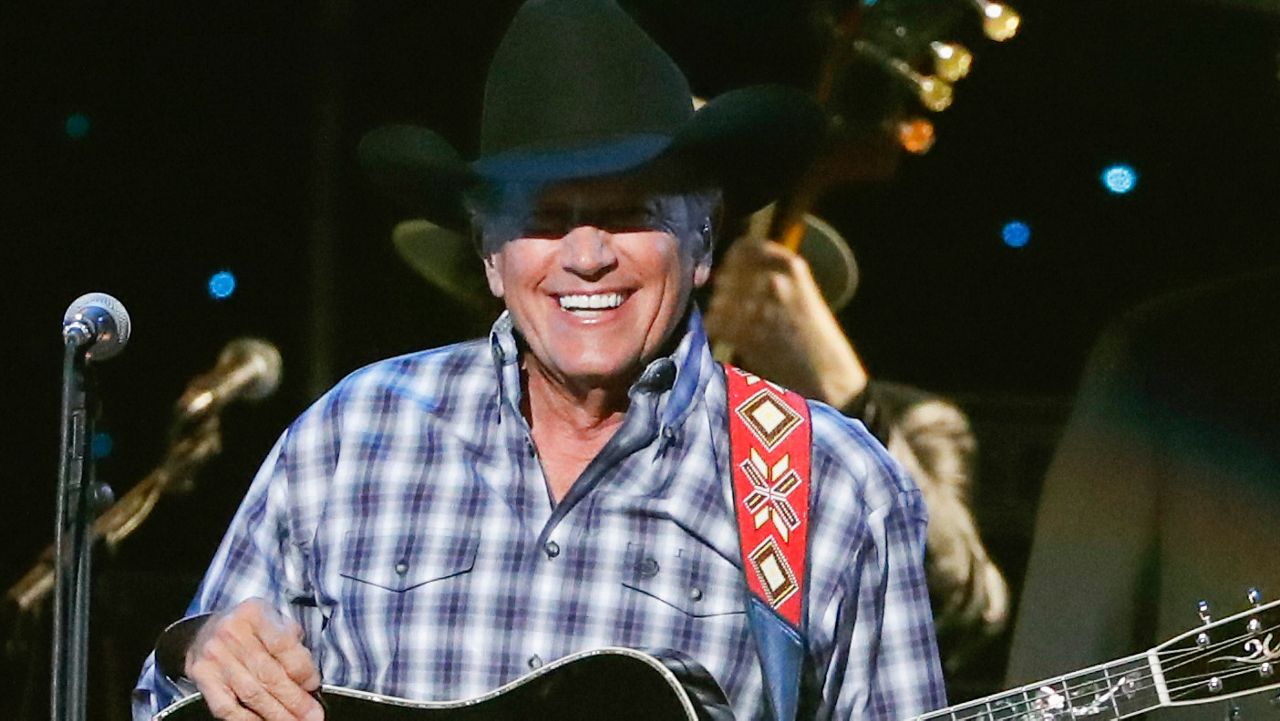
That restraint eventually produced one of the most successful careers in American music. Strait’s official biography credits him with sixty No. 1 singles, more than seventy million albums sold, and thirty-three platinum or multi-platinum albums. He was inducted into the Country Music Hall of Fame in 2006 after becoming a defining figure in modern traditional country.
Yet the career was not protected from tragedy. In 1986, George and Norma lost their thirteen-year-old daughter, Jenifer, in a car accident. Strait did not transform the family’s grief into a public narrative. He withdrew from extensive media attention and protected the loss as something private. When he accepted the Country Music Association’s Male Vocalist of the Year award later that year, he dedicated the honor to his daughter.
The silence that followed was not evidence of emotional emptiness. It was the response of a father whose deepest pain did not belong to the entertainment industry. George continued recording, touring, and interpreting songs, but the public would never again be granted unlimited access to the man behind them.
That privacy made the ranch even more meaningful. The stage required George Strait to be available to thousands of people. The land required no explanation from him. Horses did not ask for interviews. A fence did not care about chart positions. The daily rhythms of ranch life provided a place where success and sorrow could exist without becoming headlines.
In a 2013 interview referenced by Architectural Digest, Strait spoke of enjoying time at his ranch near Laredo—hunting, roping, riding around, inspecting the property, and even operating a bulldozer during improvement projects. He connected that enjoyment directly to the work ethic his father had instilled in him as a boy.
The pleasure he described was not the luxury of doing nothing. It was the pleasure of visible accomplishment. Ranch work offers a clear result: a repaired area, an improved road, healthy livestock, or a completed project. The music business rarely provides that certainty. A successful album can still be criticized. A sold-out concert can immediately create pressure for another. Fame continually moves the finish line.
On the ranch, completion is easier to recognize.
This explains why George Strait’s quiet life beyond the spotlight feels so consistent with the man audiences have known for decades. He did not retreat to the land because fame had defeated him. He returned because the land had always been part of him. The ranch was there before Nashville understood his talent, and it remained after he had nothing left to prove.
Even his decision to end conventional touring reflected that rancher’s sense of boundaries. The Cowboy Rides Away Tour concluded in 2014 before 104,793 people at AT&T Stadium, establishing a North American indoor concert attendance record at the time. Strait stepped away from the traditional tour bus but continued presenting carefully selected engagements, including his successful Las Vegas appearances.
He did not disappear. He adjusted the structure of his career so that performing could remain meaningful rather than becoming an obligation without end.
This is perhaps the defining achievement of George Strait’s life. Many artists survive by changing themselves whenever public taste moves in another direction. George survived by understanding what should never change. The songs could evolve. The recordings could become more sophisticated. The stages could expand from Texas dance halls to enormous stadiums. But the values underneath them—discipline, loyalty, restraint, hard work, and respect for tradition—remained untouched.
His greatest record may not be the sixty No. 1 songs, the platinum albums, or the historic crowds. It may be the fact that worldwide recognition never completely separated him from the boy who learned to work beside his father on a Texas ranch.
When George Strait steps away from the microphone, he does not enter an empty existence waiting for the next burst of applause. He returns to horses, family, open land, and tasks that possess value even when nobody photographs them. He enters a world where the sky is wider than the stage, the day begins without an introduction, and silence is not something that must be filled.
That is why the ranch should not be described merely as George Strait’s retirement refuge. It is his quiet kingdom, though nothing about it depends upon grandeur. It represents the private order beneath an extraordinary public life.
The log homes, open ranges, stone fireplaces, and distant western hills may create a beautiful visual portrait. But the real story is not architectural. It is emotional. George Strait built his career according to the same principle that builds a lasting ranch: prepare carefully, remain patient, respect the foundation, and never sacrifice durability for temporary attention.
The world may call him the King of Country Music, but far from the stage, George Strait still appears most at peace as a man of the land—working quietly beneath an open sky, where applause has never been necessary to tell him that the day mattered.