Introduction
ELVIS LEFT BEHIND MORE THAN A FORTUNE—How His Family Turned Graceland’s Enduring Wealth Into Help for Children, Families, and Future Artists

ELVIS LEFT BEHIND MORE THAN A FORTUNE—How His Family Turned Graceland’s Enduring Wealth Into Help for Children, Families, and Future Artists
When Elvis Presley died in 1977, he left behind far more than gold records, stage costumes, automobiles, and one of the most famous homes in America. He left a name powerful enough to remain commercially and emotionally alive for generations. Every ticket purchased at Graceland, every officially licensed product, and every celebration connected with his music became part of an extraordinary legacy that continued producing value long after his voice fell silent. Yet the most meaningful part of that inheritance may not be found in museum displays or financial accounts. It can be seen in the decision to direct part of the continuing Elvis enterprise toward people who need assistance.
It would be inaccurate to claim that the Presley family simply gave away Elvis’s entire estate or personally redirected all his wealth to charity. The documented story is more thoughtful and sustainable. The Elvis Presley Charitable Foundation, established by Graceland and Elvis Presley Enterprises in 1984, operates as a separate nonprofit organization created to continue Elvis’s tradition of generosity and community service. The foundation receives a portion of the overall business income generated by Graceland and Elvis Presley Enterprises, along with royalties from specially licensed products, proceeds from benefit events, and donations from fan clubs and individual admirers. In this way, the estate does not merely preserve Elvis as a historical figure; part of the business surrounding his memory is transformed into practical help.
That distinction is important because lasting charity requires more than one dramatic donation. A single gift may create a memorable headline, but a structured foundation can continue serving communities year after year. Graceland states that Elvis Presley Enterprises covers the foundation’s administrative expenses, allowing the charitable funds it receives to be used for donations rather than ordinary staffing costs. The arrangement creates a continuing cycle: Elvis’s home and legacy attract visitors, the commercial operation generates income, and a portion of that income supports philanthropic work carried out in his name.

This work reflects the generosity Elvis demonstrated during his own lifetime. Graceland’s historical account notes that on December 12, 1966, he donated checks totaling $105,000 to Memphis charities, an enormous contribution for that era. He also supported community organizations and benefit efforts without always turning the gifts into public spectacles. His generosity was not separate from his identity; it emerged from the memory of having grown up with limited means and understanding what assistance could mean to a struggling family.
The charitable legacy created after his death has concentrated particularly on children, education, the arts, and the Memphis community. The Elvis Presley Charitable Foundation has maintained a relationship with Goodwill Homes, an organization providing services to children and their families, while also supporting other charitable programs in and around Memphis. These choices feel appropriate for an artist whose own rise began in modest circumstances and whose career demonstrated how one opportunity can transform a young person’s future.
One of the foundation’s most enduring projects is the Elvis Presley Endowed Scholarship Fund at the University of Memphis. Established in 1995 with an initial endowment of $25,000, the fund assists students pursuing studies connected with fields that shaped Elvis’s own career, including music, film, television, theater, and communication. Donations increase the principal, while scholarships are paid from the income generated by that fund. The arrangement ensures that the assistance is not exhausted after one generation of students but can continue opening doors for young artists and communicators in the future.
Another powerful example is Presley Place, a 12-unit housing community that opened in Memphis in 2001 with funding from the Elvis Presley Charitable Foundation. The development was designed to provide transitional housing for families experiencing homelessness until they could regain stability. Its purpose carried a deeply personal connection to Elvis’s history. As a child, he lived with his parents in low-income housing at Lauderdale Courts, long before fame placed Graceland within reach. Presley Place therefore transformed a difficult chapter from the Presley family’s past into shelter and hope for other families facing uncertainty.
The foundation has also supported respected Memphis institutions and causes associated with children, health, culture, and civil rights. Graceland has cited assistance involving organizations such as St. Jude Children’s Research Hospital and the National Civil Rights Museum, alongside numerous quieter donations that may never receive widespread attention. This understated approach resembles the most meaningful kind of giving: help directed toward the need rather than toward the person whose name appears on the check.
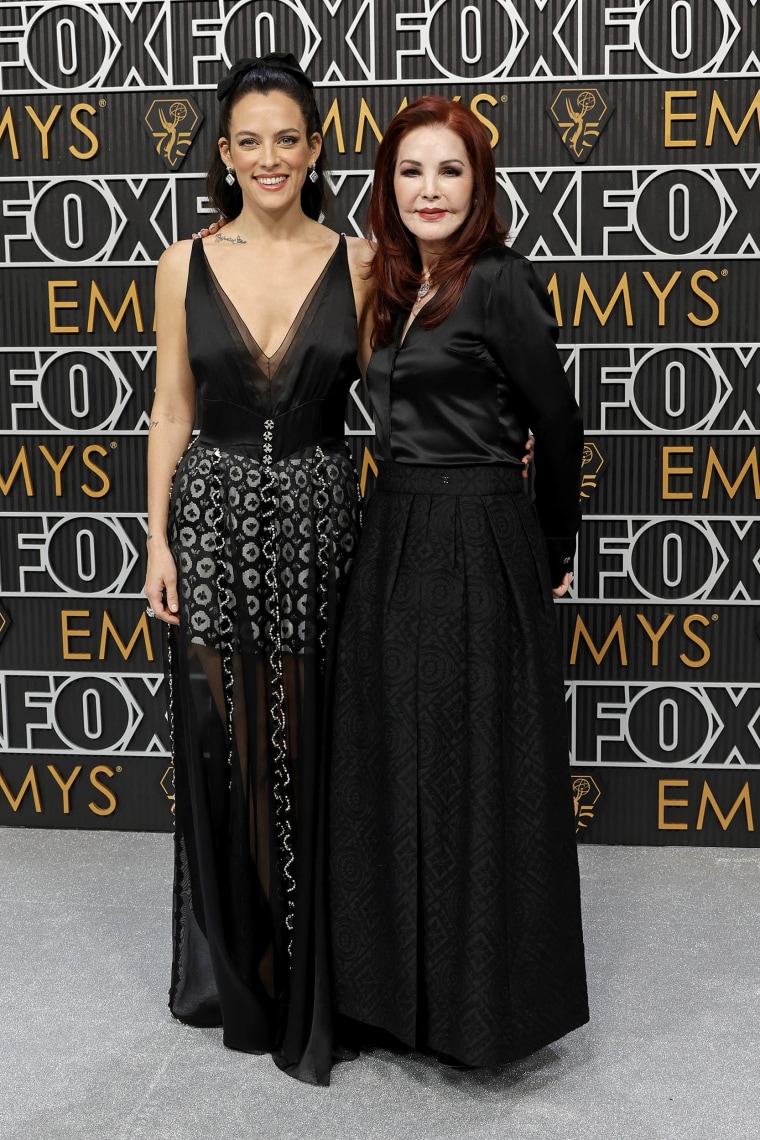
The Presley family’s relationship with this charitable mission became especially visible after the death of Lisa Marie Presley in January 2023. Rather than asking mourners to send elaborate floral tributes, the family encouraged those wishing to honor her to donate to the Elvis Presley Charitable Foundation. That decision joined the memories of father and daughter through an act of service. Grief was not treated as entertainment or used to create another display of celebrity. It was redirected toward programs involving education, children, the arts, and communities connected with Memphis.
Today, Riley Keough occupies an important position in protecting the Presley inheritance. Graceland states that she serves as sole trustee for herself and her younger sisters’ ownership interest, including ownership of Graceland Mansion, its original grounds, and Elvis’s personal effects. Those family-owned properties and objects remain available for Graceland tours and related operations. This means that the home is more than a privately held monument: it remains an active cultural institution whose business operations help sustain Elvis’s public legacy and contribute to the financial stream supporting the charitable foundation.
The connection continues through modern Graceland programs. Certain premium tours designate a portion of their proceeds for local Memphis charities through the Elvis Presley Charitable Foundation. Annual campaigns, including the Graceland Poinsettia Campaign, invite admirers to participate, showing that the charitable legacy is not restricted to the Presley family or estate management. Fans are given an opportunity to turn their affection for Elvis into scholarships, children’s programs, and community support. The 2025 campaign continued to emphasize arts, education, and charitable services for children.
This may be the most remarkable transformation of Elvis Presley’s fortune. Objects once purchased for one family now help draw visitors whose spending supports a broader institution. Songs recorded decades ago continue producing royalties and opportunities. A house that once represented personal success has become a public destination, while part of the enterprise connected with it assists people whose names Elvis could never have known.
In many cultures, there is a beautiful belief that good deeds performed in someone’s memory add light to the legacy they leave behind. Whether one understands that idea spiritually or simply as an expression of gratitude, the Presley story offers a moving example. The family cannot change Elvis’s past, protect him from every judgment, or give him another lifetime. They can, however, ensure that the wealth and attention surrounding his name continue creating kindness in the present.
That is a legacy far greater than preserving an entertainer’s possessions behind glass.
Elvis gave the world his music. Through Graceland, the charitable foundation, his family’s stewardship, and the devotion of his fans, part of what he left behind continues giving other people a home, an education, an opportunity, and a reason to hope.