Introduction
DEATH COULD NOT SILENCE THEIR VOICES: The Elvis and Lisa Marie Duet That Became a Final Embrace Across Time
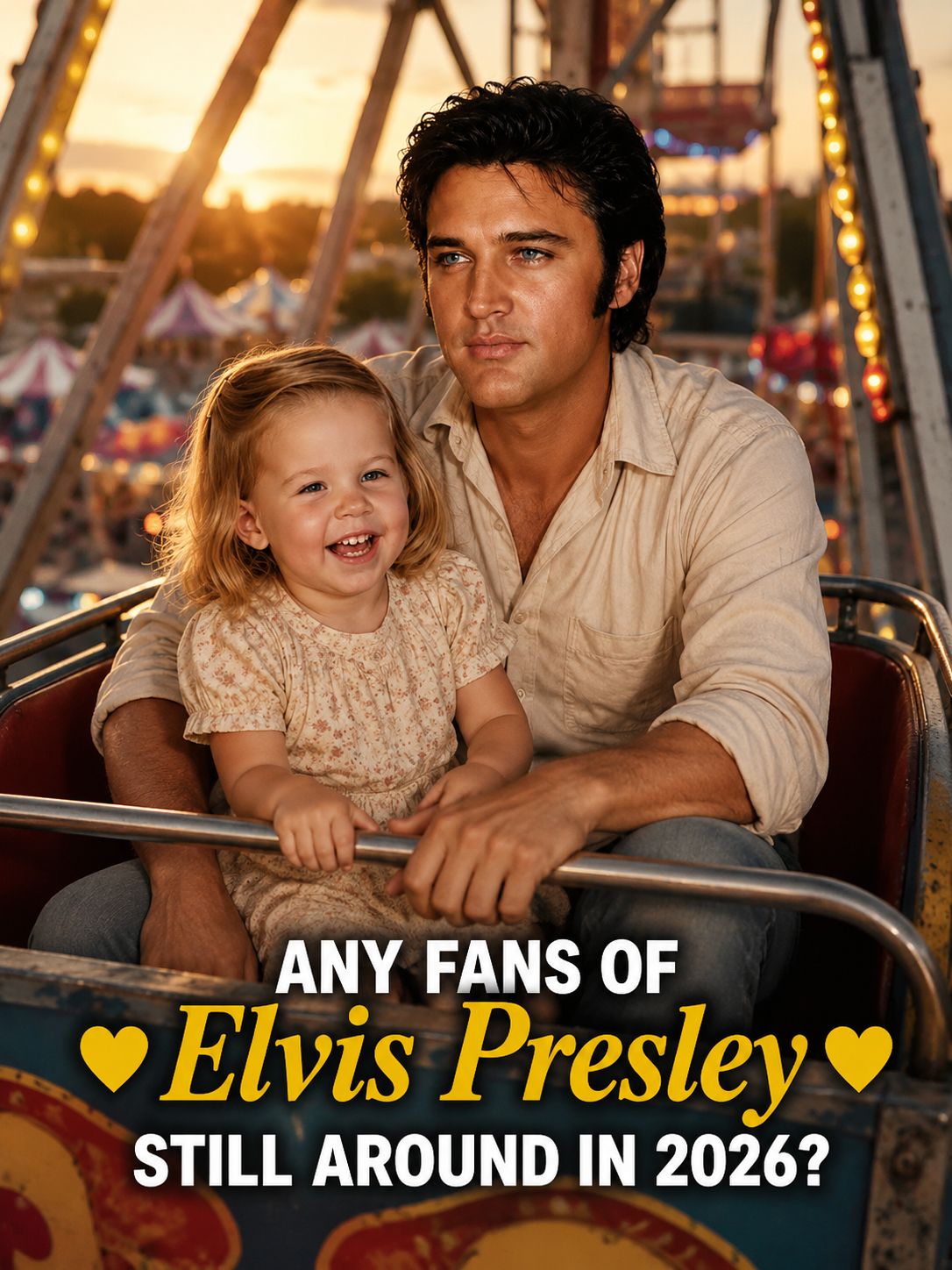
Few musical recordings carry the emotional weight of Elvis and Lisa Marie Presley singing “In the Ghetto.” It is not a duet in the traditional sense. Father and daughter never entered a studio together to exchange glances, follow the same conductor, or stand before neighboring microphones. Elvis had been gone for thirty years when Lisa Marie added her voice to his historic recording in 2007. Yet through careful production, archival footage, and the mysterious intimacy of recorded sound, the impossible seemed to happen: a daughter separated from her father since childhood was finally able to sing beside him.
The effect remains deeply moving because the recording asks the listener to accept two realities at once. We know that Elvis’s voice belongs to 1969, when he recorded the Mac Davis composition at American Sound Studio in Memphis. We also know that Lisa Marie’s contribution came decades later, after she had lived most of her life beneath the immense shadow of the Presley name. The voices were created in different eras, under different emotional circumstances, but when joined together they seem to occupy the same room. Music temporarily removes the years between them.
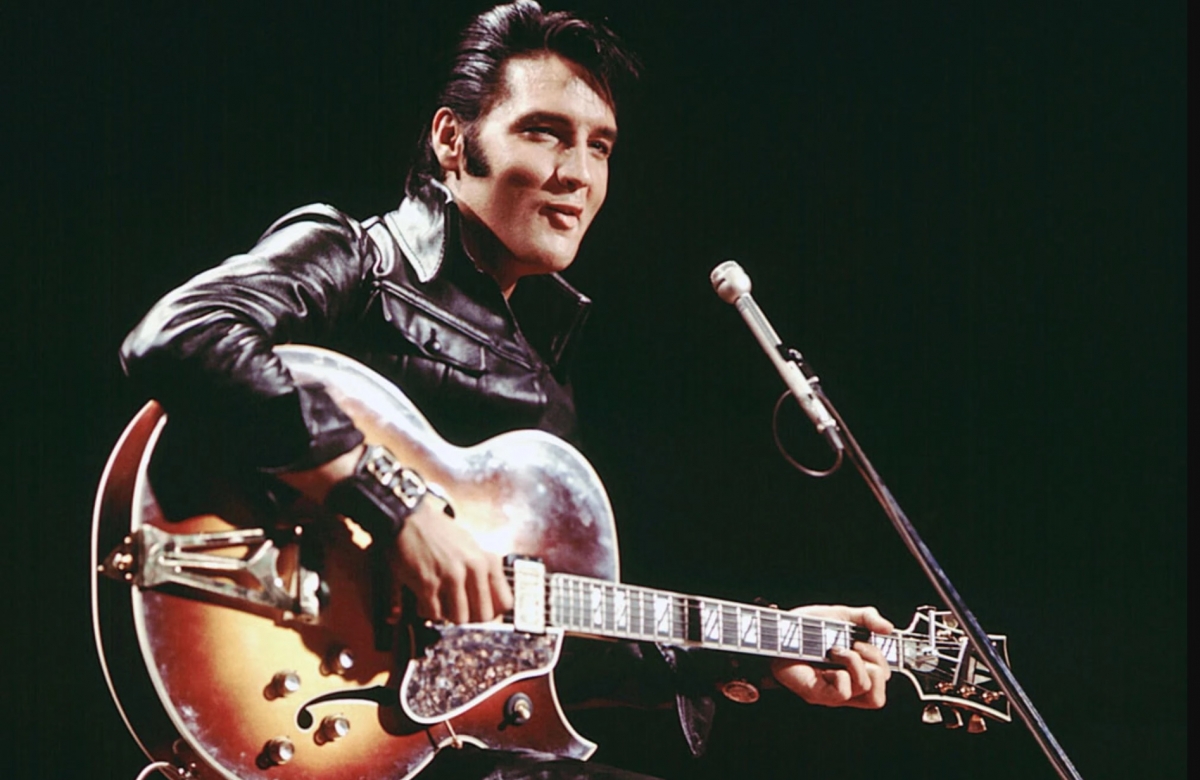
Elvis recorded “In the Ghetto” on January 20, 1969, during the celebrated Memphis sessions that helped restore his artistic authority after years dominated by motion pictures. Released that April, the song marked his first Memphis recording in fourteen years and returned him to the upper reaches of the charts. More importantly, it showed a mature Elvis willing to perform a song of social conscience, using restraint rather than theatrical grandeur to tell a story about poverty repeating itself from one generation to another.
The original performance remains powerful because Elvis never treats the song’s suffering as spectacle. His voice is controlled, sympathetic, and almost observational at first. Gradually, however, a quiet sorrow enters the delivery. The tragedy is not confined to one family or one street. It is part of a larger cycle in which deprivation, neglect, and hopelessness continue because the surrounding world notices too late—or chooses not to notice at all.
That message gave Lisa Marie’s later participation a purpose beyond family remembrance. Her virtual duet was created in 2007 to commemorate the thirtieth anniversary of Elvis Presley’s death. The single was offered through iTunes, and its proceeds supported Presley Place, a transitional housing initiative designed to assist families experiencing homelessness. In other words, the project connected the social concerns of the original song to practical charitable work.
This detail matters. Lisa Marie did not simply choose one of her father’s most famous recordings because it guaranteed attention. She selected a song whose message could still serve vulnerable people. The resulting performance became both a personal tribute and a continuation of the song’s moral appeal. The father’s voice described a cycle of hardship; the daughter’s contribution helped support families trying to escape such a cycle.
When Lisa Marie enters the recording, she does not attempt to overpower Elvis or imitate the famous richness of his voice. Her tone is darker, more guarded, and shaped by a life very different from his. Elvis sounds like the narrator of a public tragedy. Lisa Marie sounds closer to someone standing inside its memory. Their vocal differences make the recording more affecting, because the duet does not pretend that time has left them unchanged. It allows the distance between them to remain audible.
That distance began when Elvis died in August 1977 and Lisa Marie was only nine years old. For most of the world, his death marked the loss of an international entertainer. For his daughter, it was the disappearance of a parent during childhood. Public mourning transformed Elvis into an immortal cultural figure, while Lisa Marie was left to carry a private relationship that strangers frequently believed they understood.
For years, nearly every part of her identity was interpreted through him. Her face was compared with his face. Her voice was measured against his voice. Her choices were discussed as extensions of the Presley story. Even when she established herself as a songwriter and recording artist, the name remained both an inheritance and a burden. The 2007 duet allowed her to approach that inheritance on her own terms. Rather than being spoken about as Elvis’s daughter, she became an artist answering him.
The accompanying video strengthened the sense of a conversation across time. Archival images and performance footage placed the two Presleys within the same visual narrative, while scenes connected to hardship reminded viewers that the project’s meaning extended beyond nostalgia. During the Elvis 30th Anniversary Concert in Memphis, Lisa Marie also appeared in connection with the duet alongside a gospel choir, creating a moment remembered by those present as one of the emotional peaks of Elvis Week 2007.
For longtime admirers, the performance offered something no ordinary archival release could provide. Elvis’s catalog had already supplied countless alternate takes, concert recordings, remasters, and compilations. This was different. His voice was not merely being restored; it was being answered by the child whose name had always occupied a special place in his life.
There is something profoundly human in that idea. Many people carry unfinished conversations with parents who are no longer present. They remember questions never asked, gratitude never expressed, disagreements never resolved, and ordinary moments they did not realize would become precious. Most cannot return to those conversations except through memory. Lisa Marie, through the unusual possibilities of recording technology, was able to place her adult voice beside the voice her father left behind.
The song’s subject makes the reunion even more haunting. “In the Ghetto” is centered on a child born into circumstances that seem to determine his future before he has any power to change it. The story asks whether society will recognize suffering before it becomes tragedy. When performed by a father and daughter divided by death, the song acquires an additional layer of generational meaning. It becomes not only a warning about inherited poverty, but a meditation on what passes from parent to child: love, grief, identity, responsibility, and unfinished history.
The recording became more painful after Lisa Marie Presley died in January 2023 at the age of fifty-four. Graceland later honored her as Elvis’s only child, a musician, a mother, and a guardian of her father’s legacy. She was laid to rest in the Meditation Garden near members of her family, bringing another sorrowful chapter of the Presley story back to the home so closely associated with both father and daughter.
Listeners now hear the duet differently. In 2007, it sounded like a living daughter reaching backward to accompany her late father. Today, both voices arrive from the past. The performance has become a preserved meeting between two people the world can no longer hear sing in person.
Yet the recording should not be reduced entirely to grief. There is tenderness in it, but also determination. Lisa Marie chose to participate. She entered one of Elvis’s most serious recordings and brought her own history to it. She did not disappear beneath the legend. She stood beside him.
That distinction is essential. Lisa Marie Presley was more than the daughter included in an elaborate tribute. She was the person who gave the project its emotional and humanitarian purpose. Her presence changed the song from an Elvis restoration into a Presley family statement about memory, compassion, and the responsibility to notice those whom society overlooks.
For older listeners, the duet may also serve as a reminder of what recorded music can preserve. Photographs hold expressions, and films preserve movement, but a human voice carries something uniquely intimate. Breath, hesitation, strength, weariness, and personality remain inside it. When the voices of Elvis and Lisa Marie meet, technology may explain how the duet was created, but technology alone cannot explain why it moves people.
The answer lies in what we bring to it. We hear a child who lost her father. We hear an adult woman finally responding to him. We hear a celebrated family touched repeatedly by grief. We hear a song about a society that fails its children, transformed into an effort to help families in need.
Above all, we hear the temporary defeat of separation.
Elvis Presley and Lisa Marie never recorded “In the Ghetto” together in the same room. But for several unforgettable minutes, music gave them what life could not: one final song, one shared message, and something that feels remarkably like a last embrace.