Introduction
THE WOMAN WHO STOOD BESIDE THE LAST GIBB BROTHER: INSIDE BARRY AND LINDA’S 50-YEAR LOVE STORY OF FAME, FAMILY, AND UNBREAKABLE DEVOTION
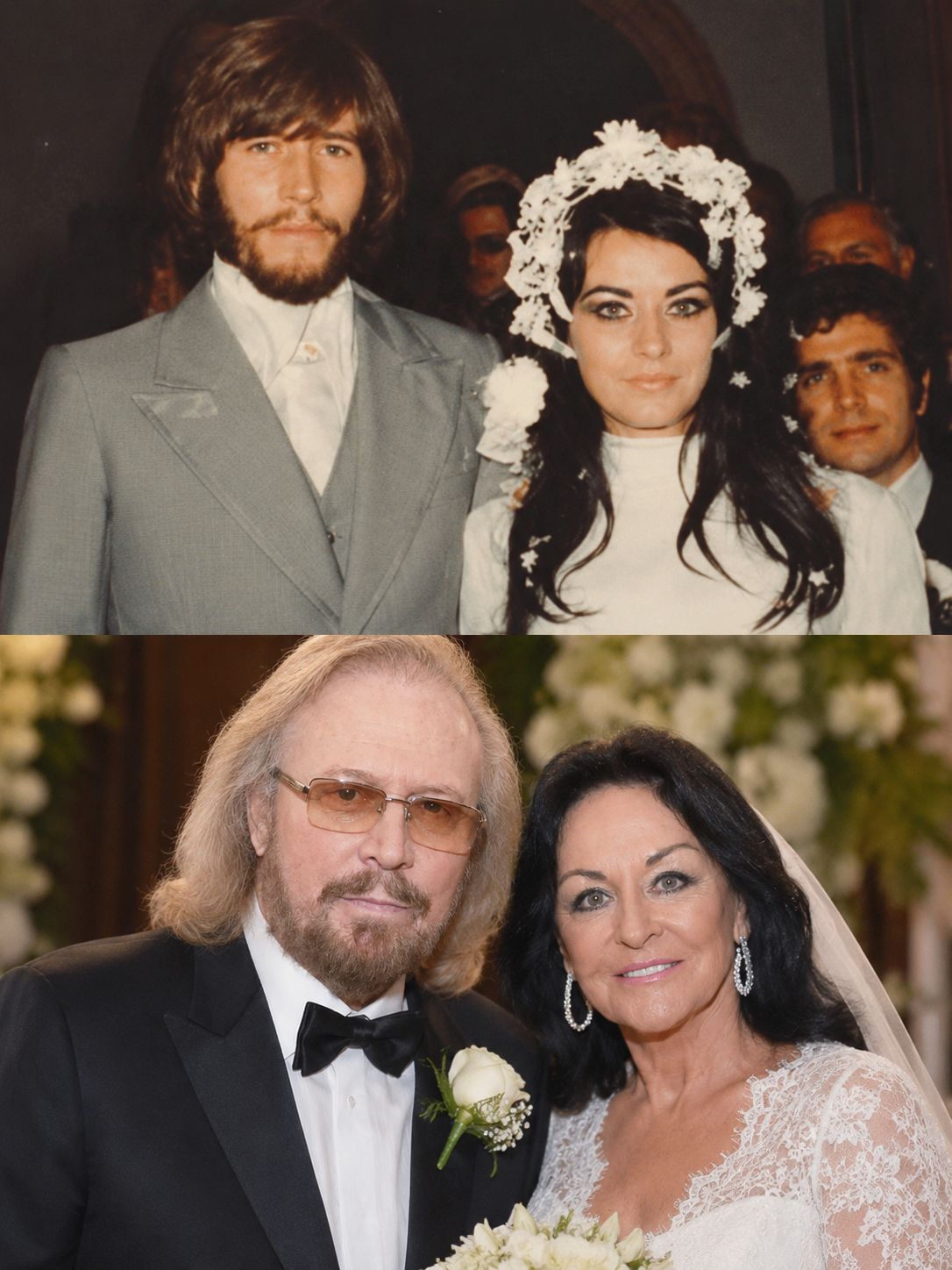
For more than half a century, Barry Gibb has been recognized as one of the most gifted and influential figures in popular music. His unmistakable voice, elegant melodies, and extraordinary songwriting helped turn the Bee Gees into a global phenomenon whose work continues to cross generations. Yet behind the celebrated performer, the awards, the crowded arenas, and the songs that became part of millions of lives stands a quieter and deeply personal story: Barry’s enduring marriage to Linda Gray, the woman who remained beside him through triumph, criticism, family tragedy, and the unpredictable demands of worldwide fame.
Their marriage is remarkable not because it has been completely untouched by difficulty, but because it survived circumstances that could easily have divided two people. Barry’s career placed him at the center of an industry defined by constant attention, long absences, intense professional pressure, and rapidly changing public opinion. Linda entered his life as his star was beginning to rise, and she stayed as that fame reached unimaginable heights. She also remained when changing musical fashions brought harsh criticism and when private grief became more powerful than public applause.
The story of Barry and Linda Gibb is therefore larger than an account of a famous musician and his wife. It is a portrait of companionship built slowly across decades. It reveals how trust can become stronger than celebrity, how family can provide shelter from public chaos, and how a committed partnership can help a person endure losses that success cannot repair.
Barry’s understanding of loyalty was shaped long before he became an international star. Born on September 1, 1946, on the Isle of Man, he grew up in a family where music, performance, and brotherhood were inseparable. His father, Hugh Gibb, was a drummer and bandleader, while his mother, Barbara, encouraged the musical abilities of her children. Barry began performing alongside his younger twin brothers, Robin and Maurice, while they were still boys.
The brothers formed an early skiffle group known as the Rattlesnakes, laying the foundation for what would eventually become the Bee Gees. Their journey took the family from Britain to Australia and later back to England, where the three brothers began their rise to international prominence. Their harmonies were unusually close because they came not only from practice but from a lifetime of listening to one another.

By the late 1960s, the Bee Gees were building momentum with songs that displayed a rare combination of emotional sensitivity and melodic sophistication. Barry was still a young man, yet his professional life was already moving at extraordinary speed. He was surrounded by recording sessions, television appearances, travel, and the growing expectations placed upon a successful group.
It was during this formative period that he met Linda Gray, a young woman known for her grace, warmth, and composed personality. She had been recognized as Miss Edinburgh, but the quality that reportedly captured Barry’s attention was not simply her appearance. He was drawn to her humor, steadiness, and ability to see the person behind the rising celebrity.
Their connection developed during a period when Barry’s public identity was changing almost daily. The Bee Gees were no longer merely three hopeful brothers trying to secure a recording contract. They were becoming recognizable figures, and Barry was emerging as a major songwriter and performer. Linda entered his life before the greatest heights of that success, allowing their relationship to be built around more than fame alone.
The couple married on September 1, 1970, Barry’s twenty-fourth birthday. The timing carried a quiet symbolism. As Barry entered another year of life, he also entered a partnership that would become one of the most stable elements of his personal history. From that point forward, their lives unfolded alongside the extraordinary and often turbulent journey of the Bee Gees.
Linda witnessed the brothers’ transformation during the 1970s, when the Bee Gees moved beyond their earlier ballad style and embraced a new rhythmic direction. Their work on songs associated with Saturday Night Fever made Barry, Robin, and Maurice among the most recognizable musicians in the world. Recordings including “Stayin’ Alive,” “Night Fever,” and “How Deep Is Your Love” dominated the international charts and changed the course of popular music.

For Barry, the success was both thrilling and overwhelming. His high falsetto became instantly recognizable, while his songwriting abilities were sought by major artists beyond the Bee Gees. He helped create memorable work connected with performers such as Barbra Streisand, Diana Ross, Kenny Rogers, and Dolly Parton, demonstrating that his talent could move confidently between styles and generations.
Yet enormous success often creates a distance between a public figure and ordinary life. The artist becomes surrounded by schedules, expectations, advisers, and people whose loyalty may depend upon professional advantage. In such an environment, Linda’s role became increasingly important. She offered Barry something fame could not provide: a private world built upon familiarity, honesty, and family responsibility.
Linda was not merely a spectator watching Barry’s career from the side. She became the person who helped him preserve a sense of proportion when the Bee Gees were receiving overwhelming praise and when the same group later faced an aggressive public backlash. The decline of the disco era brought a difficult period for the brothers. Although their musicianship extended far beyond one genre, they were treated by some critics as symbols of a passing fashion.
The experience could have left Barry bitter or disconnected, but his family life offered continuity. Public taste changed, yet the home he and Linda created remained. The value of that stability cannot be measured through record sales or awards. It existed in ordinary routines, private conversations, shared decisions, and the knowledge that Barry did not have to perform the role of a legend inside his own home.
Over the decades, Barry and Linda raised a family together, giving their children an upbringing shaped by creativity but also by the values of loyalty and mutual support. Some members of the next Gibb generation later became involved in music, continuing the family’s artistic tradition. Barry’s collaborations with his sons revealed how the musical legacy of the Gibbs could move forward without becoming merely an imitation of the past.
Linda’s most significant contribution, however, may have emerged during periods when music offered Barry little protection from grief. In 1988, the Gibb family lost Barry’s youngest brother, Andy. His death at only thirty years old devastated the entire family. Andy had achieved major solo success, but his life had also been marked by difficult personal struggles. For Barry, who had often acted as both an older brother and professional guide, the loss carried an especially painful mixture of sorrow and helplessness.
:max_bytes(150000):strip_icc():focal(1016x540:1018x542)/barry-gibb-linda-gray-1-c3c12c50e90e4c478bc8adf6c6f5c820.jpg)
Linda stood beside him as he faced a reality that no amount of success could change. Barry could write songs capable of comforting millions, but he could not rewrite the ending of his brother’s life. Her presence provided emotional steadiness at a time when the Gibb family’s celebrated public story had been interrupted by private heartbreak.
Further losses followed. Maurice Gibb died suddenly in January 2003, leaving Barry and Robin without the brother who had frequently served as the emotional and musical mediator between them. Maurice had been the quiet instrumental force of the Bee Gees, bringing humor, balance, and remarkable versatility to the group. His death permanently changed the chemistry of the brothers.
In 2012, Robin also passed away after a serious illness. Barry was now the last surviving Gibb brother, carrying memories that once belonged to four young men. The stages, studios, and songs remained, but the voices that had accompanied him from childhood were no longer physically present.
Through these losses, Linda became Barry’s anchor. She could not remove the grief, and their long marriage did not offer an easy answer to bereavement. What it provided was companionship—the assurance that Barry did not have to carry his sorrow entirely alone. She had known his brothers, witnessed the development of their careers, and understood that the Bee Gees represented far more to Barry than a successful musical enterprise. They were his family, his childhood, and the people who had helped form his identity.
Barry’s later work revealed a more reflective artist. Albums such as In the Now and Greenfields allowed him to revisit the meaning of family, memory, and musical inheritance. The performances carried the emotional weight of a man singing not only for an audience but also for absent brothers. Behind that continued creativity stood the stable partnership he had built with Linda.
The longevity of their marriage has often attracted attention because lasting relationships can appear unusual within celebrity culture. Yet reducing their story to an impressive number of years would overlook what those years contained. Their life together included professional triumph, public scrutiny, parenthood, creative uncertainty, bereavement, and the natural changes that accompany aging.
:max_bytes(150000):strip_icc():focal(999x0:1001x2)/barry-gibb-linda-gray-5-8aa0b12250744d60a571f3c45c3a86ee.jpg)
A marriage lasting more than five decades is not sustained by one dramatic moment. It is sustained by repeated choices: remaining present during difficult seasons, protecting private trust, allowing each person to change, and remembering the values that existed before public recognition altered the surrounding world.
Barry has often credited Linda with helping him remain grounded. That grounding was not a restriction upon his artistry. It may have been one of the conditions that allowed his artistry to endure. While the music industry encouraged constant reinvention, Linda represented continuity. While audiences responded to an image, she knew the individual behind it. While the world celebrated Barry Gibb the legend, she shared life with Barry Gibb the husband, father, brother, and grieving survivor.
Their relationship also offers a deeper perspective on loyalty. Loyalty does not mean that two people never experience disagreement, pressure, or disappointment. It means that they continue recognizing the importance of the bond when circumstances make withdrawal easier. Barry and Linda’s enduring partnership suggests that love is expressed less through public declarations than through the quiet work of remaining present.
There is no sensational secret capable of explaining the survival of their marriage. Its truth is more meaningful than any dramatic revelation. Barry found in Linda a partner who understood both the privilege and the cost of his extraordinary career. Linda found in Barry not merely a famous performer, but a man whose deepest commitments remained connected to music and family.
Today, their story stands alongside the Bee Gees’ musical legacy as another form of endurance. The songs survived cultural changes because they were built upon emotion, craftsmanship, and truth. The marriage survived because it was built upon respect, resilience, shared history, and devotion.
Barry Gibb helped give the world some of its most lasting melodies, yet his partnership with Linda reminds us that the greatest achievement in a celebrated life may not always occur beneath the stage lights. It may be found in the person who remains after the audience has gone home, who understands the silence after the music ends, and who offers stability when memory becomes heavy.
For more than fifty years, Linda Gray has stood beside Barry Gibb through global fame and unimaginable loss. Their journey is not a perfect fairy tale untouched by hardship. It is something more credible and inspiring: the story of two people who continued choosing a life together while the world around them changed.
Like the finest Bee Gees songs, their relationship has endured because its emotional foundation is simple and universal. It speaks of finding one person who knows the public triumphs but also recognizes the private wounds, who celebrates the music but treasures the human being, and who remains when applause can no longer provide comfort.
Barry and Linda’s love did not merely survive fame—it gave Barry a home beyond it.