Introduction
THE NIGHT THE KING SAID “ADIOS”: Inside Elvis Presley’s Final Concert and the Farewell No One Recognized
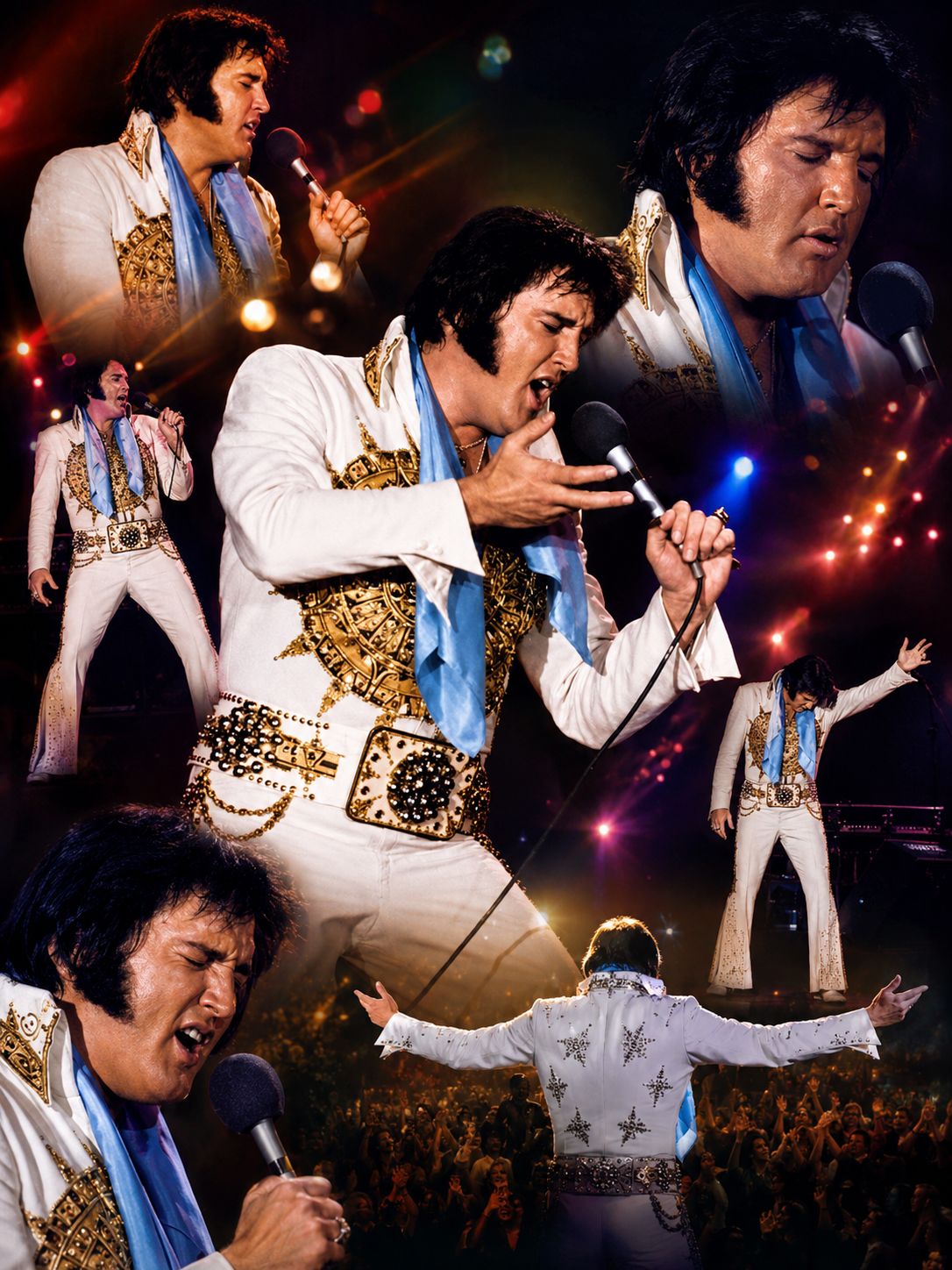
On the evening of June 26, 1977, nearly 18,000 people entered Market Square Arena in Indianapolis expecting another unforgettable concert from Elvis Presley. They carried tickets, cameras, souvenirs, and years of personal memories connected to his music. Some had followed him since the 1950s, when his early recordings sounded unlike anything previously heard on American radio. Others had discovered him through his films, his triumphant 1968 television comeback, or the spectacular Las Vegas performances that confirmed his place among the defining entertainers of the twentieth century. None of them understood that they were about to witness Elvis Presley’s final concert.
There was no formal announcement that the end was approaching. No documentary crew introduced the evening as a historic farewell, and no carefully prepared tribute marked the occasion. Elvis was only 42 years old and was expected to return to the road for another tour. His life and career appeared troubled, but unfinished. The Indianapolis audience therefore watched the show as fans usually do, judging each song, applauding familiar gestures, and waiting for the moment when the performer would once again remind them why he had become known as the King of Rock and Roll.
In retrospect, the date itself carries an almost mysterious significance. June 26 had already appeared at important moments in Elvis’s life. On that date in 1954, he visited Sun Records during the period when his musical future was beginning to take shape. Three years later, June 26 was connected with one of his earliest nights at Graceland, the Memphis home that would become forever associated with his name. Two years after Elvis’s death, his father, Vernon Presley, would also die on June 26. These coincidences were not meaningful to the crowd in 1977, but history has given the date a weight that no one inside the arena could have imagined.
The evening began in the familiar manner of an Elvis tour. Comedian Jackie Kahane, who had served as a regular opening act, appeared before the main performance. Entertaining an impatient Elvis audience was rarely an easy task. Fans had not come for comedy; they had come to see the man whose arrival could transform the atmosphere of an arena before he sang a single note. Kahane nevertheless assured the audience that Elvis looked and sounded wonderful. His words, intended to build anticipation, would later seem painfully bittersweet.
Tickets had been priced at approximately fifteen dollars, a modest amount by modern concert standards. Even more surprisingly, some seats reportedly remained available close to the date of the show. Today, such a ticket would be treated as a priceless historical object. At the time, it represented one more opportunity to see a familiar star whose touring schedule had made his appearances seem almost dependable. History often becomes visible only after it has passed.
When the lights finally changed and the opening theme began, Elvis entered wearing a white-and-gold stage suit, one of the elaborate costumes that had become closely identified with his 1970s performances. The clothes still suggested grandeur, ceremony, and showmanship, but the man wearing them was visibly different from the explosive young performer who had once unsettled television audiences with every movement.
His physical energy had diminished, and the demanding years of travel, emotional strain, poor health, and dependency on prescribed medication had taken a serious toll. Yet reducing the final concert to a description of decline would miss what made the evening so affecting. Elvis was still attempting to connect with the people in front of him. Whatever difficulties surrounded his private life, the stage remained the place where he could reach for something larger than those difficulties.
He began with “C.C. Rider,” a familiar opening number that immediately connected the audience with the rhythm and excitement of earlier tours. Some of his once-famous movements were less pronounced, but flashes of the old instinct remained. A turn of the body, a sudden vocal emphasis, or a playful gesture could still awaken the crowd. The audience did not demand perfection. They wanted recognition. They wanted to see the Elvis they remembered, and at certain moments, he appeared before them again.
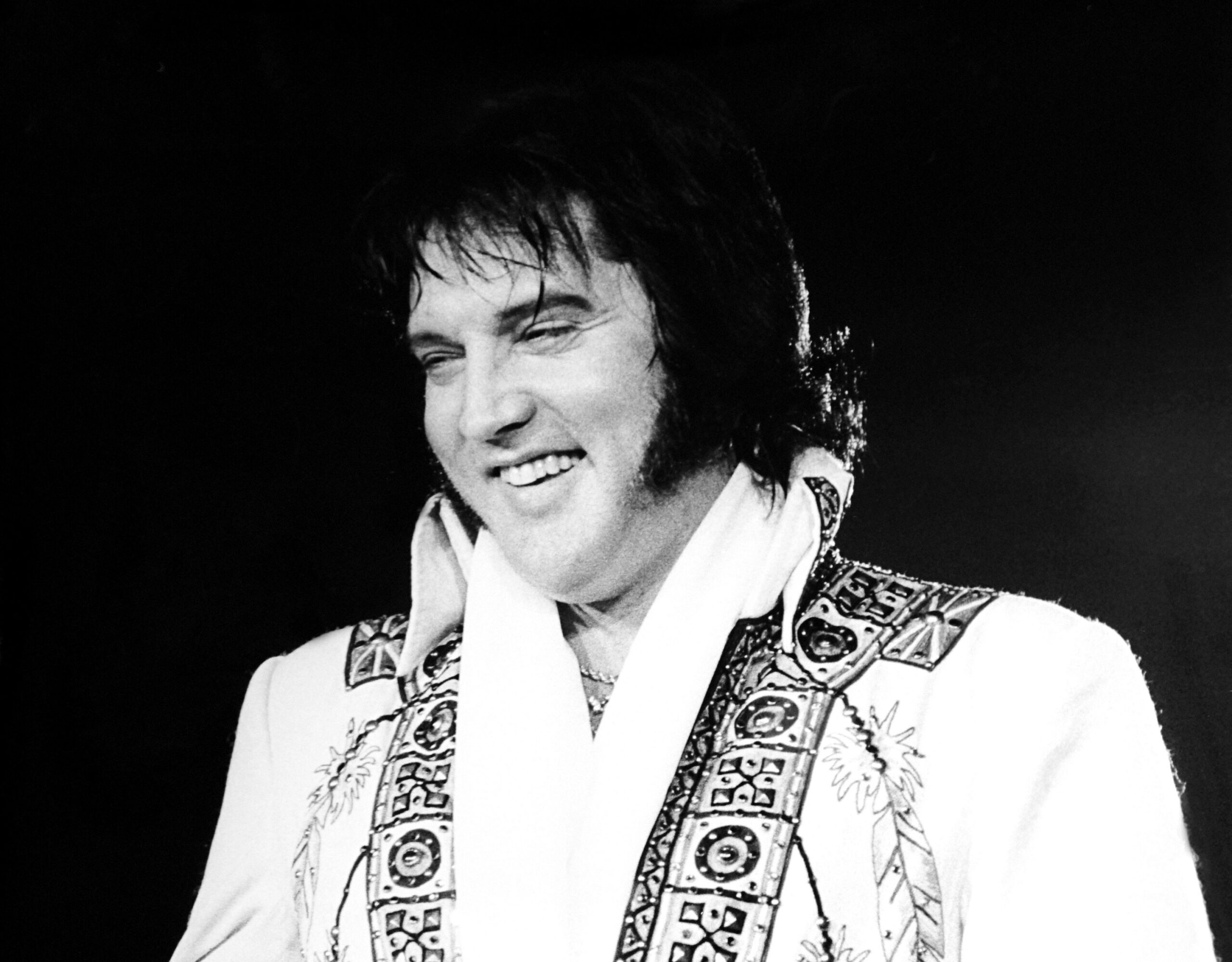
The program brought together songs from different chapters of his career. There were energetic numbers, romantic ballads, gospel-influenced performances, and dramatic interpretations that allowed him to use the deeper emotional qualities of his voice. By 1977, that voice no longer possessed exactly the same effortless control heard in his earliest recordings, but it had gained another quality: vulnerability.
This was especially evident when Elvis approached songs carrying themes of struggle, devotion, endurance, or farewell. His performance of “Bridge Over Troubled Water,” the Simon and Garfunkel classic, held particular emotional power. Elvis had always been drawn to songs that allowed him to move from tenderness toward vocal intensity. The composition gave him an opportunity to offer reassurance through music, even as his own life appeared increasingly uncertain.
Some critics regarded the Indianapolis show as outdated or uneven. They commented on the production, the long supporting program, and the contrast between Elvis’s legendary reputation and the reality of his condition. Such observations cannot be ignored, but professional reviews tell only one part of the story. Those sitting in the arena were not merely evaluating lighting, arrangements, or vocal consistency. Many were sharing one final evening with an artist whose music had accompanied their youth, marriages, family gatherings, disappointments, and private hopes.
Elvis had always possessed an unusual ability to make a large audience feel personally addressed. He might glance toward one section, smile at an individual fan, or pause before a lyric, creating the impression that the song belonged to everyone and to one listener at the same time. Even in his final months, that connection had not completely disappeared.
The personal difficulties surrounding Elvis in 1977 were impossible to separate from his performances. His health had declined, his appearance had changed, and his emotional life had become increasingly unsettled. The end of an important relationship had added further strain, while people close to him remained concerned about his condition. Nevertheless, he continued touring because performing had become both an obligation and a source of identity.

Elvis did not simply work as a singer. Music was the language through which he understood himself. From the gospel services of his childhood to Sun Records, Hollywood, Las Vegas, and the largest concert arenas in America, singing had carried him through every transformation. It had given a shy young man from Tupelo a place in history, but it had also placed demands upon him that became increasingly difficult to meet.
One of the most poignant moments of the Indianapolis concert came when Elvis introduced members of his family. His father, Vernon Presley, was brought forward to acknowledge the crowd. The gesture now feels like an unexpected closing of the circle. Father and son stood together before thousands of people, connected to a story that had begun in poverty and reached a level of fame neither could have imagined.
The concert eventually moved toward the song that traditionally closed Elvis’s performances: “Can’t Help Falling in Love.” By 1977, its opening notes told audiences that the evening was ending. The song had become more than one of his best-known recordings. It functioned as a final expression of affection between Elvis and the people who had sustained his career.
That night, however, the familiar conclusion carried a meaning no one yet understood. Elvis sang the melody, accepted the applause, and prepared to leave. He did not announce his retirement. He did not offer a carefully written speech about his career. His farewell was brief and spontaneous: “We’ll meet you again. God bless, adios.”
The crowd heard it as a conventional promise. They assumed there would be another tour, another ticket, another white stage suit emerging beneath the lights. Less than two months later, on August 16, 1977, Elvis Presley died at Graceland. The Indianapolis words became his final message from a concert stage.
There is something profoundly moving about an unrecognized goodbye. A planned farewell allows people to prepare themselves, to listen more carefully, and to preserve every detail. Elvis’s last concert offered no such warning. The audience did not know that each song was becoming final as he performed it. They did not understand that the familiar closing number would never again be sung by Elvis before a live crowd.
This is why the concert continues to fascinate listeners. It was not necessarily his strongest performance, nor was it the perfect conclusion to an extraordinary career. It was something more human: a tired but determined artist stepping before an audience and doing the work that had defined his life.
The evening revealed both the cost of his journey and the enduring force of his presence. Elvis was no longer the young man who had electrified America in the 1950s, but the connection between his voice and his audience remained real. Beneath the elaborate costume stood someone trying to give one more performance, unaware that history was already preparing to close the curtain.
Today, recordings, photographs, and eyewitness accounts allow admirers to revisit the final night at Market Square Arena. They listen differently because they know what the audience did not. Every smile seems more fragile, every lyric more meaningful, and every pause more haunting.
Elvis Presley left the stage believing that he would return. That belief may be the most heartbreaking part of the story. His final concert was not designed as a farewell, yet it became one of music history’s most unforgettable endings.
The King walked beneath the lights, sang the song that had closed so many evenings, and offered a simple promise to meet his audience again. He could not keep that promise in person. Through the recordings he left behind, however, Elvis Presley continues to return whenever the music begins.