Introduction
THE DAY THE PALACE CALLED HIM “SIR”: How Barry Gibb’s Songs Carried Him from a Working-Class Childhood to Buckingham Palace
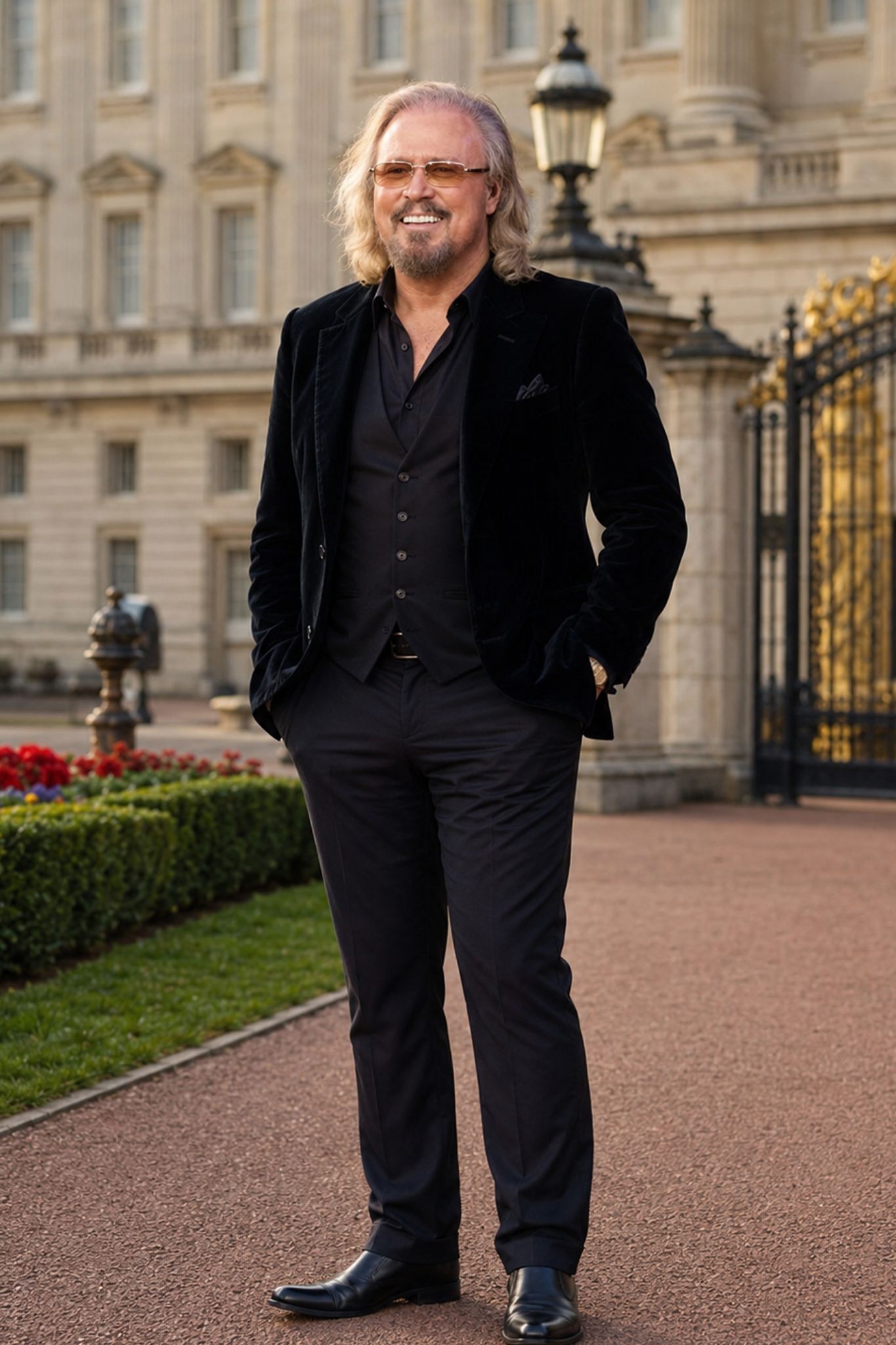
There are awards that recognize commercial success, and there are honors that acknowledge something deeper. A gold record may celebrate a particular album, while a trophy may preserve the memory of one remarkable year. A British knighthood, however, speaks to the influence of an entire lifetime. It recognizes not merely popularity, but enduring service, cultural contribution, and a body of work that has become part of the public inheritance. For Barry Gibb, the journey to Buckingham Palace was therefore much more than another ceremonial appearance. It represented the formal recognition of a songwriter whose melodies had crossed borders, generations, musical fashions, and personal tragedies.
Barry Gibb was named in Queen Elizabeth II’s New Year Honours, with the official announcement dated December 30, 2017. The published notice identified Barry Alan Crompton Gibb as a singer, songwriter, and record producer who would receive a Knighthood for services to music and charity. On June 26, 2018, he attended an investiture at Buckingham Palace, where the honor was formally presented by the then Prince Charles, who would later become King Charles III. From that day forward, the world could officially address one of popular music’s most recognizable voices as Sir Barry Gibb.
The setting could hardly have been more dignified. Buckingham Palace has witnessed countless moments of national history, yet there was something especially moving about seeing Barry standing within those grand rooms. He had not arrived as a politician, military commander, or hereditary aristocrat. He came as a musician whose authority had been earned through melody, harmony, perseverance, and the extraordinary partnership he once shared with his brothers. His path to the palace had begun not with privilege, but with a family determined to build a future through music.
For older listeners, the name Barry Gibb immediately awakens memories that belong to more than one era. His voice recalls the early tenderness of “Words,” the emotional elegance of “How Deep Is Your Love,” and the mature reassurance found throughout the Bee Gees’ vast catalogue. Yet Barry’s importance cannot be measured only through the songs he performed. He also possessed the rare ability to write for other voices while preserving the emotional truth of each composition. Songs associated with Barbra Streisand, Dionne Warwick, Diana Ross, Kenny Rogers, and Dolly Parton demonstrated how widely his musical imagination could travel. ITV noted that his songwriting successes for other performers included “Guilty,” “Woman in Love,” “Chain Reaction,” “Heartbreaker,” and “Islands in the Stream.”
The knighthood also recognized a quality that is sometimes overlooked when people discuss the Bee Gees: their determination. Barry explained after the ceremony that the brothers had been relentless, continuing even when an idea failed or success seemed uncertain. This is one of the most valuable lessons within their story. The Bee Gees were not carried through six decades by a single fortunate moment. They repeatedly adapted to changing times while maintaining the unmistakable family harmony at the center of their music.
Their career experienced extraordinary heights, but it also faced periods when critics dismissed them and musical tastes appeared to leave them behind. Lesser artists might have surrendered to disappointment or attempted to imitate whatever was fashionable. Barry, Maurice Gibb, and Robin Gibb continued writing. They trusted the craft that had sustained them since childhood, and they gradually discovered new ways to express it. Their resilience became as important as their talent, because each return proved that genuine songwriting could survive the judgment of any particular decade.
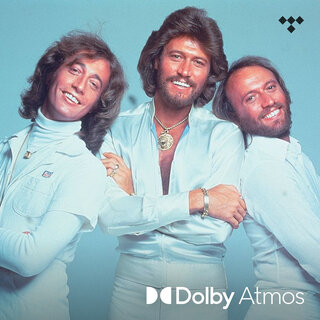
That history made the Buckingham Palace ceremony deeply emotional. Barry did not speak as though the knighthood belonged to him alone. He expressed his hope that Maurice and Robin would have been proud, emphasizing that the honor could not have happened without them. He said that he continued to feel their presence and wished they could have shared the occasion. Maurice died in 2003, while Robin died in 2012, leaving Barry to carry the public memory of a partnership formed among three brothers who had spent most of their lives creating music together.
This was perhaps the most meaningful aspect of the day. The medal rested upon Barry’s shoulder, and the title was placed before his name, but the emotional space beside him remained occupied by his brothers. In the public photographs, viewers saw one man standing before royalty. In Barry’s heart, however, the moment still belonged to three brothers.
That sense of shared achievement has always distinguished the Bee Gees from many other celebrated groups. Their harmonies were not simply carefully arranged studio effects. They were the sound of lives connected by childhood memories, family struggles, ambition, disagreement, forgiveness, and an instinctive understanding that could not be taught. When Barry accepted the knighthood, he was also accepting recognition for that remarkable family language.
The ceremony even contained a gentle moment of humor. After kneeling before Prince Charles, Barry admitted that getting back to his feet was not quite as easy as expected. The two men briefly joked about their knees, bringing an unexpectedly human touch to the stately proceedings. Barry later described his new title as somewhat surreal, but he also spoke of his enormous pride in receiving such an important acknowledgment from his culture.
That pride was understandable, yet the honor did not transform Barry Gibb into a legend. His songs had accomplished that long before the palace ceremony. The knighthood simply gave an official name to something listeners had already understood for decades. Barry had become more than a successful entertainer. He was part of the musical history of Britain, Australia, America, and countless other places where Bee Gees records had entered family homes.
His music had accompanied weddings, long journeys, quiet evenings, periods of grief, and moments of renewed hope. Listeners who first discovered the Bee Gees in their youth later introduced those same songs to their children and grandchildren. That continuity is one of the clearest signs of lasting artistry. Fashion can make a song famous for a season, but only emotional truth can keep it alive for generations.
The title Sir Barry Gibb therefore carries a significance far beyond ceremony. It honors a man who helped demonstrate that popular music could possess craftsmanship, emotional intelligence, and remarkable durability. It recognizes a songwriter who gave other artists some of their finest material and a performer whose voice remained unmistakable through decades of change. Most importantly, it honors a brother who never stopped acknowledging the two men who helped him create that legacy.
When Barry Gibb walked out of Buckingham Palace on June 26, 2018, he carried a new title. Yet he also carried the same history he had always carried: the memory of modest beginnings, the persistence of a determined family, the voices of Maurice and Robin, and the melodies that had once existed only in the imagination of three ambitious brothers.
The palace called him Sir Barry Gibb, but millions of listeners had already given him another title that no formal ceremony could bestow. To them, he was the keeper of the Bee Gees’ musical legacy, a master of timeless melody, and the surviving voice of a brotherhood that changed popular music forever.