Introduction
ANDY GIBB’S FINAL DAYS: THE HEARTBREAKING TRUTH THE AUTOPSY REVEALED—AND THE COMEBACK THAT ENDED BEFORE IT COULD BEGIN
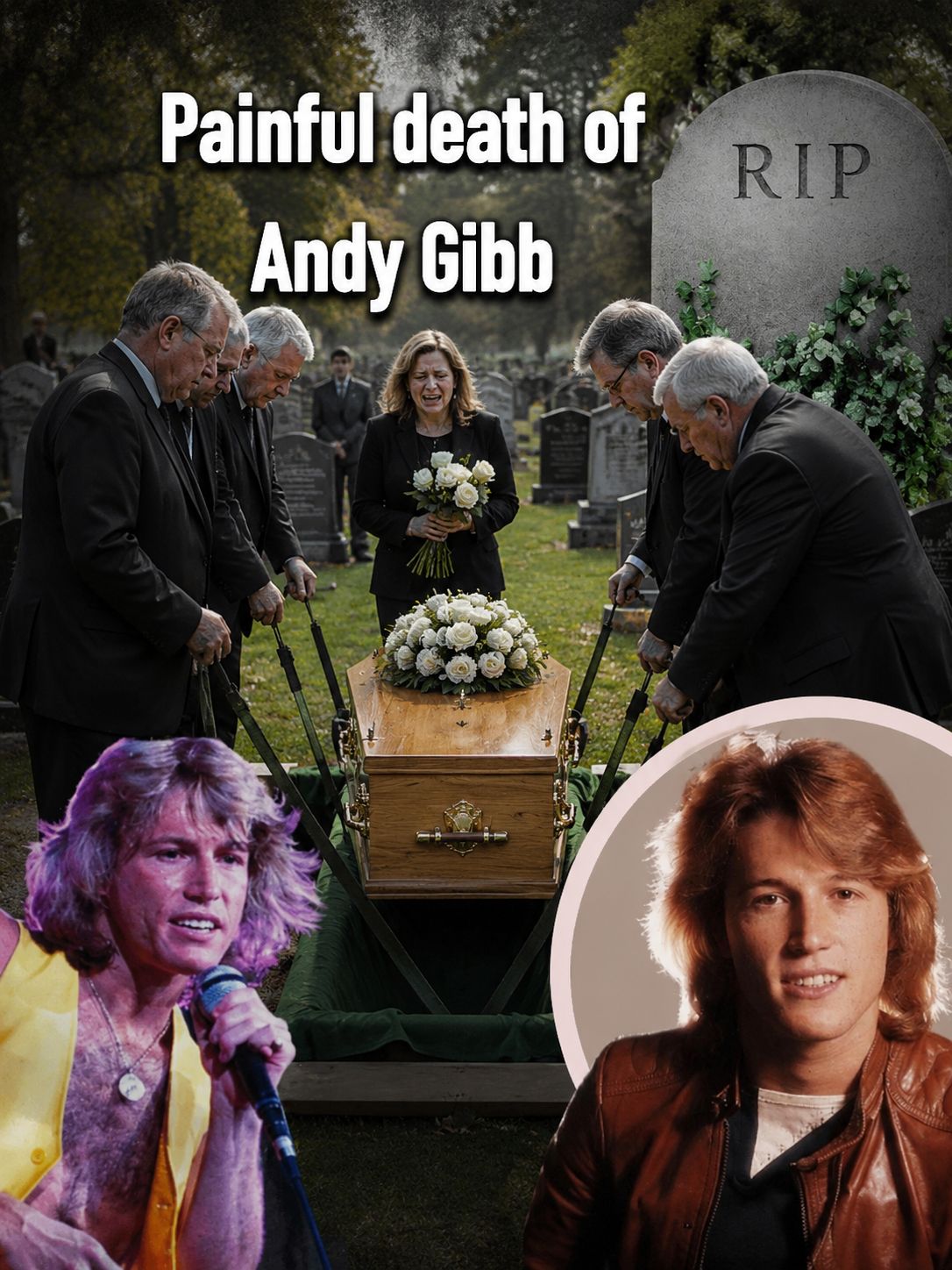
For millions who remember the golden age of the Bee Gees, the death of Andy Gibb remains one of the saddest chapters in the Gibb family story. He had the famous surname, the unmistakable voice, the youthful appearance, and for a few extraordinary years, the world seemed to open effortlessly before him. Yet Andy’s life ended on March 10, 1988, only five days after his 30th birthday. What made his death particularly painful was not simply his age, but the fact that he had begun looking toward the future again. After difficult years away from the heights of his early fame, Andy had signed a new recording contract and was preparing to rebuild his career. Instead, a visit to an Oxford hospital became the final chapter of a life that still seemed to contain so much unwritten music.
Andy had once appeared almost destined for permanent stardom. As the younger brother of Barry, Robin, and Maurice Gibb, he grew up surrounded by music, but his success was not simply borrowed from the Bee Gees. In the late 1970s, his own recordings made him one of the most recognizable young singers in America. “I Just Want to Be Your Everything,” “(Love Is) Thicker Than Water,” and “Shadow Dancing” helped establish him as a major solo performer, and he achieved the remarkable feat of beginning his American career with three consecutive No. 1 singles. His voice carried something immediately appealing—a combination of softness, vulnerability, and melodic instinct that clearly belonged to the Gibb family while still sounding like Andy himself.

But extraordinary success arrived when he was still extremely young, and the years that followed became increasingly difficult. His career lost momentum, and well-documented personal struggles affected both his professional opportunities and his health. In 1985, Andy entered the Betty Ford Center for treatment. By the beginning of 1988, however, there were signs that he wanted a fresh start. He had signed a contract with Island Records approximately two months before his death and moved to Britain to work toward a new album. People around him described a young man excited about returning to music. The tragedy of his final days is therefore not the story of someone who had simply surrendered. It is the story of someone trying to begin again.
On Monday of that final week, Andy became ill with stomach pains and was admitted to John Radcliffe Hospital in Oxford for observation. Nothing in the first public reports suggested that the music world was about to lose him. Then, on the morning of March 10, Andy died. He was only 30. The suddenness immediately produced speculation, particularly because his earlier difficulties were already well known to the press. Some newspapers quickly suggested that his death had been caused by an overdose. His family strongly rejected those claims.
The postmortem examination provided an important answer.
Hospital officials announced that Andy Gibb had died of natural causes, specifically an inflammation of the heart, described at the time as the type normally caused by a virus. The hospital statement also made a point that deserves to be remembered whenever Andy’s final days are discussed: investigators found no evidence that his death was related to alcohol or drugs. The finding contradicted the sensational reports that had appeared immediately after his death.
That distinction matters because Andy’s life has too often been reduced to his struggles rather than understood in its entirety. His earlier problems were real and should not be erased, but neither should they be allowed to rewrite the documented cause of his death. The final medical finding was not a tabloid rumor. It was a heart condition—an inflammation severe enough to take the life of a man only days into his thirtieth year.
For his brothers, the loss was devastating. Robin Gibb publicly challenged reports attempting to connect Andy’s death with renewed drug use, insisting that those claims were untrue. Behind the famous harmonies and international success, the Gibbs were still a family, and Andy was still their youngest brother. Barry had played an especially important role in Andy’s early recording career, helping guide and write material for him. The public could discuss charts, careers, and headlines; the Gibb family had lost someone they had known since childhood.
Perhaps the most heartbreaking part of Andy’s final chapter is the comeback that never happened. He had a new record deal. He had returned to Britain. There was music ahead of him—or at least the possibility of music. At 30, he was young enough to reinvent himself many times over. Had he lived, he might have reunited professionally with his brothers, developed a more mature sound, or discovered an entirely different audience as the decades passed. We will never know what the older Andy Gibb might have sounded like.