Introduction
DOLLY PARTON AND ROD STEWART: THE UNLIKELY FRIENDSHIP THAT BROUGHT TWO MUSICAL WORLDS TOGETHER
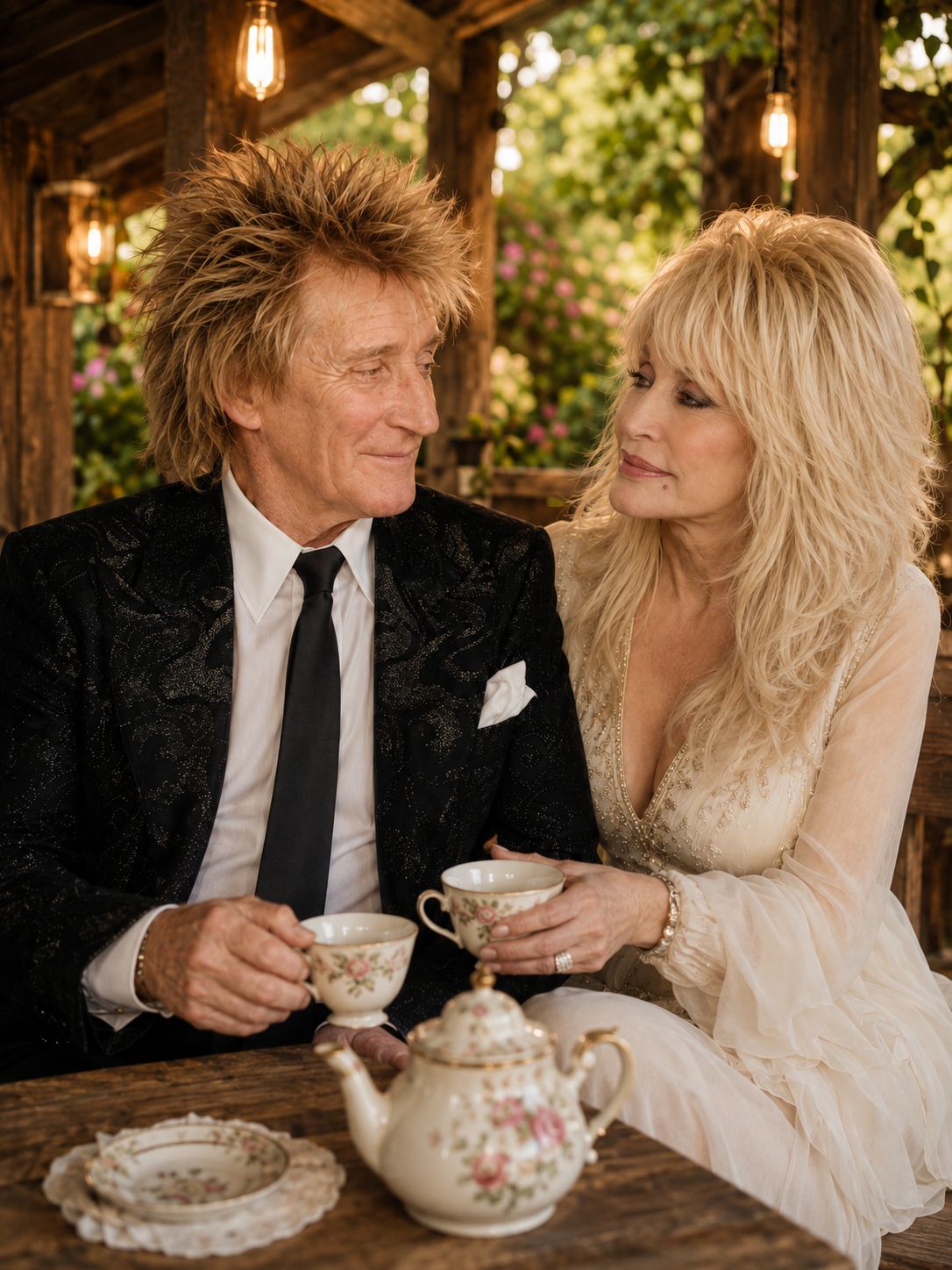
Some friendships in music are born from years spent traveling the same roads, playing the same clubs, and sharing the same audiences. Others are more surprising. The connection between Dolly Parton and Rod Stewart belongs to that second category. On paper, they came from remarkably different musical worlds. Dolly emerged from the mountains of East Tennessee and became one of country music’s most recognizable storytellers, while Rod rose from Britain’s rock scene with a weathered voice that eventually carried him from hard-driving rock and soul into standards, ballads, and popular song. Yet when their paths crossed, the differences seemed far less important than what they had in common: longevity, humor, professionalism, respect for great songs, and an instinctive understanding of how music can reach people long after fashions have changed.
For older listeners in particular, Dolly Parton and Rod Stewart represent something increasingly rare in popular culture: artists whose careers cannot be reduced to one decade or one style. Both learned how to survive enormous changes in the music business without completely abandoning the personalities that first made audiences care about them. Dolly’s songwriting remained rooted in plainspoken emotion, family memory, faith, hardship, and hope. Rod’s unmistakably raspy voice continued to carry traces of blues, soul, folk, and rock even when he moved into sophisticated interpretations of classic American standards. Their friendship and professional warmth therefore make sense at a deeper level. They are performers from different traditions, but they share an old-fashioned belief that the song comes first.
One of the clearest public expressions of their musical connection came when Rod Stewart and Dolly Parton recorded “Baby, It’s Cold Outside.” Their pairing was unexpected enough to attract attention immediately, yet the performance worked because neither singer attempted to become someone else. Rod brought his familiar gravel-edged phrasing, while Dolly answered with the bright, conversational warmth that has always made her performances feel personal. Rather than sounding like two celebrities placed together merely for novelty, the duet suggested two veteran entertainers enjoying the opportunity to interpret a classic song in their own unmistakable voices.
That performance also reveals something important about the relationship between artists who have been famous for decades. At that stage of a career, collaboration is rarely about proving who can sing louder or command more attention. It is often about listening. Dolly Parton has spent much of her life demonstrating an unusual generosity toward fellow performers, frequently praising younger musicians and established legends with equal enthusiasm. Rod Stewart, despite the swagger associated with many of his biggest rock performances, has likewise shown throughout his career a deep reverence for the singers and songwriters who came before him. When musicians with those instincts meet, mutual respect can become more important than genre.
Their personalities also help explain why the connection feels natural. Both have long understood the value of humor. Dolly can turn a sharp observation into a joke before an interviewer realizes what has happened, while Rod has rarely presented himself as a distant or solemn figure. Behind the glamour and celebrity, each cultivated a public presence that remained recognizably human. They could laugh at themselves. They could acknowledge age without allowing age to define them. And they understood that audiences who had followed them for forty, fifty, or even sixty years deserved more than nostalgia; they deserved honesty, warmth, and a sense that the artist onstage still appreciated being there.
There is also a fascinating cultural contrast between them. Dolly Parton became an emblem of American country music while remaining difficult to confine within country music alone. Her songs crossed into pop, gospel, bluegrass, film, and countless interpretations by other artists. Rod Stewart, meanwhile, moved from British blues-rock and the Faces into arena rock, pop balladry, soul standards, and the Great American Songbook. Their careers demonstrate two different versions of the same artistic principle: a distinctive voice can travel almost anywhere when the personality behind it remains believable.
That may be the most meaningful way to understand the friendship between Dolly Parton and Rod Stewart. It is not simply a story about two famous people appearing together. It is a meeting of survivors from an era when careers were built through relentless touring, radio play, record stores, television appearances, and direct relationships with audiences. They watched the industry move from vinyl to cassette, from cassette to CD, from CD to downloading and streaming. Through every transition, each retained something technology could not manufacture: a voice listeners could identify within seconds.