Introduction
THE VOICE THAT REFUSED TO SURRENDER: Elvis Presley’s Haunting “Unchained Melody” in the Final Summer of His Life
June 21, 1977, Rapid City, South Dakota remains one of those dates that Elvis Presley admirers cannot revisit casually. Watching the surviving performance today means seeing far more than another concert by The King of Rock and Roll. It means witnessing a legendary entertainer during the final summer of his life, visibly changed from the young man who had once seemed capable of commanding a stage with effortless movement and boundless confidence. Elvis was only 42 years old, yet exhaustion appeared written across his face and body. Nevertheless, when he moved toward the piano and prepared to sing “Unchained Melody,” the atmosphere changed. For a few remarkable minutes, physical frailty seemed to become secondary, and the quality that had carried him through more than two decades of fame came forward again: that unmistakable voice.
There is something profoundly moving about the contrast. The Elvis of June 1977 was no longer the restless young performer who had shaken American popular culture in the 1950s, nor the black-leather comeback figure who had reclaimed television screens in 1968. This was an older-looking, visibly weary Elvis facing an audience that still expected magic from him. Charlie Hodge stood nearby helping with the microphone as Elvis settled at the piano, and what followed has become one of the most discussed performances of his final months. The moment was imperfect, deeply human and almost painfully exposed, yet when Elvis began singing, the great instrument at the center of his career was still capable of astonishing force.
“Unchained Melody” was particularly suited to such a moment. Long before Elvis performed it, the song had become associated with yearning, separation, memory and the desire to reach across an impossible distance. In Rapid City, those qualities seemed magnified by the condition of the man singing them. His delivery was not polished in the conventional sense, and that may be precisely why the performance continues to affect listeners. Every rising phrase appeared to demand something from him. Instead of hiding the effort, the performance seemed to incorporate it. The struggle became part of the music, turning a familiar standard into something resembling a personal declaration from an artist refusing to surrender the stage while he could still sing.
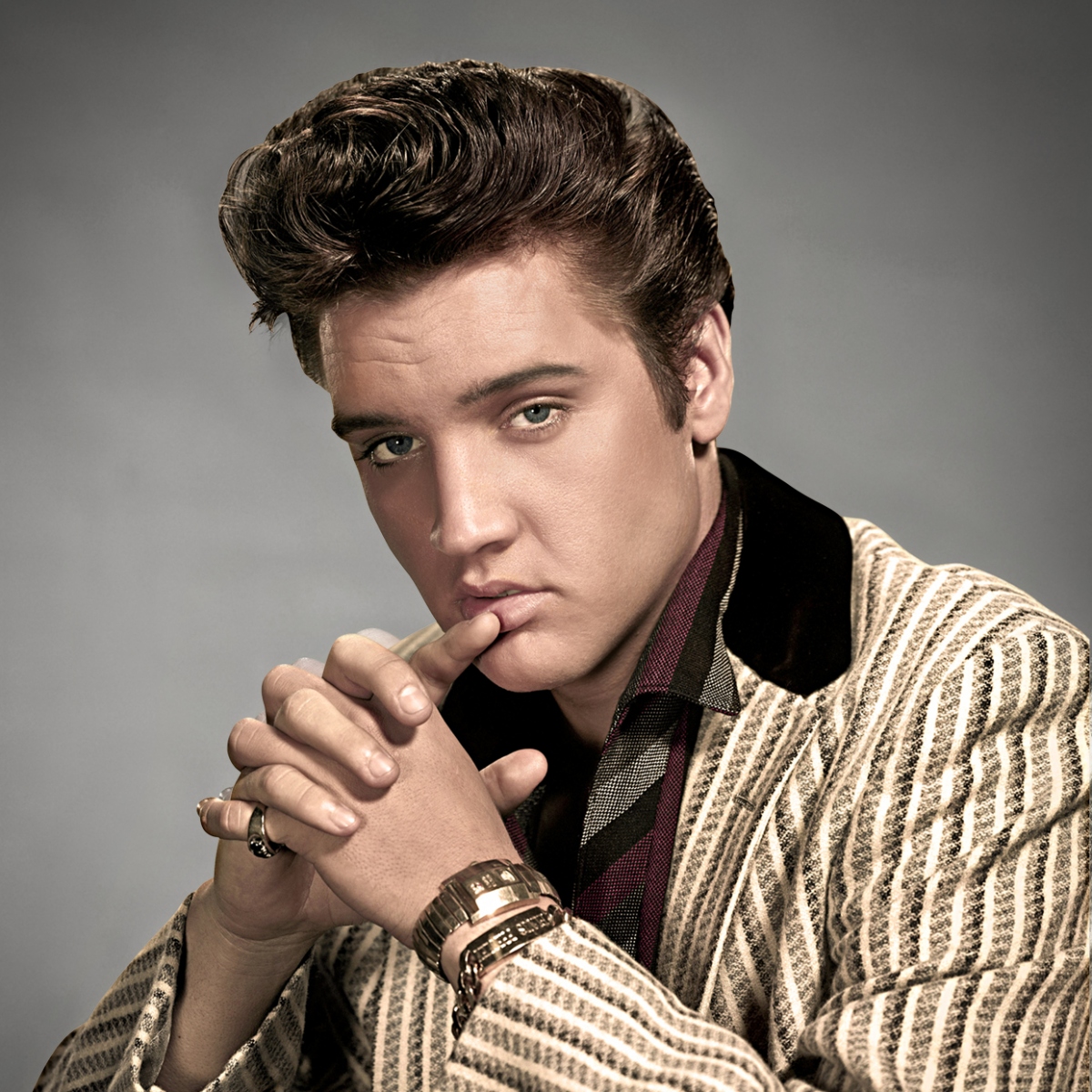
For decades, fans have attached an almost prophetic meaning to the footage, sometimes asking, “Did Elvis know that time was running out?” It is an understandable question, but it remains one that history cannot answer. There is no reliable way to know what Elvis believed about his immediate future while sitting at that piano. What the footage does reveal is something simpler and perhaps more powerful: a performer pushing himself through visible exhaustion because performing remained central to his identity. Knowing that Elvis would die less than two months later inevitably changes how modern audiences experience the scene, but the tragedy of what came afterward should not be mistaken for proof that he understood exactly what was approaching.
The context surrounding Elvis Presley’s final months makes the performance even more difficult to watch. His health had deteriorated significantly, and touring had become increasingly demanding. The explosive physical confidence associated with his earlier career had largely disappeared, while various health problems and extensive prescription-drug use complicated his daily life. Yet the concert schedule continued. The contradiction was painful: Elvis was struggling, but Elvis Presley remained an enormous attraction, surrounded by an industry, an audience and an established touring operation that continued moving from city to city.
Only two days before Rapid City, Elvis had performed in Omaha, Nebraska, another concert filmed for the CBS television project eventually broadcast as “Elvis in Concert.” Those final filmed appearances have remained controversial because they preserved Elvis at an unusually vulnerable point in his life. They were not carefully constructed portraits of a star at his physical peak. Instead, the cameras recorded a performer who sometimes seemed tired and diminished, then suddenly capable of summoning flashes of the extraordinary talent that had made him famous. That uneasy mixture of decline and brilliance is precisely what makes the Rapid City performance so compelling.
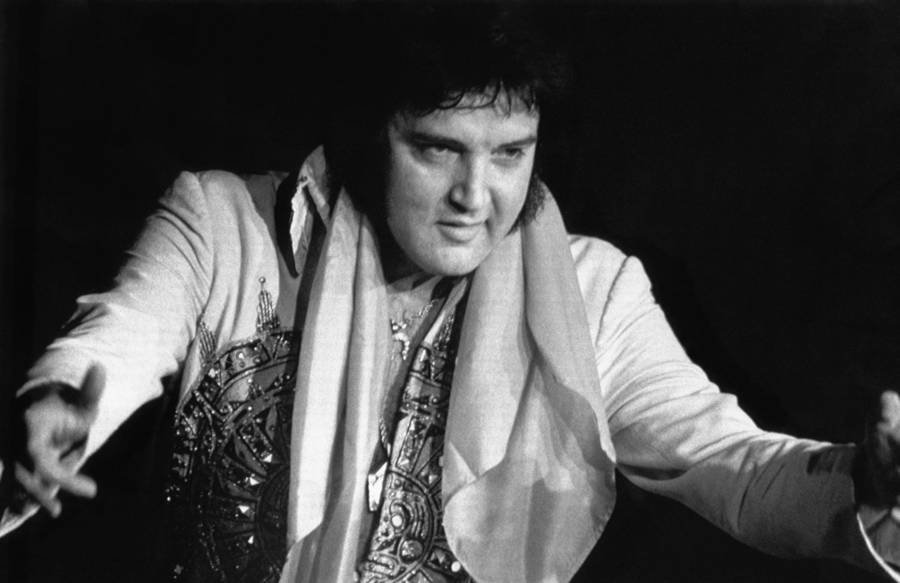
The temptation is to reduce those final weeks to a simple story of collapse, but doing so misses an essential part of Elvis Presley. His voice had not simply disappeared with his physical decline. At unexpected moments, it could still rise with astonishing depth, power and emotional authority. During “Unchained Melody,” the difference between the weakened man at the piano and the enormous sound coming from him is almost startling. He reaches upward vocally, pushing toward the song’s climactic passages with a determination that seems to transcend technique. One does not need to romanticize his suffering to recognize the courage involved in completing such a performance.
That is why this footage continues to resonate with listeners who remember Elvis from their youth as well as generations who discovered him long after his death. It reminds us that musical greatness is not always revealed through perfection. Sometimes it is found in persistence. Sometimes a familiar song becomes unforgettable because the person singing it can no longer conceal how difficult the journey has become. In Rapid City, the polished mythology surrounding The King briefly fell away, leaving something much more intimate: a tired man, a piano, an audience and a voice determined to finish the song.
Less than two months later, on August 16, 1977, Elvis Presley would be gone. That knowledge gives the Rapid City performance a gravity that no audience member could have fully understood on the night itself. Yet perhaps its meaning should not rest solely on death. “Unchained Melody” in Rapid City survives because it captures the strange duality of Elvis Presley near the end — vulnerability beside strength, physical decline beside musical instinct, exhaustion beside an extraordinary determination to perform.