Introduction
THE HARMONY THAT SURVIVED GOODBYE: BARRY AND ROBIN GIBB’S FINAL CHAPTER WAS MORE POWERFUL THAN THE LEGEND
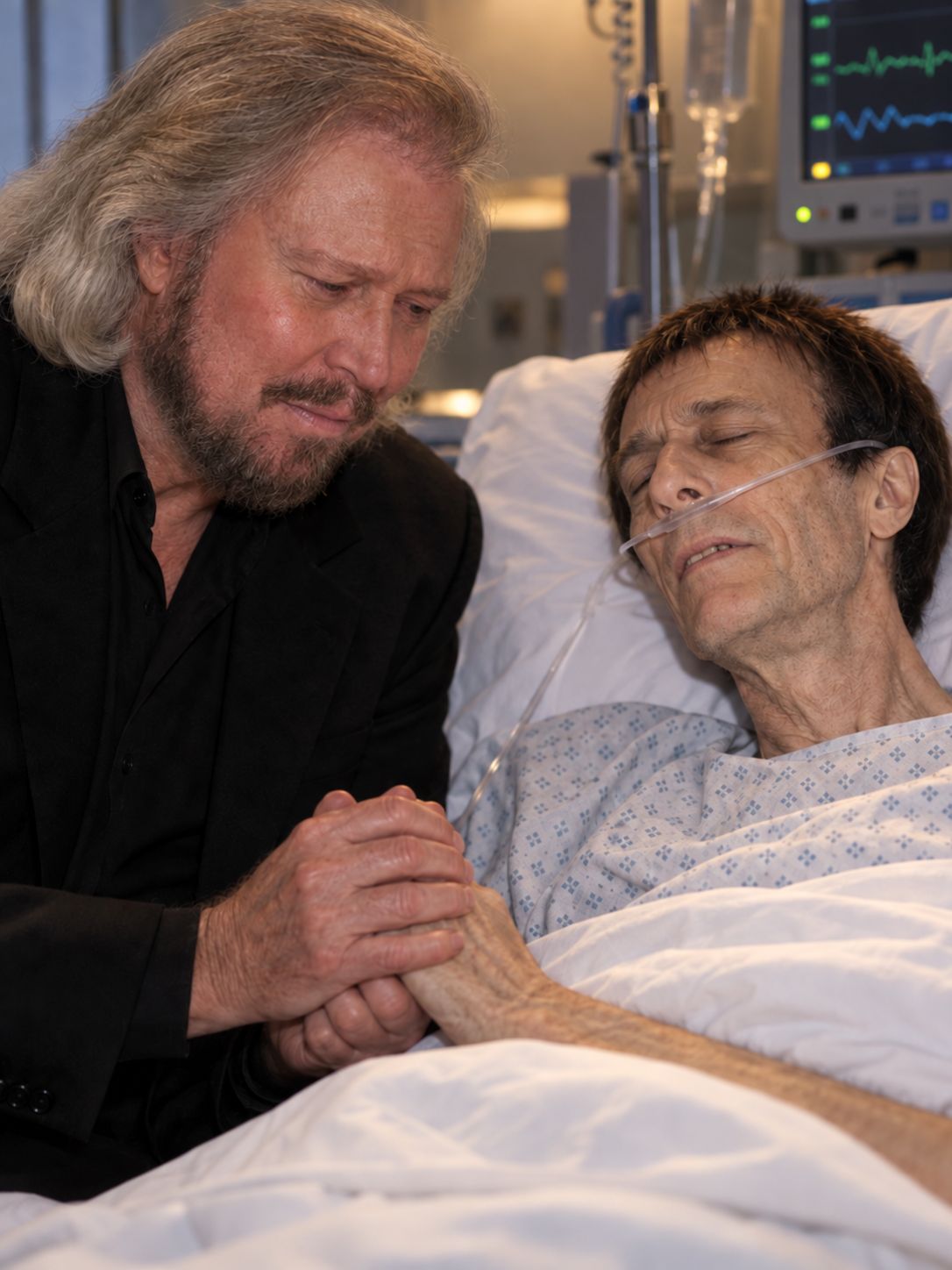
There is something irresistible about the story suggested by the words “Inside the Bee Gees’ Final Duet: How Barry Gibb Fulfilled Robin’s Deathbed Request.” It contains everything that has always made the story of the Bee Gees so compelling: brothers divided by pride, reunited by music, and finally separated by circumstances no harmony could overcome. Yet the truth, when carefully examined, is in many ways more moving than the legend. There is no well-established documentary evidence that Robin Gibb, during his final days, asked Barry Gibb to complete a last duet with him, nor is there reliable evidence that Barry added his voice to Robin’s final recording as the fulfillment of such a request. What history does give us, however, is an extraordinary story about two brothers whose voices repeatedly found each other after arguments, separation, success, tragedy, and the passage of nearly half a century.
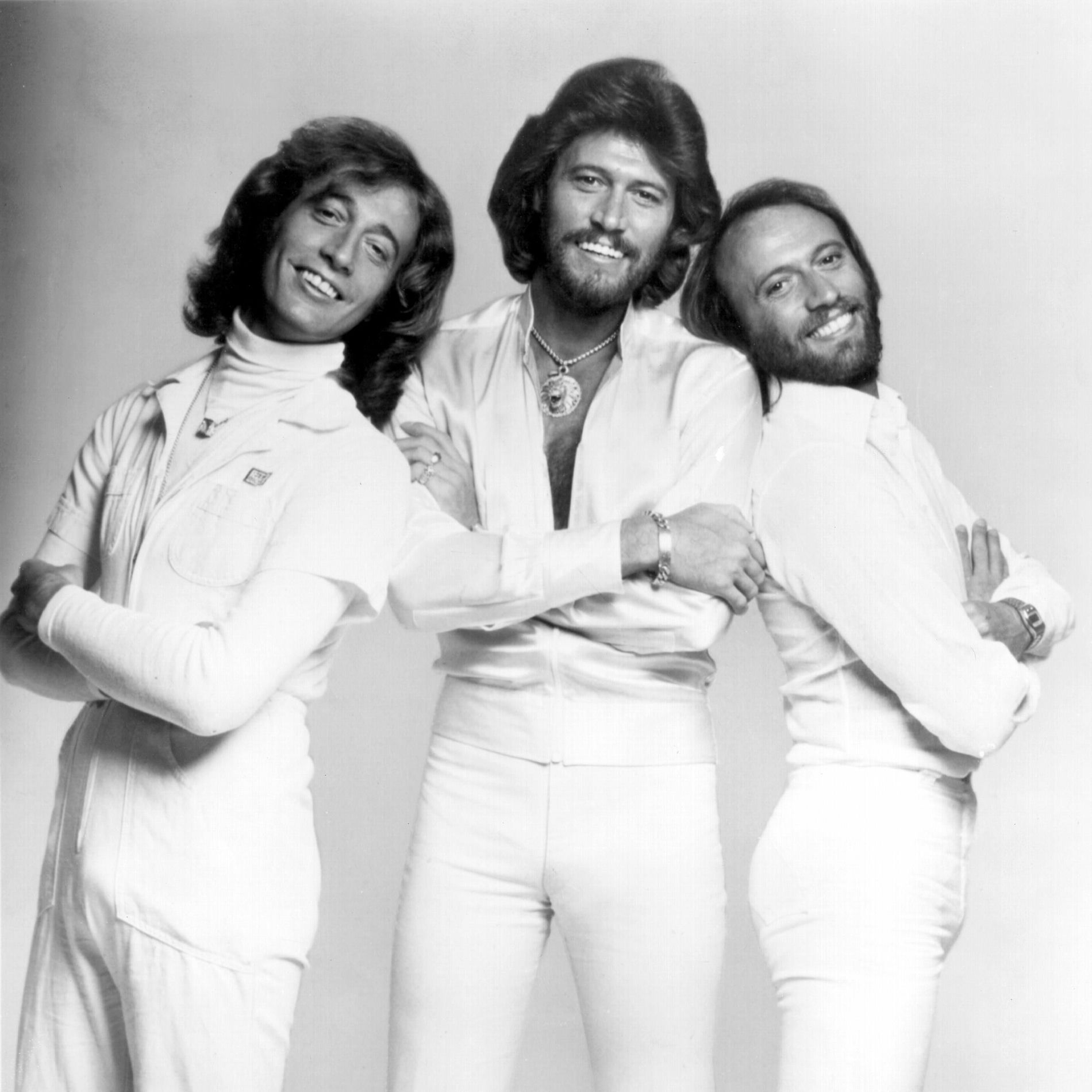
Long before the Bee Gees became associated with the soaring falsettos and polished rhythms of the late 1970s, their greatest instrument was something much simpler: the sound of brothers singing together. Barry, Robin and Maurice Gibb did not merely arrange harmonies; they seemed to breathe inside the same musical sentence. Their voices were different enough to be immediately recognizable, yet close enough in instinct to create the impression of a single personality divided among three men. That remarkable chemistry did not mean their relationship was peaceful. In fact, some of the Bee Gees’ most enduring music emerged from periods when the brothers were struggling intensely over leadership, songwriting and identity.
The most famous early rupture came in 1969, when tensions surrounding the album Odessa and the choice of Barry’s “First of May” as a single helped push Robin away from the group. Robin favored his own “Lamplight,” which was placed on the B-side, and the disagreement became part of a larger conflict that led him to pursue a solo career. The episode matters because it demonstrates something essential about the brothers: musical disagreement could become painfully personal, yet music was also the language through which they eventually returned to one another.
By 1972, that reconciliation could be heard clearly in “Run to Me.” Contrary to some dramatized retellings, the surviving recording history does not establish that Barry secretly completed the lead vocal before Robin arrived or that Robin refused to sing the song. What is documented is more straightforward and musically revealing. “Run to Me” was recorded on April 12, 1972 at IBC Studios in London, was credited to Barry, Robin and Maurice, and featured both Barry and Robin prominently on vocals, with Maurice contributing harmony. Released that July, it returned the Bee Gees to the British Top 10 and became another significant American success.

Listen closely to that recording today and its emotional power does not depend upon stories of betrayal behind the microphone. Barry begins with warmth and reassurance, while Robin brings a distinctive ache into the answering passages. The song works because their contrasting voices complete one another. Barry often sounded as though he were reaching outward; Robin frequently sounded as though he were searching inward. When the two approaches met, the result possessed the quality that made the Bee Gees’ harmonies so unusual: vulnerability without weakness and sentiment without losing melodic discipline.
That pattern continued across decades. The brothers argued, separated professionally, reunited, reinvented themselves, endured critical hostility, returned to enormous audiences, and continued writing songs that other singers turned into standards. Then the losses became permanent. Their younger brother Andy Gibb died in 1988. Maurice Gibb, Robin’s twin and the quiet musical center of so many Bee Gees arrangements, died unexpectedly in 2003. Suddenly the famous three-part harmony had become two voices carrying the memory of a third.
The final chapter of Robin Gibb’s musical life is especially poignant because he continued creating while seriously ill. One of his most ambitious final projects was The Titanic Requiem, composed principally with his son Robin-John Gibb. Its premiere took place in London on April 10, 2012, but Robin was too ill to attend. Instead of performing “Don’t Cry Alone” in person, the audience heard his recorded vocal. He died on May 20, 2012.
That distinction is important. “Don’t Cry Alone” was Robin’s performance, not a final Barry-and-Robin duet. The recording credits identify Robin as the vocalist, while the composition formed part of the work he created with Robin-John and collaborators. Its emotional weight is enormous precisely because the listener hears Robin himself, a man approaching the end of his life singing music concerned with reassurance, separation and remembrance.
There is another recording that makes the final chapter even more intimate. In August 2011, Robin recorded a deeply personal song called “Sydney” at home using GarageBand. Music historian Joseph Brennan identifies it as Robin Gibb’s last recording. The song looks backward toward childhood in Australia and the beginnings of the family story, almost as though Robin were circling back to the place where the brothers first learned what they could become together. There is no grand production and no manufactured farewell scene. Instead, there is memory, family and a voice looking toward its own history.
For Barry Gibb, surviving his brothers created a different kind of responsibility. He could no longer stand beside Robin and Maurice in the old configuration, but every performance of their catalogue inevitably carried them with him. Songs such as “To Love Somebody,” “How Deep Is Your Love,” “Massachusetts,” “I Started a Joke,” and “Run to Me” ceased to be merely successful compositions. They became rooms filled with absent voices.
Perhaps that is why stories about a supposed last duet or a deathbed request are so easy to believe. Audiences naturally want a final scene in which everything is resolved: Robin makes one last request, Barry enters the studio, two voices meet again, and decades of rivalry disappear inside a perfect harmony. It is an appealing piece of storytelling, but the documented history offers something subtler.
Barry did not need a single dramatic promise to preserve Robin’s voice. They had already spent a lifetime doing that for one another.
Video