Introduction
AUSTRALIA DID NOT FORGET BARRY GIBB — THE HONOR THAT RECOGNIZED A LIFETIME OF MUSIC, BROTHERHOOD, AND A LEGACY BORN FAR FROM THE SPOTLIGHT
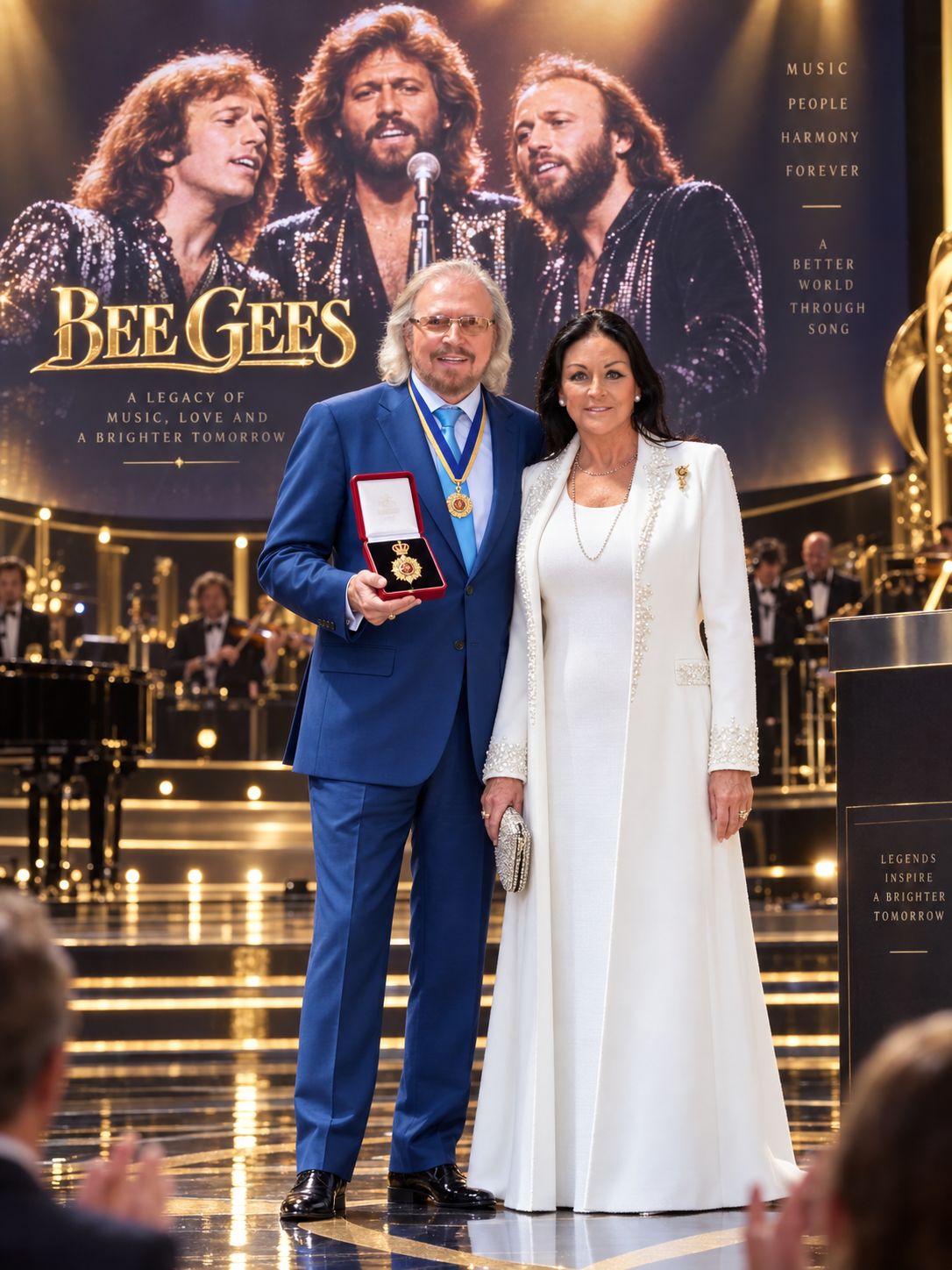
There are honors that celebrate a successful career, and then there are honors that seem to acknowledge an entire journey. For Barry Gibb, Australia’s decision to appoint him an Honorary Companion of the Order of Australia belongs firmly in the second category. It was not simply recognition of a famous singer whose records had travelled around the world. It was an acknowledgment of a musician, songwriter and producer whose story became inseparable from Australia’s own popular-music history. The appointment was officially announced on January 27, 2022, and it remains important to state that date clearly: this is confirmed history, not a newly announced 2026 distinction. The official Governor-General’s record lists Sir Barry Alan Gibb among the 2022 Special Honours recipients as an Honorary Companion in the General Division. The Companion level is the highest of the four current levels within the Order of Australia.
The wording behind the honor explains why it carried such significance. Barry was recognized for eminent service to the performing arts as a musician, songwriter and record producer, for the advancement of Australian music artists, and for philanthropy. That description reaches well beyond record sales or celebrity. It recognizes the broader influence of a man whose work helped connect Australian popular music with an international audience and whose career demonstrated what musicians with Australian roots could achieve on the world stage. Contemporary reporting on the appointment also noted his longstanding support for the Australian music industry and his charitable work.
Yet the most moving part of the story lies much earlier, before the awards, before the stadiums and before anyone could have imagined what the name Bee Gees would eventually mean. In 1958, the Gibb family emigrated to Queensland, and the brothers spent formative years in and around Redcliffe. Barry, Robin and Maurice were still young when Australia became the place where their musical instincts began turning into something professional. The State Library of Queensland records that the brothers settled first in Redcliffe and performed at the Redcliffe Speedway in 1959, while Australia’s National Portrait Gallery notes that their performances helped attract the attention of radio figures who assisted their early career.

That Australian chapter matters because the Bee Gees did not arrive as international stars. They arrived as brothers with voices, ambition and an unusual instinct for harmony. Their gift was not simply that each could sing; it was that together their voices could create something that seemed larger than the individuals producing it. Barry, Robin and Maurice Gibb would eventually become associated with extraordinary stylistic range, moving through delicate ballads, richly arranged pop, soul-influenced recordings and the dance music that became inseparable from the late 1970s. But underneath those changes remained the same foundation: songwriting, family harmony and an unmistakable understanding of melody.
For listeners who lived through those decades, the Bee Gees were never merely part of one musical fashion. That is sometimes forgotten when their name is reduced to the disco era. Their catalogue tells a much longer story. Songs such as “To Love Somebody,” “Massachusetts,” “How Deep Is Your Love,” “Too Much Heaven,” “Words,” “Night Fever,” and “Stayin’ Alive” belong to different moods and moments, yet each reveals the brothers’ extraordinary sensitivity to melody and emotional atmosphere. Their music could fill a dance floor, but it could also accompany weddings, long drives, family gatherings, private losses and memories that listeners carried for decades. Great popular music often survives because people attach their own lives to it, and few groups understood that emotional relationship more naturally than the Bee Gees.
This is also why Barry’s Australian honor can be understood as something larger than an individual medal. Although the appointment was formally his, the story behind it inevitably leads back to Robin and Maurice. Maurice died in 2003, and Robin died in 2012. Their absence transformed Barry’s later public appearances into something different from what they had once been. Whenever he revisited the Bee Gees catalogue, he was not simply performing old material; he was carrying songs originally shaped by three brothers whose voices had once stood beside one another. For longtime admirers, that knowledge gives every later recognition an additional emotional weight. The honor may bear Barry’s name, but the musical history behind it was created by a family.
Australia itself has continued to preserve that connection. In Redcliffe, Bee Gees Way commemorates the brothers’ relationship with the community where their early Australian story unfolded. The City of Moreton Bay describes the site as an audio-visual tribute featuring music, historical material and interviews about the brothers’ years in the region. It is a physical reminder that before the Bee Gees belonged to the world, part of their identity was formed on the Queensland coast.
Video