Introduction
ROD STEWART’S OTHER STAGE: THE FOOTBALL PITCH THAT SHAPED HIM — AND THE INTERVIEW THAT SUDDENLY SOUNDED LIKE A FAREWELL
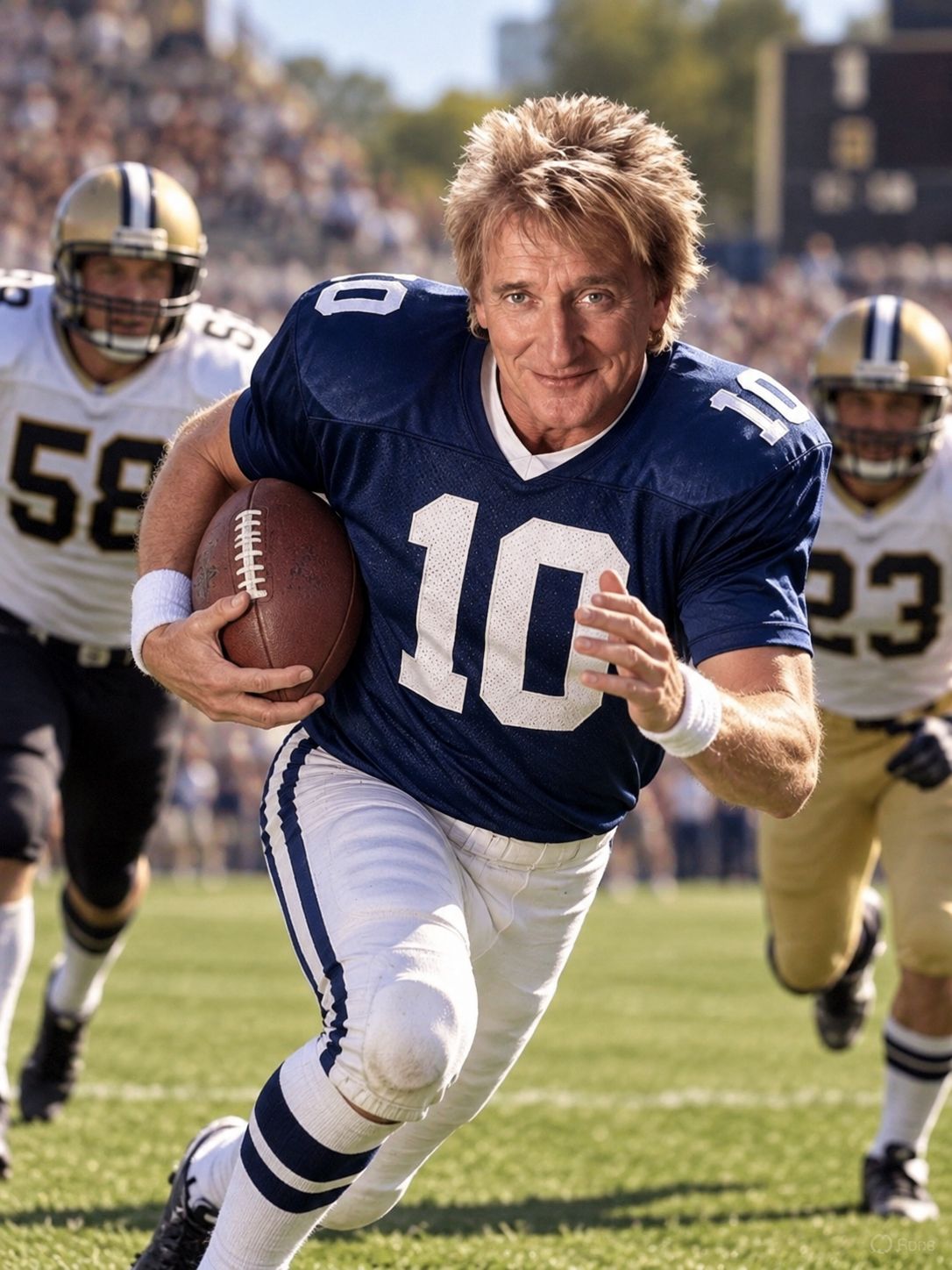
Long before the tailored jackets, packed arenas and that unmistakably weathered voice turned Rod Stewart into one of Britain’s most recognizable singers, another dream occupied his imagination. It did not involve microphones or record contracts. It involved muddy boots, cold mornings, an open stretch of grass and a football at his feet. For Stewart, football was never merely a celebrity hobby. It became one of the quiet threads running through his entire life — a reminder of the ordinary young man who existed before the world knew his name.
The mythology surrounding Stewart’s football years has sometimes grown larger than the facts. Stories have long suggested that he was once an apprentice with Brentford FC, almost choosing professional football instead of music. Stewart himself later poured cold water on that romantic version, telling The Guardian that he “didn’t even get close,” adding that although he was a good player, he was not good enough to become a professional. Yet the truth may actually be more touching than the legend. He did not need to become a professional footballer for the game to become part of his identity.
Photographs from the late 1970s show Rod playing football in California, at a moment when his musical career had already reached heights most young performers could scarcely imagine. His official career timeline even records him playing at Coldwater Canyon Park in Beverly Hills in February 1978, followed soon afterward by a television profile filmed while he played soccer in Los Angeles. Here was a global rock star who could leave the stage, pull on his boots and return to something reassuringly simple: a ball, a field and the pleasure of the game.
That passion never disappeared.
Stewart became famous for kicking signed footballs into concert audiences, turning a childhood enthusiasm into part of his stage ritual. He also maintained a serious football pitch at his home and remained closely associated with the sport long after music became his profession. There is something wonderfully revealing about that habit. Other performers might throw roses or guitar picks. Rod Stewart sent footballs sailing toward the seats.
And then there was Celtic.
Few moments captured his emotional connection to football more clearly than Celtic’s extraordinary 2–1 victory over Barcelona in Glasgow in 2012. Cameras caught Stewart overcome with emotion in the stands. Years later, when asked which Celtic match had brought him the greatest pleasure, he returned immediately to that night and remembered crying uncontrollably because the occasion had overwhelmed him.
Those tears revealed something audiences had perhaps always sensed beneath the flamboyant clothes and mischievous humor. Rod Stewart has never been embarrassed by feeling deeply.
That may be why his reflective interviews carry a different weight as the years pass.
It would be misleading to describe any recent conversation as definitively “his last interview” without reliable confirmation. But there is another way to understand the phrase — not as a prediction of death, but as the feeling that accompanies certain late-career conversations. Suddenly, familiar stories about youth, football, family and music sound different. A man is no longer simply describing where he is going. He is looking backward across an extraordinary distance.
That is what makes Stewart’s football memories so powerful for older readers.
At twenty, we imagine life as a field stretching endlessly ahead. At fifty, we begin remembering the roads we did not take. And later still, those abandoned dreams no longer seem like failures. They become part of the person we eventually became.
Perhaps football gave Stewart something music could not: a connection to the boy he had once been.
Before “Maggie May.” Before “Sailing.” Before the stadiums, awards and decades of fame, there was simply a young man who loved the game. The dream of becoming a professional player faded, but the football never entirely left his feet.