Introduction
THE VOICE THAT ALMOST SLIPPED AWAY: HOW BARRY GIBB GAVE FRANKIE VALLI A NEW MUSICAL LIFE WITH “GREASE”
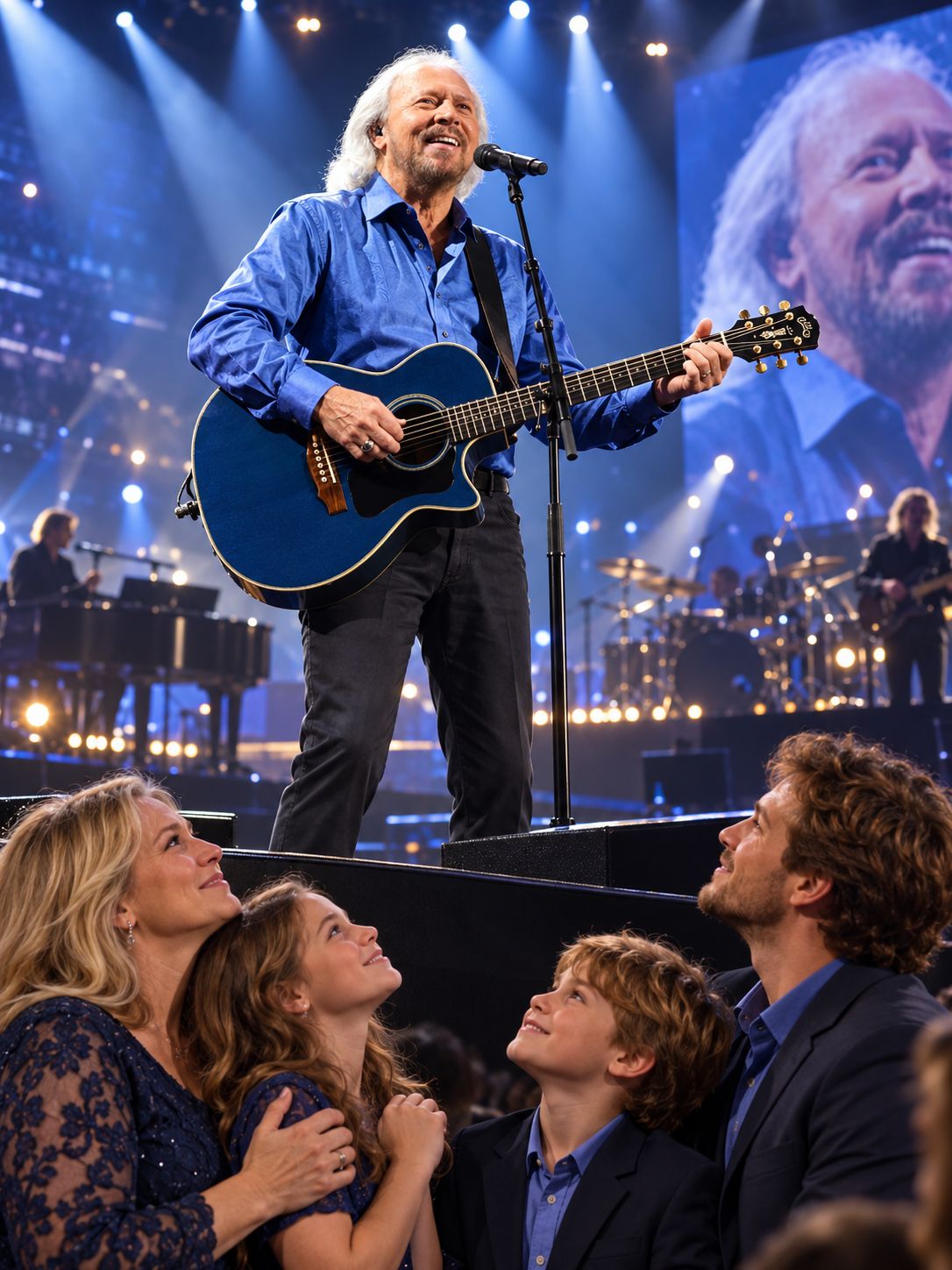
When Frankie Valli stepped behind the microphone to record “Grease” in the late 1970s, he was already carrying the weight of an extraordinary career. His unmistakable falsetto had helped define the sound of The Four Seasons, and songs such as “Sherry,” “Big Girls Don’t Cry,” “Walk Like a Man,” and “Can’t Take My Eyes Off You” had made him one of the most recognizable voices in American popular music. Yet by the time the world was preparing to discover the movie Grease, popular music had changed dramatically. Disco dominated dance floors, younger performers were reshaping radio, and many singers identified with the early 1960s were discovering that yesterday’s success offered no guarantee of tomorrow’s relevance. Into that uncertain moment came Barry Gibb, carrying a song that would unexpectedly connect two musical generations.
The story is sometimes described dramatically as Barry Gibb “rescuing” Frankie Valli’s lost voice, but the deeper truth is more interesting than the legend. This was not a literal medical rescue. Valli had not suddenly forgotten how to sing, nor was Gibb performing some miraculous restoration. What Barry offered was something musicians often need just as desperately: the right song at exactly the right moment. “Grease” gave Valli an opportunity to step outside the familiar Four Seasons sound without abandoning the emotional directness that had made listeners love him in the first place. Barry Gibb understood that a mature voice should not be forced to imitate youth. Instead, the arrangement could surround that voice with a new musical landscape.
By 1978, Barry Gibb was operating at an extraordinary creative level. Alongside his brothers in the Bee Gees, he had helped redefine contemporary pop through richly layered harmonies, rhythmic songwriting, and melodies that seemed simultaneously sophisticated and immediately memorable. His work for Saturday Night Fever had already demonstrated that he could write songs that belonged not merely to an artist, but to an entire cultural moment. Yet “Grease” presented a very different challenge. The song needed to introduce a film rooted in 1950s nostalgia while still sounding unmistakably current to audiences of the late 1970s. Barry responded by writing something that looked backward and forward at the same time.
That contradiction is precisely what makes “Grease” so fascinating. The film celebrates an earlier America of high-school dances, automobiles, friendships and youthful dreams, but the title song does not pretend to come from that period. Its pulse belongs firmly to 1978. The rhythm is muscular, the production polished, and the melody carries Barry Gibb’s instinct for building momentum until a chorus feels inevitable. Rather than attempting to recreate the innocent sound of Valli’s earliest records, the production placed him inside something more modern. Frankie Valli was not being asked to become the singer he had been fifteen years earlier. He was being invited to prove that the singer he had become still mattered.
For older listeners, there is something profoundly moving in that idea. Popular music can be merciless toward aging performers. Radio formats change, fashions disappear, and artists who once seemed permanent can suddenly find themselves treated as reminders of another era. Yet the finest singers possess something fashion cannot easily erase: identity. When Valli sings “Grease,” listeners immediately recognize the person behind the performance. The voice may belong to a different musical environment, but its emotional fingerprint remains unmistakable. Barry Gibb did not erase Frankie Valli’s past; he built a bridge from that past into the present.
The recording also reveals an often-overlooked quality in Barry’s songwriting. He understood voices. Great songwriters do not merely create melodies that sound beautiful on a piano; they imagine how those melodies will live inside another human being. Barry’s own voice was famous for its high register, but he did not simply write a Bee Gees song and ask Valli to imitate him. Instead, “Grease” allowed Valli to bring his own phrasing, toughness and unmistakable character into a composition shaped by Barry’s melodic instincts. The result feels neither entirely like the Bee Gees nor entirely like the Four Seasons. It exists somewhere between them.
That meeting of musical worlds helped turn “Grease” into a major hit and gave Valli another defining recording in a career already filled with them. More importantly, it demonstrated something that veteran performers and their longtime audiences understand especially well: reinvention does not always require abandoning who you were. Sometimes reinvention means finding a new setting in which the qualities you have carried for decades can be heard again.
There is also a quietly beautiful symbolism in the partnership. Barry Gibb, a younger songwriter then standing near the center of late-1970s pop culture, could easily have kept his attention focused entirely on his own extraordinary success. Instead, his composition became the vehicle for another established singer. Frankie Valli, meanwhile, trusted a songwriter associated with a different musical era to place his voice somewhere unfamiliar. That combination of confidence and humility is one reason the recording still feels alive decades later.