Introduction
ROBIN GIBB’S VOICE NEVER REALLY LEFT US — THE BEE GEES LEGEND WHO TURNED FRAGILITY INTO SOMETHING ETERNAL
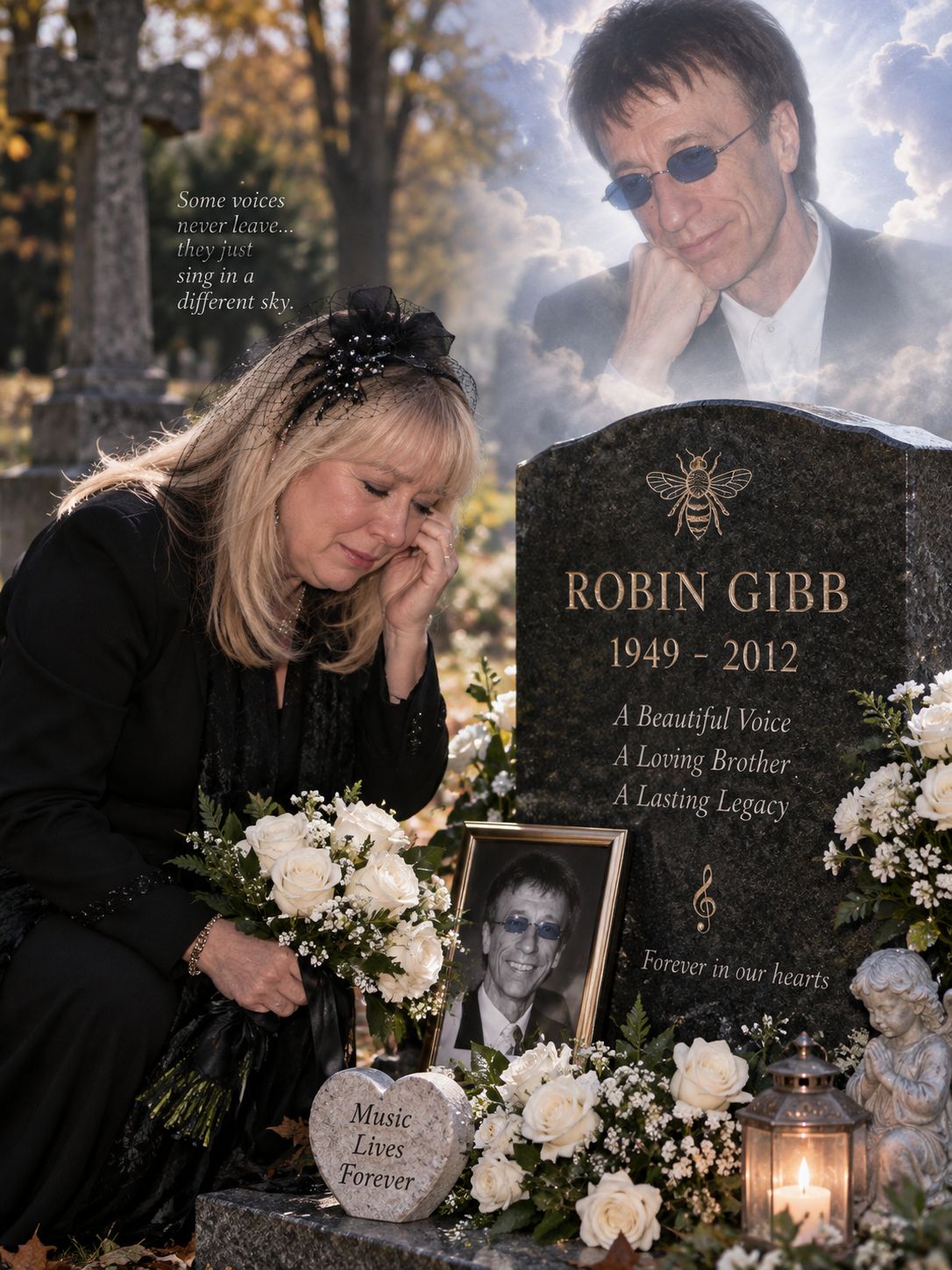
There are singers whose voices impress us for a season, and then there are voices that seem to become part of our memory itself. Robin Gibb belonged unmistakably to the second group. When news came on May 20, 2012, that the Bee Gees singer had died in England at the age of 62, it was more than the loss of another famous performer. For generations who had grown up with the Gibb brothers playing through radios, record players, family cars, dance halls, and quiet living rooms, it felt as though one of the unmistakable sounds of their own lives had suddenly fallen silent. Robin had spent his final period facing serious illness in public, yet the lasting story is not simply about how his life ended. It is about the extraordinary voice he left behind, a voice capable of sounding vulnerable and commanding at exactly the same moment.
The remarkable thing about Robin Gibb’s voice was that it never needed to sound conventional in order to sound beautiful. There was a trembling quality in his singing, a distinctive vibrato that could make even a simple melody feel as if it were carrying years of longing. It was immediately recognizable. Within only a few notes, listeners knew exactly who was singing. In an industry where countless performers have spent entire careers searching for an identifiable sound, Robin possessed one almost from the beginning. His voice could rise above an arrangement with startling clarity, yet there was often something delicate beneath the surface, as though every note might break if handled too roughly. That combination became one of the defining emotional ingredients of the Bee Gees.
Much of the public remembers the Bee Gees through the enormous success of the late 1970s, but the brothers’ story was far broader than any single musical era. Long before the dance-floor phenomenon that transformed them into international superstars, Barry, Robin and Maurice Gibb had established themselves as gifted writers and harmony singers. Their earlier recordings were filled with melancholy, orchestral drama, and unusually sophisticated melodies. Robin was crucial to that sound. When he stepped forward as lead vocalist, he could make a song feel almost unbearably personal, not because he shouted or exaggerated the emotion, but because he seemed willing to let listeners hear the vulnerability inside it.

For older listeners especially, that quality may explain why Robin’s recordings have aged so well. Music changes, fashions disappear, production techniques become dated, but genuine emotional communication survives. A listener returning to a Robin Gibb performance decades later may hear details that were easy to miss the first time: the slight hesitation before a phrase, the tension in a sustained note, or the way his voice seemed to hover above the harmonies created by his brothers. These were not merely technical characteristics. They were part of the emotional language of the Bee Gees, one built from sibling chemistry that could never be fully reproduced by musicians who had not shared their history.
There was also something striking about Robin himself. Beside the commanding presence of Barry and the musical versatility of Maurice, Robin often appeared physically slight, almost fragile. Yet once he began singing, that appearance became irrelevant. His voice could fill the recording with an intensity completely disproportionate to his quiet physical presence. That contrast made him fascinating. Here was a relatively reserved figure capable of delivering performances filled with enormous emotional weight. To many admirers, his singing seemed to come not from physical power but from somewhere deeper, giving rise to descriptions of his “angelic voice.”
That voice accompanied millions of listeners through dramatically different stages of life. Bee Gees songs were played at celebrations, during long drives, after heartbreak, at family gatherings, and during solitary evenings when music became a form of companionship. The brothers created songs that could generate joy, yet some of their finest recordings carried unmistakable sadness beneath the melody. Robin excelled in that emotional territory. Even when the lyrics were restrained, his delivery could suggest regret, hope, loneliness, devotion, and memory all at once. For listeners who had experienced enough life to understand that happiness and sorrow frequently exist side by side, his performances often became more meaningful with age.
His death inevitably changed how many people heard those recordings. A familiar voice that once seemed permanently available suddenly belonged to history. Yet recorded music creates a strange form of permanence. Put on an old Bee Gees album today, and Robin is not an elderly man looking back upon his achievements, nor is he remembered only through photographs and obituaries. He is young again. The brothers are standing together again. Their harmonies rise exactly as they did decades earlier, untouched by time, illness, separation, or loss. That may be one of recorded music’s most mysterious gifts: it cannot prevent death, but it can preserve a human voice at the precise instant when it was alive with feeling.
The story becomes even more poignant when placed within the history of the Gibb family. Maurice Gibb died in 2003, and the brothers had earlier endured the death of their younger brother Andy Gibb in 1988. Robin’s passing in 2012 therefore carried another painful sense of a musical family gradually disappearing from the stage. For Barry Gibb, the surviving eldest brother, the songs inevitably became something more than a catalogue of international hits. They became records of conversations, rehearsals, arguments, discoveries, laughter, ambition, and a shared childhood that eventually turned three brothers into one of popular music’s most successful songwriting teams.
Yet remembering Robin only through tragedy would misunderstand what made him important. Robin Gibb was ultimately a songwriter and singer whose work gave people pleasure. His music was not created merely to be mourned decades later. It was created to be heard, sung along with, rediscovered, and passed from one generation to another. The best tribute is therefore found not solely in solemn remembrance, but in the moment when an old recording begins and someone recognizes that unmistakable voice before anyone has to announce his name.