Introduction
THE KING’S FINAL BATTLE: What Really Happened to Elvis Presley Before the Music Stopped?
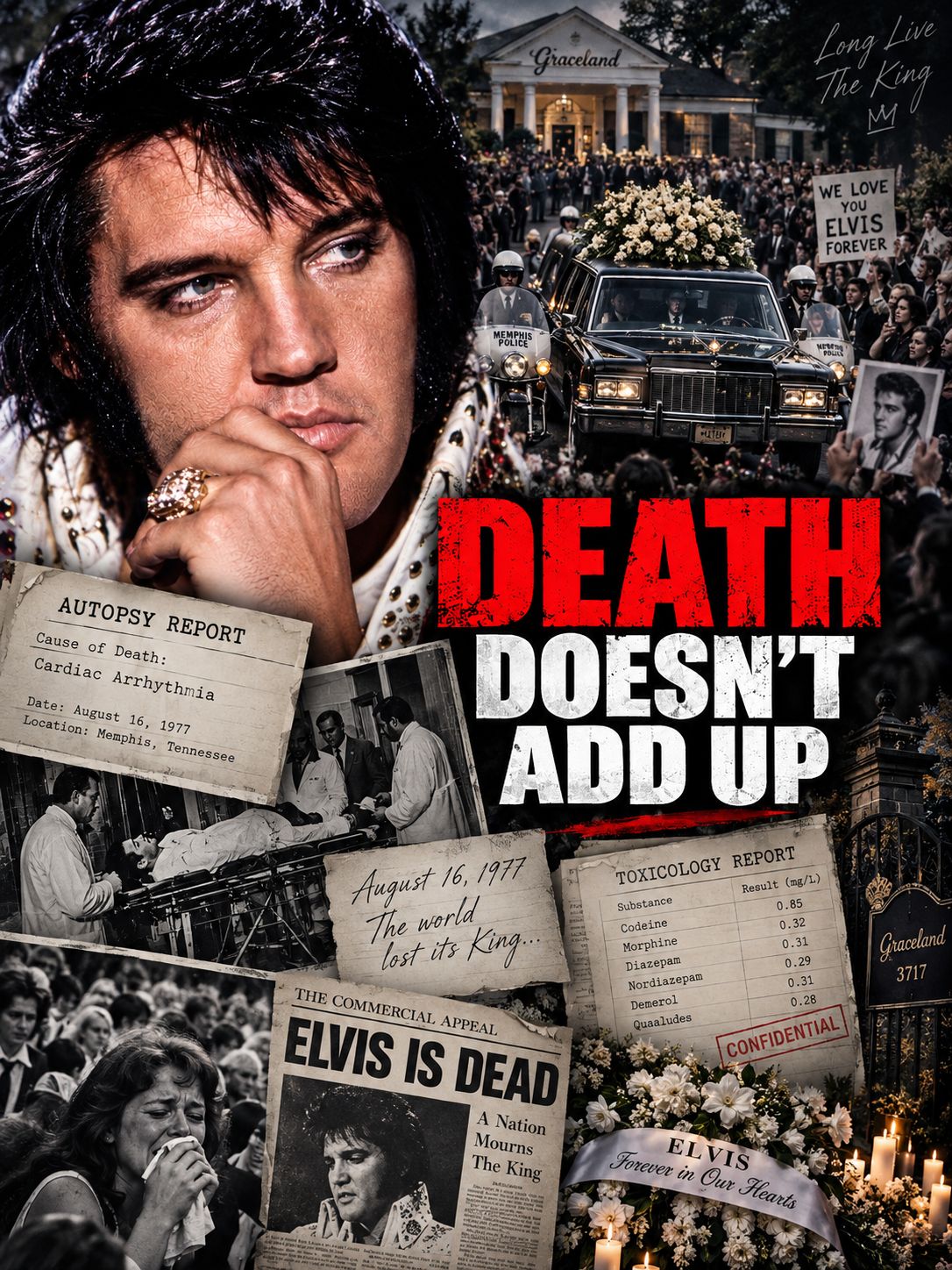
For millions of Americans, Elvis Presley still exists in a permanent flash of youth: the black hair, the dangerous smile, the white jumpsuits, the unmistakable voice that could move effortlessly from gospel tenderness to rock-and-roll thunder. Yet behind that immortal image was a human being whose final years became increasingly complicated by illness, exhaustion, prescription medication, disrupted sleep, grief, isolation, and the almost unimaginable pressure of remaining “The King” when his own body was beginning to resist him. That is why the question “What really killed Elvis Presley?” has survived for nearly half a century, because the answer is far more complicated than the simple phrase that first appeared in news reports after his death.
On August 16, 1977, Elvis Presley was found unresponsive at Graceland in Memphis. He was only 42 years old. Emergency efforts failed, and he was pronounced dead at Baptist Memorial Hospital that afternoon. Shelby County Medical Examiner Jerry Francisco publicly attributed the death to cardiac arrhythmia, an abnormal heart rhythm, while noting that Elvis had a history of mild hypertension and some coronary artery disease that could have contributed. Francisco described the death at the time as natural but acknowledged something that would haunt the story for decades: the precise mechanism might never be completely known.
But the story did not end with the heart.
Later toxicology findings revealed the presence of numerous prescription medications in Elvis’s body. Contemporary and later accounts describe sedatives, painkillers and other drugs, while records surrounding his physician, Dr. George Nichopoulos, showed that extraordinary quantities of medication had been prescribed during Elvis’s final years. A 2026 HISTORY review notes that prosecutors later established that more than 19,000 doses of narcotics, sedatives and stimulants had been prescribed to Presley during a period of roughly 31 months before his death. Dr. Nichopoulos was eventually acquitted of criminal wrongdoing in the Presley case, although he later lost his medical license.
This is where the popular image of Elvis’s final years becomes both darker and more complicated. It is tempting to imagine one dramatic overdose, one catastrophic mistake, one single pill that ended everything. The available record does not support such a simple conclusion. Medical literature discussing Elvis’s case has described polypharmacy—the simultaneous presence and use of numerous medications—as a major concern, while the original medical examiner continued to identify cardiac arrhythmia as the official explanation. Modern forensic guidance emphasizes that toxicology alone cannot always establish cause of death; medication levels must be interpreted together with autopsy findings, medical history and the circumstances of death.
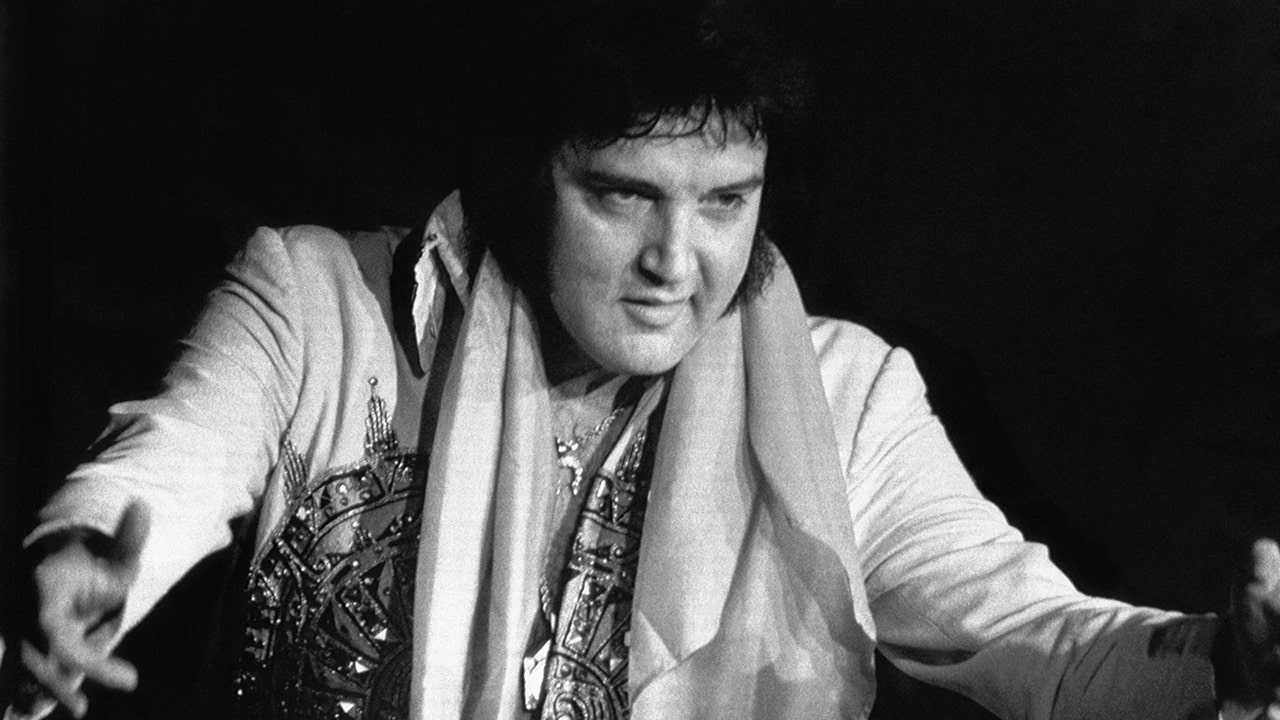
And then there was Elvis’s body itself. By the mid-1970s, this was not simply the body of a tired entertainer carrying a few extra pounds. Later accounts have described a disturbing collection of medical problems, including hypertension, cardiovascular disease, glaucoma and severe chronic constipation, along with evidence of broader physical deterioration. Some investigators and writers have suggested that straining associated with Elvis’s severe bowel problems may have placed additional stress on an already vulnerable cardiovascular system, although this remains an interpretation rather than a universally accepted final explanation for his death.
Yet a documentary titled Elvis Presley – What Really Killed Him? | Mental Health History Documentary cannot stop with toxicology reports and cardiac pathology, because Elvis’s decline also occurred within an extraordinary emotional landscape. One of the defining wounds of his early adulthood was the death of his beloved mother, Gladys Presley, in August 1958 while he was serving in the U.S. Army. Contemporary accounts describe a devastated young man who openly told reporters that her death had broken his heart. Their bond had been unusually close, and the loss occurred just as Elvis was being transformed from a poor Southern boy into one of the most recognizable human beings on Earth.

Decades later, it would be easy—and irresponsible—to diagnose Elvis from a distance. Claims that he suffered from a particular psychiatric disorder have circulated for years, but retrospective speculation is not the same thing as a documented clinical diagnosis. What can be discussed with considerably greater confidence are the visible patterns surrounding his later life: chronic insomnia, dependence on prescription medications, relentless touring, deteriorating physical health and increasing isolation. HISTORY’s recent account describes a cycle in which stimulants were reportedly used to maintain activity and sedatives were then used in attempts to sleep, an exhausting rhythm capable of placing enormous strain on both body and mind.
That insomnia matters more than it might initially appear. Elvis often lived according to an inverted schedule, sleeping during daylight hours and remaining awake deep into the night. His fame also created conditions that few ordinary people could understand. He could not simply walk anonymously into a restaurant, sit in a movie theater or wander through Memphis without attracting attention. Graceland, which represented extraordinary success, could also function as a protective world separating him from ordinary life. The larger Elvis Presley became as a cultural institution, the harder it may have been for the man underneath the name to live normally.
There is also an uncomfortable contradiction at the heart of his story. Elvis possessed almost everything the American dream promised: wealth, fame, extraordinary talent, beautiful homes, loyal audiences and cultural immortality. Yet none of those things guaranteed physical health, restorative sleep, emotional stability or freedom from dependency. During the first half of 1977 alone, Presley continued performing dozens of concerts even as his physical condition was visibly deteriorating. The machine surrounding Elvis Presley was still moving because thousands of livelihoods, contracts and expectations were attached to the man at its center.