Introduction
TOBY KEITH’S FINAL RIDE — FROM OKLAHOMA OIL FIELDS TO ONE LAST SOLD-OUT STAGE
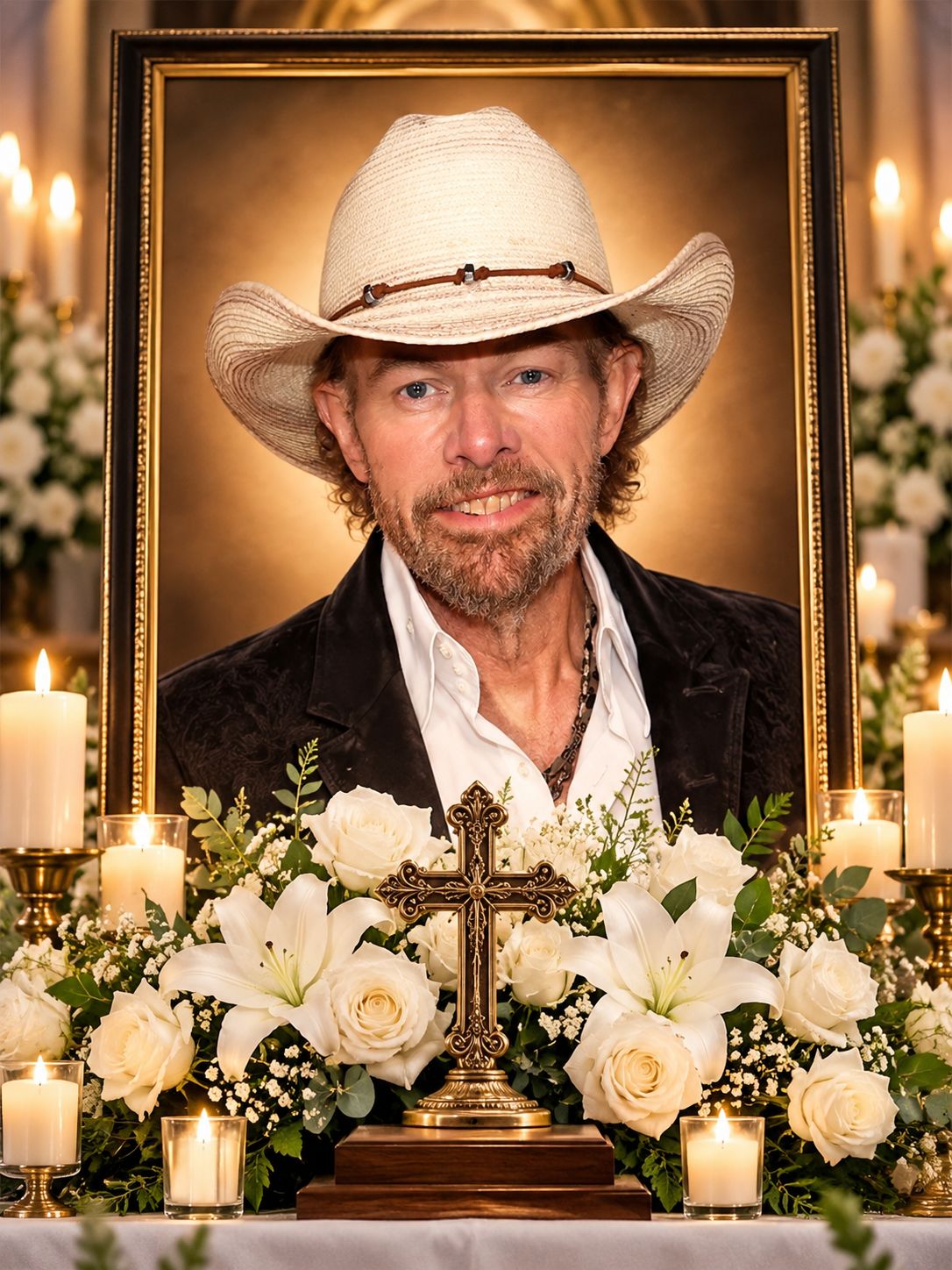
For more than three decades, Toby Keith seemed almost impossible to slow down. He was six-foot-four, unmistakably Oklahoma, armed with a booming baritone, a songwriter’s instinct, and the kind of confidence that could fill an arena before he sang a single note. Then came the news country music never wanted to hear. On February 5, 2024, Keith died at the age of 62 after a long battle with stomach cancer, passing peacefully with his family beside him. Suddenly, the man who had spent a career singing about strength, humor, stubbornness and survival became part of country music history.
But to understand why his death struck so deeply, one has to go back long before the fame.
Before Toby Keith became one of the defining country stars of the 1990s and 2000s, he worked in the Oklahoma oil fields, following a path familiar to generations of working-class families in his home state. He also played semi-professional football for the Oklahoma City Drillers. Those years mattered. They gave him the blue-collar credibility that later ran through so many of his songs. Keith did not have to imagine the world of hard work, long shifts and ordinary people trying to get by. He had lived in it.
Then, in 1993, everything changed.
His debut single, “Should’ve Been a Cowboy,” reached No. 1 and announced the arrival of a singer who sounded both traditional and completely self-assured. Over the years, Keith would place more than 40 songs in the country Top 10 and score 20 No. 1 hits on Billboard’s country charts. His music ranged from swaggering humor to reflection, patriotism and aging, making him far more complicated than the oversized public persona sometimes suggested.

There was “Beer for My Horses,” his collaboration with Willie Nelson, a song that combined old-fashioned storytelling with Keith’s unmistakable sense of attitude. There was “Red Solo Cup,” the 2011 novelty hit that turned an ordinary plastic cup into a piece of country-pop culture. After Keith’s death, fans across America even raised red cups in his honor — proof that one of his most playful songs had become an unlikely symbol of remembrance.
And then there was “Courtesy of the Red, White and Blue (The Angry American).”
Written after the September 11 attacks and the death of Keith’s father, an Army veteran, the song became one of the most discussed country records of its era. It inspired intense devotion among many listeners, particularly members of the military, while also generating controversy because of its confrontational tone. Keith never seemed interested in avoiding that debate. He had always insisted on controlling his own music, image and opinions, even when doing so brought conflict.
That independence became central to his legend.
Keith eventually founded his own record label and continued touring aggressively for years. He performed repeatedly for U.S. service members overseas, becoming one of country music’s most visible supporters of American troops. Yet reducing him solely to patriotic songs would miss much of what made his catalog endure. He could be funny, bruised, sentimental and sharply observant about growing older. Songs like “As Good as I Once Was” and “Don’t Let the Old Man In” revealed a reflective side that became painfully significant late in his life.
In 2021, Keith was diagnosed with stomach cancer. He made the diagnosis public in 2022 and stepped away from his regular touring schedule while undergoing treatment. But the illness did not completely remove him from the stage. In 2023, he returned for one of the most emotional televised performances of his career, singing “Don’t Let the Old Man In” at the People’s Choice Country Awards. A song originally written years earlier suddenly sounded like a conversation with mortality itself.

Then came Las Vegas.
In December 2023, only weeks before his death, Keith performed a run of sold-out headlining shows at Park MGM. They were his first official headlining concerts since revealing his cancer diagnosis. Afterward, he called the shows a fitting way to end the year. Nobody in the audience could know that they were also watching the final concerts of one of country music’s biggest stars.
That knowledge changes everything now.
The applause sounds different.
The final bows feel heavier.
The familiar songs suddenly seem to contain farewells that no one recognized at the time.
Keith’s family later confirmed that he died peacefully, surrounded by loved ones. The country music world responded immediately, with artists including Blake Shelton, Carrie Underwood, Dolly Parton, Jason Aldean and others honoring a man many described as a trailblazer and an American icon.