Introduction

A Black Voice Filled White Radio—and Country Music Never Saw It Coming
In the late 1960s, country music radio sounded like a closed circle. Familiar accents. Familiar names. Familiar faces—at least the ones audiences were allowed to imagine. And then, quietly, a voice arrived that didn’t ask permission.
Charley Pride didn’t kick down doors. He didn’t deliver speeches between songs. He didn’t announce himself as a turning point in American culture. He simply sang—steady, warm, unmistakably country—and the songs started climbing.
At first, much of the industry tried to let the music travel without the man attached to it. When Pride’s early singles were sent out, RCA famously avoided including a promotional photo—an omission rooted in the fear that radio programmers might refuse to play him if they knew he was Black. That detail isn’t rumor; it’s documented in accounts of his early releases, including the background notes tied to his breakthrough era.
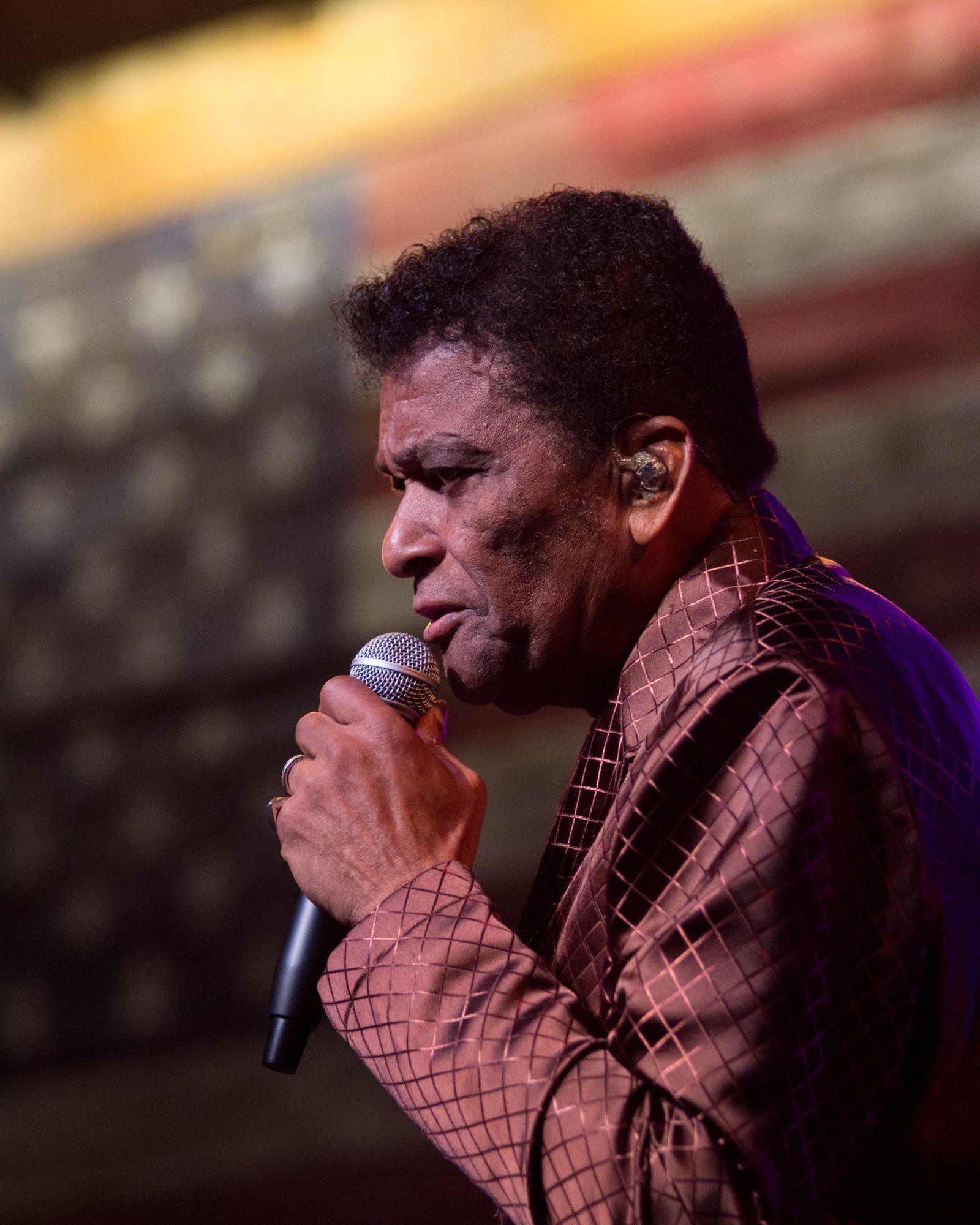
And it worked—at least in the way strategies like that “work.” The sound could enter homes before the truth could trigger anyone’s prejudice. Listeners could fall for the melody before anyone forced them to confront their assumptions. It was both a clever shortcut and a sobering confession about the times.
Then came the irony that still stings if you think about it long enough: country music—so proud of its songs about hardship, loyalty, faith, and the dignity of ordinary people—was being lifted by a man who had lived hardship in ways the industry rarely spoke about. Pride’s music wasn’t an outsider’s experiment. It was traditional, grounded, and emotionally direct. He didn’t stand at the edge of country music. He stood right in the middle of it.
When “All I Have to Offer You (Is Me)” hit No. 1 in 1969, it made history. PBS notes Pride became the first Black artist to have a No. 1 country record—an achievement that should have been impossible in that era’s gatekept system, and yet the song made it undeniable.
That’s the part that often gets missed: the music didn’t “sneak by” because it was bland. It pushed through because it was good. Pride’s voice carried a calm authority—like someone who knew exactly who he was, even if the room wasn’t sure what to do with him.
And when the truth caught up—when television appearances arrived, when album covers made it impossible to pretend the voice belonged to someone else—country music faced a question it had tried to postpone: Did you love the songs, or did you only love the songs as long as you didn’t have to picture the singer?
Some people did resist. That part is real, and it mattered. But something else happened too: the audience didn’t vanish. A relationship had already formed between the listener and the record. The stories had already landed. The choruses had already been sung in kitchens and pickup trucks and lonely living rooms. Once you’ve been moved by a voice, it becomes much harder to deny the human being behind it.
Charley Pride’s approach made the reckoning even sharper. He didn’t argue his way into acceptance. He didn’t force the industry into a public moral lecture. The New Yorker has written about how Pride often avoided overt racial commentary in his career, using composure and even humor at times—while his deeper experiences of racism still shaped him profoundly. That restraint wasn’t weakness. It was strategy. In a genre that could shut its ears the second it felt accused, he let the music do the unsettling work.

The results were historic. Pride became one of the biggest stars of his era, with a long run of chart-topping success. He went on to win major honors—including the Country Music Association’s Entertainer of the Year in 1971, a milestone still cited as a singular achievement. And decades later, he joined the Grand Ole Opry in 1993—an institutional welcome that carried the weight of everything he had already proven.
But the deepest legacy isn’t only in trophies or firsts.
It’s in the uncomfortable mirror he held up to country music: a reminder that the genre could embrace a voice while still hesitating to embrace the person. Pride didn’t change country music by rewriting its sound. He changed it by revealing its contradictions—and showing that once a listener truly hears something, prejudice has to work harder to survive.
So here’s the question, especially for those of us who’ve lived long enough to remember how tight those “rules” once were:
Did country music accept Charley Pride… or did it simply run out of ways to hide him?
If you have a memory of the first time you heard his voice—or the first time you saw his face—share it in the comments. For many fans, that moment wasn’t just about one singer. It was about what the music was finally forced to admit.